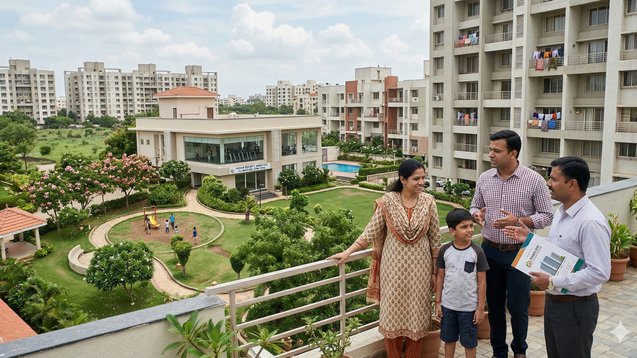
How Amenities Should Influence Your Property Choice
Introduction: Amenities Are No Longer Just “Extras”
A decade ago, property buyers in India focused mainly on location, price, and carpet area. People considered amenities to be nonessential features which they could use if they wanted. The present day shows a complete transformation of the earlier human thinking pattern. The presence of amenities now determines how people experience their daily activities in Mumbai and Nashik and Indore and all developing Tier 3 cities. Some amenities create actual benefits while other amenities fail to deliver worth. Many buyers get impressed by glossy brochures listing 40+ facilities infinity pools, sky lounges, meditation decks only to realise later that maintenance costs are high and actual usage is low. The liveability and resale value of some projects become better when they offer essential amenities in smaller quantities than their competitors. So how should amenities influence your property decision? Smart home buyers use strategic assessment techniques to evaluate amenities according to my research on housing trends which I conduct throughout India. The first three market tiers require businesses to identify important factors which enable them to make intelligent decisions according to this comprehensive handbook.
The Real Purpose of Amenities Needs to Be Understood.
Daily living activities receive support through amenities which exist to provide that support. The advantages of these amenities become apparent when they match your personal way of living and the prevailing economic conditions of your area. Residents of Tier 1 cities which include Mumbai and Bengaluru and Gurgaon use amenities to make up for their limited apartment square footage. Your home space expands when you have access to a well-designed clubhouse and co-working area and landscaped garden. Buyers here expect lifestyle infrastructure within the society because external open spaces are limited. Residents of Tier 2 cities which include Pune and Nashik and Jaipur and Coimbatore use amenities to enhance their property value instead of replacing their existing space. The community space of this residential area includes children’s play areas and walking tracks and security systems because residents need security. Residents who live in Tier 3 towns still need to learn about how real estate operates. Buyers value basic amenities which include elevators and parking space and power backup systems and security more than they value high-end amenities. The Property Aaj website (https://www.propertyaaj.com) shows that different city tiers have different requirements for essential amenities which people need. Understanding this context prevents overpaying for features you may never use.
Essential Amenities vs Lifestyle Luxuries
The common purchasing error which buyers frequently commit leads them to view all available amenities with equal importance. The actual situation requires two major distinctions between the two groups of amenities.
Essential amenities include:
24x7 security
Power backup
Adequate parking
Water supply systems
Lifts and fire safety
The two components directly impact both daily comfort and operational capabilities of the building. The two components should not be avoided because their value remains essential. Lifestyle amenities, on the other hand, include:
Swimming pools
Clubhouses
Sky decks
Mini theatres
Co-working lounges
The elements create better living conditions for residents although they do not constitute essential requirements. Tier 1 markets see their rental attractiveness rise through the presence of lifestyle amenities. Young professionals in cities like Bengaluru actively prefer societies with gyms and co-working spaces. In Tier 2 and Tier 3 cities, however, buyers often prioritise low maintenance costs over luxury features. A society with too many high-end amenities may actually face resistance from middle-income families. You should select your property based on your personal usage needs which requires you to assess both categories.
How Amenities Impact Property Pricing Across India
The presence of amenities affects the cost of properties through square foot pricing although different markets show varying results. Property prices in Tier 1 cities experience an 8 to 15 percent increase through premium amenities. Gated communities attract buyers who value strong lifestyle infrastructure because urban areas outside their homes face constant traffic jams. The price premium for Tier 2 cities ranges between 5 to 10 percent. The location and flat size of the unit remain important factors for buyers but amenities provide projects with a competitive advantage in micro-market competition. Price sensitivity reaches its highest point in Tier 3 towns. Buyers prioritize affordability when they see luxury amenities because too many amenities will decrease project sales velocity. From a practical standpoint, always calculate:
Base price vs amenity-loaded price
Monthly maintenance estimates
Long-term usability
When evaluating listings on Property Aaj (https://www.propertyaaj.com), compare similar configurations across projects. The two properties with matching carpet areas show different results because their amenity packages create a significant difference between them. The key question to ask: Am I paying for real value or brochure glamour?
Rental Demand: Which Amenities Tenants Actually Want
Property investors should evaluate property amenities through rental rates because their personal preferences do not provide suitable assessment methods. Research on tenant demand throughout India shows that rental patterns display consistent behaviour across various geographic areas. The rental market demands these essential amenities: The security system provides reliable protection The installation offers continuous power supply The facility provides protected vehicle storage The building contains efficient vertical transportation systems The facility provides basic fitness equipment to users
The following amenities receive moderate demand from users: The swimming pool provides aquatic recreational space The children’s play area offers a safe space for kids to play The clubhouse serves as a social gathering space for residents
Most markets experience low usage of these amenities: Mini theatres Rooftop lounges Fancy water features The IT corridors of Tier 1 cities now depend on co-working spaces and high-speed internet as their primary factors. Family-friendly amenities represent the top priority for residents in Tier 2 urban areas. In Tier 3 towns, tenants consider building quality and location as their top priority, while they view lifestyle amenities as lesser important factors. You should review rental properties on Property Aaj (https://www.propertyaaj.com) which operate in your chosen micro-market space. The actual tenant demand information shows through the details which tenants select as their preferred amenities.
Maintenance Costs: The Hidden Long-Term Burden
The first home buyer surprise occurs here. The total cost of society maintenance increases with each new amenity which business operations require. The total cost of society maintenance increases with every added amenity. High-density Tier 1 projects require monthly maintenance costs which range between ₹3 and ₹6 per sq. ft and reach higher values in luxury developments. The Tier 2 cities maintain area costs which range between ₹2 and ₹4 per square foot. The buyers in Tier 3 towns refuse to pay maintenance charges which exceed ₹1.5 to ₹2.5 per square foot. The society spends maintenance costs for five years until residents stop using the amenities. The buyers who want to resell their property start bargaining for better prices. The story teaches that luxury items which people do not use become costly items which people must carry. The builders need you to request information about these three items. You need to know about: Monthly maintenance expenses which require estimation Foundation fund needs which require calculation Responsibility for maintaining amenities which you need to know Your long-term ROI protection requires this due diligence process.
The study investigates how buyer behaviour differs between markets classified as Tier 1 Tier 2 and Tier 3.
Understanding buyer psychology provides you with a significant advantage. Buyers in Tier 1 cities live their lifestyle through their buying activities. Premium amenities enhance perceived social status. Projects marketed as “lifestyle residences” perform well here. In Tier 2 cities, buyers are practical but aspirational. The first requirement proves essential because buyers need to show their upgraded lifestyle through visible upgrades while they assess their expenses. The most effective approach consists of delivering balanced amenity packages which provide essential amenities to users. The primary value in Tier 3 towns exists between functional elements and their actual benefits. Buyers prefer:
Strong construction
Good ventilation
Parking availability
Basic security
Luxury-focused projects face challenges because they need to reach specific target markets. Property Aaj (https://www.propertyaaj.com) allows you to establish property filters according to your buyer persona which includes end-user and investor and premium lifestyle buyer categories. This clarity prevents emotional overspending.
Infrastructure vs Internal Amenities: What Matters More
Infrastructure Development in External Areas Shows Greater Value Than Internal Building Amenities. The truth which builders hide from customers exists that external infrastructure elements hold greater importance than the internal building facilities. A project with:
Good road connectivity
Nearby schools
Hospital access
Public transport
will usually outperform a poorly located luxury complex. Metro systems provide greater value than clubhouse facilities in Tier 1 cities. Tier 2 cities see their residents choose to live near highways and workplaces. The people in Tier 3 towns consider access to roads and dependable water services as essential needs. Amenities serve as location multipliers because they do not replace essential location elements. People prefer to choose between two options which include prime location with basic amenities versus remote location with luxurious amenities. The first option usually wins in the long run.
Legal and RERA Considerations Around Amenities
Many buyers overlook the legal angle of amenities. RERA requires builders to provide clear details about:
Promised amenities
Delivery timelines
Common area definitions
Maintenance handover terms
The states themselves show different levels of implementation quality. The RERA markets of Maharashtra, Karnataka, and Gujarat demonstrate stronger compliance than emerging states. Buyers in some emerging states need to verify all promised facilities before making their purchases. Also check:
The determination of whether amenities belong to common areas
The distinction between exclusive and shared usage
The evaluation of future development rights which apply to open spaces
The property value which includes amenities in stamp duty and registration fees results in higher upfront expenses because of increased amenity costs which developers charge. The RERA filing requires your examination before you make any booking.
Future-Proofing: Amenities That Will Matter Tomorrow
The real estate market experiences rapid changes. Amenities which used to be exclusive now become standard requirements in the industry. Future-relevant amenities in India include:
EV charging infrastructure
Co-working spaces
Smart security systems
Solar power integration
High-speed internet readiness
The market already displays high demand for these products in Tier 1 cities. Tier 2 cities are approaching similar levels of demand as they advance in IT-related business sectors. Tier 3 towns will gradually develop but they will maintain sensitivity to pricing. If you want to buy property for long-term investment choose projects with future-oriented design plans instead of those which focus on surface-level aesthetics.
Conclusion: Choose Amenities With Strategy, Not Emotion
The proper selection of amenities between two different options will determine which one delivers better results for your residential comfort. The most intelligent buyers in India's housing markets use a basic principle which states that they should first assess the practical aspects of a property before they consider the way it will enhance their personal living experience and the marketing strategies that promote it. The appropriate combination of amenities will enhance your comfort and increase your property's market appeal while boosting its resale value regardless of whether you purchase property in a metropolitan area or a developing Tier 2 city or an emerging Tier 3 town. You should take a break from your property research to ask yourself three essential questions before making your decision.
Will your family actually use these facilities?
Are maintenance costs sustainable?
Does the project already provide some of these conveniences through its current location? Property Aaj (https://www.propertyaaj.com) enables users to conduct project assessments through an objective comparison process which extends beyond existing brochures and onsite evaluations. The Indian real estate market achieves better outcomes through intelligent choices than through extravagant decision-making. The property you choose will benefit you for many years if you select amenities which match your personal requirements and your financial objectives.
FAQs
1. Do more amenities always mean a better property investment in India?
The relationship between amenities and property value exists because amenities enhance living conditions. The property requires proper management because it needs to handle both standard and uncommon amenities which become operational expenses and create resale problems. Property developers should establish actual amenities which meet the needs of local renters and potential buyers who enter their market.
2. Which amenities matter most for rental income in Tier 1 cities?
Security and power backup and lifts and parking and basic gym access represent the main needs of tenants who live in Tier 1 markets. Co-working spaces are gaining traction in IT hubs. Luxury features help, but only after core functionality is ensured.
3. Are luxury amenities worth paying for in Tier 2 cities?
Value assessment for amenities depends on their pricing together with the characteristics of their target market. The special facilities of the project create extra maintenance requirements which become overwhelming for the project. Balanced amenity packages usually perform better in Tier 2 markets.
4. How do maintenance charges relate to amenities?
Every additional facility increases operational costs. The monthly maintenance expenses of societies with pools and large clubhouses and landscaped areas tend to exceed those of other organizations. Always calculate long-term affordability before purchasing.
5. What should buyers verify under RERA regarding amenities?
The RERA registration should be checked to confirm all promised amenities together with their delivery schedules and the specifications of shared spaces. The builder's legal obligation to deliver these features must be confirmed while all details about maintenance transfer should be examined.
6. Which future-ready amenities should Indian buyers look for today?
The importance of EV charging stations together with intelligent security systems and solar power installations and shared workspaces is growing in significance. These features improve long-term appeal, especially in Tier 1 and rapidly developing Tier 2 markets.