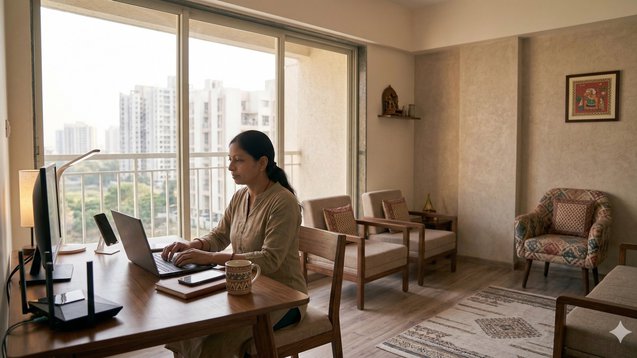
Choosing Property Based on Work-from-Home Needs
The way Indians choose homes has changed dramatically over the last few years. The temporary pandemic changes which existed before now have transformed into a permanent change to our daily routines. The work-from-home and hybrid work models have become permanent fixtures which currently drive changes in India's property market development. Office workers used to prioritize office proximity as their main requirement for work. Today's buyers and tenants create their demands because they want to know two things. The internet connection must prove its dependability. The space must provide enough room for a separate workspace. Residents need to know whether their area will maintain its quiet nature throughout the daytime hours. Home purchase decisions now depend on practical factors which affect all levels of Indian cities from Tier 1 metropolitan areas to Tier 2 developing cities and Tier 3 growing cities. Home buyers and renters in India should select properties which enhance their ability to work productively while providing them comfort and enabling future operational changes. Property Aaj (https://www.propertyaaj.com) now experiences rising home search activity for properties which include study rooms and extensive balconies and advanced digital connectivity. The guide explains how to select suitable properties for work-from-home arrangements throughout India through its detailed pricing information and buyer behaviour analysis.
How Work-from-Home Practices Cause Permanent Changes to Property Market Demands.
Indians have developed a new understanding of residential value because of work-from-home policies. The home has transformed into an office space which companies use for meetings and workers use to complete their tasks. Professionals in Mumbai and Bengaluru now prefer to move from their previous small apartments which they used to live near downtown areas toward bigger houses in suburban areas. Remote workers in Tier 2 cities such as Pune and Jaipur seek two things because they want to find affordable housing while maintaining their quality of life. Even small towns now experience positive developments. Buyers who previously showed no interest in smaller cities now investigate their hometowns because they need basic transportation and infrastructure services to meet their demands. The psychology shift is clear: people now value usable space over just location prestige. People now make decisions based on three factors which include noise levels and natural light and broadband reliability. The market trend demonstrates to property investors that their industry is experiencing permanent changes which will last for an extended period.
Essential Property Traits Remote Workers Must Consider
Home office workers need to treat specific property features as essential requirements which they cannot compromise for their work. A dedicated workspace area stands as the first requirement. A different study room does not always need to exist but the design needs to create distinct boundaries between work space and residential area. High-speed internet must exist as the first requirement for this area. The broadband service in Tier 2 and Tier 3 cities shows different reliability levels across micro-markets which buyers typically do not notice during their site evaluations. The value of natural light and ventilation systems gets underestimated by most people. Extended screen time leads to fatigue because of inadequate lighting. WFH users achieve better results from homes that have balconies and large windows and corner units. Power backup systems now become essential components to business operations. The power outages that affect specific areas cause direct interruptions to work activities. Smart buyers who browse Property Aaj listings (https://www.propertyaaj.com) now use BHK size filters to find homes that match their needs and examine properties by their layout efficiency and digital infrastructure capabilities.
Tier 1 vs Tier 2 vs Tier 3: Where Work-from-Home Buyers Are Moving
Locations decisions today require more complex understanding than previous times. The most expensive cities in Tier 1 Metro areas maintain their high price levels while their infrastructure systems work at their maximum capacity. Hybrid professionals who work from home most of the time but need to go to the office occasionally choose to work in areas that border city limits. Homebuyers in this area choose to spend their time traveling to work instead of living in smaller residences. The current optimal location for people to live and work from home exists in Tier 2 cities. The combination of better city development and lower real estate costs makes Ahmedabad and Indore an attractive investment opportunity. Professionals who return to their hometowns are creating rental properties that generate better returns for investors.
Tier 3 towns attract buyers primarily for end-use rather than investment. Buyers must conduct their own research to confirm internet service quality and access to medical facilities and upcoming construction projects because prices are inexpensive throughout the area. The smartest WFH buyers today are not asking "Which city is best?" but rather "Which micro-market supports my daily workflow?"
Space Planning: Why Layout Matters More Than Carpet Area
Current buyers demonstrate a persistent tendency to concentrate their attention on carpet area measurements but actual home office requirements depend more on space design than space measurements. A well-executed 2BHK design with its adaptable study nook exceeds the performance of a poorly executed design which uses more space. The required elements to find:
• Separate corners for video calls
• Minimal noise transfer between rooms
• Space for ergonomic furniture
• Balcony access from living or bedroom
Developers in Tier 1 cities have started to modify their construction methods. New launches increasingly advertise “work-from-home friendly layouts.” The process requires buyers to perform manual assessments of resale properties.Home buyers frequently make the mistake of selecting residences that possess extended narrow lounges with no functional work areas. The second mistake occurs when people overlook the significance of door and window locations, which determine how workspaces should be arranged. Smart buyers on Property Aaj (https://www.propertyaaj.com) use floor plans to see where their desks will be before making their final decision. This small step prevents major post-purchase regret.
Internet Infrastructure: The Silent Deal-Breaker
The digital connectivity throughout India shows extreme differences which exist between different areas of the same city. People in Tier 1 metros have access to fibber broadband in most areas yet they experience video call interruptions during peak times because of network congestion. The availability of internet services in Tier 2 cities has improved but service remains restricted to specific areas. Tier 3 towns usually depend on various wireless technologies for their internet connectivity needs.
Before buying or renting, always:
• Check which ISPs serve the building
• Ask residents about real-world speeds
• Test mobile network strength indoors
• Verify society rules for additional connections
Many buyers forget this step and discover limitations only after moving in. Young professionals currently prefer to rent properties which exist in areas that possess advanced digital infrastructure according to investment trends. The property search process requires remote workers to use this filter as their first property search method.
The Budget Strategy
Establishes work-from-home movements as tools to assist organizations in their expense calculations. People need to adjust their budgeting approach because work-from-home arrangements create new requirements for their expense management. People who used to spend more money on housing costs to be near their workplaces now select bigger homes located in distant Tier 2 areas.
• In Tier 1 cities, moving 10–15 km outward can increase usable space by 25–40%.
• In Tier 2 cities, the same budget may upgrade you from 2BHK to spacious 3BHK.
• In Tier 3 towns, buyers often prioritize independent homes with office rooms.
People often overlook the existence of unrecognized expenses. The expenses of maintaining bigger homes become more expensive because the costs of electricity and furnishing and maintenance work increase when you build a home office space. The home loan market demonstrates this new trend. Hybrid professionals are driving banks to require larger loan amounts because they need to upgrade their working space instead of changing their workplace. Smart buyers balance EMI comfort with long-term livability — not just purchase price.
Rental Trends for Remote Workers Across India
The WFH pattern has caused rental markets to develop at a rapid pace. The demand for properties in Tier 1 metropolitan areas has decreased in central business districts while it has increased in suburban residential areas. Tenants are willing to move farther out for better space and peaceful environments. Tier 2 cities are witnessing steady rental demand from returning professionals and digital workers. The cities of Pune and Ahmedabad show strong activity in this particular market. The rental market in Tier 3 areas caters mostly to end-users although certain towns with strong educational and IT sectors are starting to see rental demand. The market shows an interesting trend because furnished or semi-furnished homes that include workstations show higher occupancy rates. Landlords listing on Property Aaj (https://www.propertyaaj.com) are increasingly highlighting:
• Study rooms
• High-speed internet
• Power backup
• Quiet surroundings
The features will help to decrease vacancy times which makes them essential for rental income properties.
Legal and Regulatory Factors Buyers Often Miss
Work-from-home buyers tend to concentrate on interior design which leads them to neglect fundamental legal requirements that create dangerous consequences for their purchasing process. RERA compliance remains crucial across India. The country has national regulations but states show different levels of enforcement of their rules. You should always check both project registration status and builder history. The state-specific stamp duty rates create different acquisition costs because they determine your total acquisition expenses. The states provide temporary stamp duty discounts which increase appeal for bigger residential units through their stamp duty exemptions. Buyers who select peripheral markets or Tier 3 markets need to pay special attention to land title verification and the established local authorization procedures. Real estate projects in RERA-registered areas have easier access to home loan approvals, but the approval process for semi-urban properties requires closer examination. The WFH excitement should not prevent you from performing your necessary due diligence. A home office needs to provide both operational efficiency and legal safety.
Future Appreciation: Will WFH-Friendly Homes Gain Value?
This is the big question investors are asking. The initial research shows that properties with superior liveability through their larger spaces and balcony access and township facilities experience higher demand stability after the pandemic. The suburban micro-markets of Tier 1 cities which offer metro access and well-developed social infrastructure will show better performance than their congested central areas during the upcoming years.
Tier 2 cities will experience their most significant growth potential. Professionals who work remotely or in hybrid modes now feel confident to move to cities with cheaper living expenses because those cities maintain sufficient connectivity. Tier 3 appreciation will remain selective and infrastructure-driven. The long-term winner? Homes that balance: Digital readiness Functional layouts Liveability Connectivity to economic hubs These are no longer luxury features — they are becoming the new baseline.
Conclusion: Buy for the Lifestyle You Actually Live
Work-from-home has created new property regulations which were not previously established in India. The smartest buyers today are not chasing only location prestige or price bargains — they are choosing homes that support how they actually live and work every day. The requirements of your location whether you are in a Tier 1 metro or a developing Tier 2 city or an emerging Tier 3 town remain constant which include dependable internet access and practical building design and tranquil environments and advanced future development capabilities. The good news? India’s housing market is undergoing rapid adjustments. Developers are developing new layouts while property owners are enhancing their services and digital property platforms provide improved filtering capabilities. You should approach your home search with careful thought because Property Aaj provides city comparison tools which help you find a home that meets your needs for work efficiency and investment purposes. The right home in today’s world serves as your permanent residence. The place where you do your work and build your future exists.
FAQs
1. Is it better to buy in Tier 1 or Tier 2 cities for work-from-home living?
Your priorities will decide which option better suits your needs. Tier 1 cities provide better infrastructure and closer job access, whereas Tier 2 cities deliver more affordable space and developing digital network access. Many hybrid professionals currently find their optimal work balance between Tier 1 and Tier 2 markets.
2. What minimum internet speed should I check before buying a WFH-friendly home?
A stabilized fiber connection should provide 50 to 100 Mbps for users who want to conduct video calls and cloud-based work. People should focus on maintaining a consistent connection instead of chasing high-speed internet. The user experience in the community needs to be confirmed before making any final decisions.
3. Are builders in India designing homes specifically for remote work now?
The current market shows new residential projects throughout major Indian cities. The majority of developers today add study spaces and adaptable areas together with bigger balcony spaces. The buyer must assess the complete layout of resale properties because they need to evaluate their purchase decision.
4. Does work-from-home increase property resale value?
The answer is yes through indirect means. Better home designs together with improved airflow systems and digital infrastructure make properties more appealing to buyers and renters. WFH-friendly features have emerged as important value drivers although they do not serve as the primary element.
5. Should I prioritize a separate study room or a larger living space?
The best design option requires you to select a room arrangement that enables multiple usage zones. A compact but dedicated study area often works better than a large open living room with no quiet workspace. Think of practical daily usability.
6. How can Property Aaj help in finding WFH-suitable homes?
Property Aaj (https://www.propertyaaj.com) provides users with the ability to search for properties through various options which include building design and available facilities and neighborhood selection to find homes that have study rooms and optimal interior design and effective building systems throughout India.