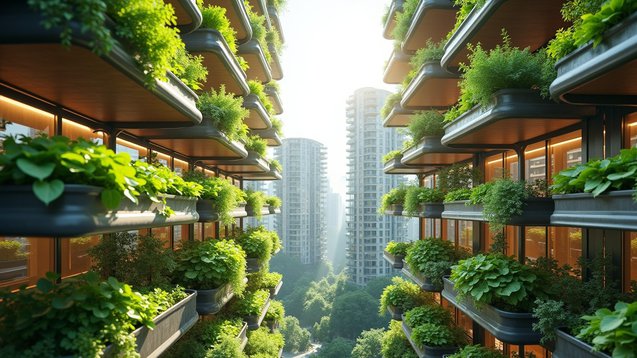
Introduction
As urban areas in Maharashtra move towards verticality with high-rise buildings, the shift in how residents think about food and green living is also changing. Vertical farming - or growing plants in stacked layers, inside what would normally be a limited area - is no longer simply a notion of a futuristic farm or for industrial scale. Today, homebuyers and housing societies are asking questions about vertical farming and are actively trying to integrate it into apartments in major cities like Mumbai, Pune, Thane, Nagpur and Nashik. There have been balcony dish gardens in Pune's Banner, vertical rooftops in Mumbai's Powai, and even some community hydroponics on Ghodbunder Road in Thane - and frankly, there is a lot of talk about vertical farming. It is such a topic of attention that in property apps like Property Aaj (https://www.propertyaaj.com), properties are being listed as "urban farming" or "green lifestyle amenities”. The ultimate question would be: Do we really think vertical farming can be a reality in the day-to-day minimalistic urban homes in Maharashtra? Let's find out.
What is Vertical Farming?
Vertical farming is a novel form of agriculture that utilizes the vertical space by using vertically-stacked layers, often indoors or controlled environments. There are several methods of vertical farming that includes:
Hydroponics - soilless plants cultivated in nutrient rich water
Aeroponics - plant roots are sprayed with a nutrient mist
Aquaponics - fish and plant farming together
LED Lighting System - indoor grow lights that mimic sunlight
The ability to produce crops such as leafy greens, herbs, and small vegetables in tighter spaces is a key benefit of vertical farming particularly for urban dwellers with small balconies, terraces, and rooftop.
Why Vertical Farming Is Relevant for Urban Homes in Maharashtra
Restricted Space
In urban areas such as Mumbai (Andheri, Bandar, Powai), apartments have decreasing sizes of balconies. Vertical farming allows for the maximization of yield with minimum space.Food Safety
Due to pesticide issues, people of Pune and Thane like to grow their own organic herbs, leafy greens, and vegetables.Never Ending Cost of Fresh Produce
The cost of vegetables such as spinach, coriander, and lettuce are increasing. Vertical farming can be produced all year round at a cheaper price once accepted.Sustainability
Cities such as Nagpur and Nashik are short on water. Hydroponics and aeroponics use 90% less water than traditional farming.Lifestyle Choice
Younger homebuyers in Navi Mumbai and Pune IT hubs view urban farming as a part of a healthy lifestyle and their lifestyle choice for a green perspective.
How Vertical Farming Can Fit into Urban Homes
Balcony Gardens
Compact hydroponic towers allow families in Pune’s Hinjewadi or Mumbai’s Bandar to grow spinach, mint, or lettuce on balconies.Rooftop Farms
Societies in Thane and Navi Mumbai are experimenting with rooftop hydroponics, providing residents with fresh produce.Indoor Farms
LED-lit vertical setups inside kitchens or living rooms are popular in premium homes in Mumbai’s Powai or Pune’s Koregoan Park.Community Farming Spaces
Larger societies in Nagpur and Nashik are setting up shared vertical farming systems as part of their amenities.
Benefits of Vertical Farming in Urban Homes
Fresh & Organic Food – Families get pesticide-free vegetables right at home.
Cost Savings – A small setup can save ₹2,000–₹5,000 per month on groceries.
Water Efficiency – Hydroponic systems recycle water, ideal for drought-prone Maharashtra cities.
Mental Well-being – Gardening reduces stress and promotes healthier lifestyles.
Higher Property Value – Projects highlighting urban farming on Property Aaj (https://www.propertyaaj.com) often see higher buyer interest.
Challenges of Vertical Farming in Urban Homes
Initial Cost – Small hydroponic kits start around ₹15,000–₹30,000, while larger setups can be expensive.
Technical Knowledge – Homeowners must learn how to manage nutrient solutions and lighting.
Power Dependence – Indoor farms rely on LED lights and pumps, which increase electricity use.
Limited Crop Variety – Best suited for leafy greens, herbs, and small vegetables—not large crops like potatoes or wheat.
Maintenance – Requires consistent care, which may not suit every family’s lifestyle.
Vertical Farming Trends in Maharashtra’s Cities
Mumbai (Bandra, Andheri, Powai) – Premium high-rises are introducing rooftop hydroponic gardens as part of wellness amenities.
Pune (Banner, Hinjewadi, Kharadi, Koregoan Park) – IT professionals are adopting balcony hydroponics for fresh greens.
Thane (Ghodbunder Road, Pokhran Road) – Large societies are experimenting with shared community farms.
Navi Mumbai (Panvel, Vashi, Nerul) – Townships in Panvel are integrating vertical farming into eco-friendly designs.
Nagpur (Civil Lines, Dharam Peth) – Rising demand for organic produce is driving home-based hydroponic adoption.
Nashik (College Road, Gangapur Road) – Known for vineyards, Nashik’s villas are adding vertical farming setups to their designs.
Aurangabad, Kolhapur, Solapur – Still in early stages, but new gated communities are beginning to explore the concept.
Real-Life Examples
A society in Banner, Pune converted its terrace into a hydroponic farm, supplying spinach and lettuce to 200 families.
A luxury project in Powai, Mumbai markets indoor vertical farming spaces as part of its premium amenities.
A villa on College Road, Nashik runs a rooftop aquaponics system that grows vegetables and raises fish.
The future of vertical farming in urban homes
With sustainability becoming more commonplace, vertical farming could become a feature of most future housing developments throughout Maharashtra. Developers are already advertising their projects with sustainable features as commonly offered, and adding vertical farming could be the next claim to fame.
Platforms such as Property Aaj (https://www.propertyaaj.com) will find their way to the mainstream as more buyers-sellers interested in "sustainable living" flood the marketplace.
Conclusion
Vertical, or urban farming, is much more than a trendy term; it is a practical, sustainable, value-added solution to urban housing in Maharashtra. Although challenges exist in the short term (cost to start, ongoing maintenance issues, etc.), the long-term potential for fresh local produce, cost savings, and sustainability might make it appear to some as a great deal too attractive to ignore.
For families who prioritize a healthy sustainable lifestyle and eco-friendly housing, seeking vertical farming-friendly projects on Property Aaj (https://www.propertyaaj.com) is a great option to consider that does not destroy the habitat of local plants and wildlife.
FAQs
What can I grow at home with vertical farming?
Leafy greens, herbs, strawberries, and small vegetables like cherry tomatoes.Does vertical farming need soil?
Not always hydroponics and aeroponics grow plants without soil.Is vertical farming expensive for home use?
Small kits start around ₹15,000–₹30,000, and savings on groceries can offset costs.Can housing societies adopt vertical farming collectively?
Yes, many societies in Pune, Thane, and Navi Mumbai are setting up rooftop or community hydroponic farms.Does vertical farming save water?
Yes, hydroponics uses up to 90% less water than traditional farming.
6. Do vertical farming features increase property value?
Yes, eco-friendly amenities like urban farming are increasingly attractive to modern buyers.
Read more about property matters with our specialists and browse the latest property listings on Property Aaj. Download the app from the Play Store and App Store now for easy buying, selling, and renting!