Introduction
The real estate sector in Maharashtra is rapidly evolving. Although location, price, and amenities will always be the priority, a new factor has begun to influence buyer decisions—green certification. Projects marketed as "green-certified" are on the rise, whether it is an IGBC-certified township in Pune's Hinjewadi area or LEED-certified luxury tower in Mumbai's Bandra, or eco-friendly apartments in Thane's Ghodbunder Road area.
So, is the question—is the green-certified home really worth the premium? Sometimes buyers see a premium of 5-15% for green-certified homes when compared to non-green-certified homes. However, on the upside, greener properties provide the promise of energy savings, water efficiency, healthier living, and long-term value for home buyers. During the last several years on real estate search platforms like Property Aaj (https://www.propertyaaj.com) the demand for sustainable housing projects has increased dramatically.
This article looks at the costs, benefits, and realities of owning a green-certified home in Maharashtra.
What Are Green-Certified Homes?
Green-certified homes are residential buildings that meet sustainability standards set by rating systems like:
IGBC (Indian Green Building Council)
GRIHA (Green Rating for Integrated Habitat Assessment)
LEED (Leadership in Energy and Environmental Design)
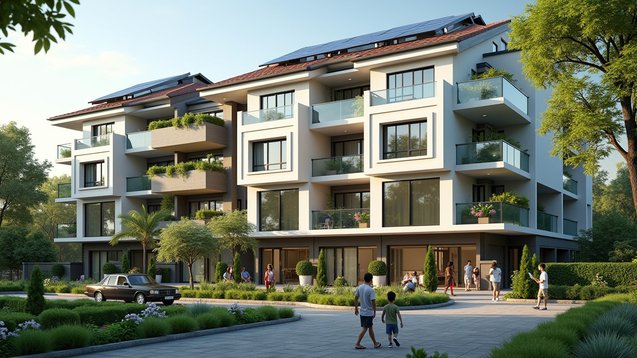
To earn certification, projects must demonstrate eco-friendly features such as:
Energy-efficient design and lighting
Rainwater harvesting and wastewater recycling
Solar energy integration
Eco-friendly paints and construction materials
Efficient waste management systems
Better indoor air quality
In Maharashtra, cities like Pune, Mumbai, and Thane are leading the adoption, with developers increasingly incorporating these standards into new residential projects.
Why Do Green-Certified Homes Cost More?
Premium Construction Materials – Use of eco-friendly paints, fly-ash bricks, and sustainable wood increases costs.
Advanced Infrastructure – Systems like solar panels, rainwater harvesting, and wastewater treatment plants require higher investment.
Certification Fees – Developers must pay for official certification and audits.
Design & Planning Costs – Green-certified homes need specialized architects and consultants.
On average, green-certified homes in Maharashtra cost 5–15% more than non-certified properties.
Do the Benefits Justify the Extra Cost?
Lower Energy Bills
In Pune’s Magarpatta or Mumbai’s Powai, residents of green-certified apartments report 20–30% lower electricity bills thanks to energy-efficient lighting, insulation, and solar panels. Over 10–15 years, these savings can easily offset the higher purchase price.Reduced Water Costs
With rainwater harvesting and greywater recycling, residents in Thane’s Ghodbunder Road or Navi Mumbai’s Panvel save thousands annually on tanker water. Large societies can save lakhs per year.Healthier Living
Better air circulation, non-toxic paints, and reduced indoor pollution make green-certified homes healthier—an advantage buyers in polluted cities like Mumbai and Nagpur value highly.Higher Resale Value
Buyers are willing to pay a premium for eco-friendly homes. On Property Aaj (https://www.propertyaaj.com), green-certified listings attract higher engagement and quicker sales compared to traditional apartments.Government Incentives
Some municipal corporations in Maharashtra offer property tax rebates for green-certified projects, further improving long-term savings.
City-Wise Adoption in Maharashtra
Mumbai (Bandra, Andheri, Powai, Goregaon) – Luxury towers often highlight IGBC or LEED certification to attract NRIs and premium buyers.
Pune (Baner, Hinjewadi, Kharadi, Magarpatta) – IT professionals are keen on sustainable townships, making Pune one of Maharashtra’s top markets for green housing.
Thane & Navi Mumbai (Ghodbunder Road, Panvel, Vashi) – Large co-operative housing societies and integrated townships are adopting green practices to reduce operating costs.
Nagpur (Civil Lines, Dharampeth) – With rising temperatures and water issues, demand for energy-efficient and water-saving homes is increasing.
Nashik (College Road, Gangapur Road) – Villas and farmhouses are incorporating green features like solar panels and rainwater harvesting.
Aurangabad, Solapur, Kolhapur – Green-certified housing is still emerging, but new projects targeting younger buyers and NRIs are starting to adopt these standards.
Real-Life Examples of Savings
A society in Baner, Pune, saved ₹30 lakhs annually on water and energy bills after implementing rainwater harvesting and solar power as part of their green-certified design.
A luxury apartment in Bandra, Mumbai, marketed as LEED-certified, sold at nearly 20% higher price per sq. ft. compared to neighboring non-certified projects.
In Nashik’s Gangapur Road, a villa with solar panels and eco-friendly paints saw higher demand and quicker resale compared to conventional homes.
Challenges with Green-Certified Homes
Higher Upfront Cost – Many middle-class buyers hesitate due to the premium pricing.
Limited Awareness – Buyers in cities like Solapur and Kolhapur are still unfamiliar with the benefits of certification.
Maintenance Requirements – Systems like water recycling plants need regular upkeep to remain effective.
Greenwashing – Some developers falsely market projects as “eco-friendly” without formal certification.
Are They Worth It? The Verdict
The answer is an unequivocal yes, especially in Maharashtra’s urban centres. Although green-certified homes from established developers have a higher initial purchase price, the amount saved over time on energy and water usage in addition to resell value and a healthier living environment easily justifies the incremental cost.
Over time, the 5-15% extra spent at purchase often means 30-40% savings in operating costs alone as well as resale premiums. For environmentally-conscious buyers and families that plan to live in them long-term, the net benefits make the cost insignificant.
Conclusion
Green-certified homes are not a lifestyle trend, they are the future of real estate in Maharashtra. Green-certified homes provide both immediate and long-lasting value from lower bills to greater health to improved appreciation.
Whether you are looking at a premium high-rise in Mumbai, a tech-centric township in Pune, or a new-age society in Thane, investing in a green-certified home is not only financially wise, but also environmentally smart. Explore green projects across Maharashtra via verified listings on Property Aaj (https://www.propertyaaj.com).
FAQs
What is the cost difference between green-certified and other homes in Maharashtra?
Typically, a green home will cost approximately 5-15% more than a standard home, based on certification and features.Do green-certified homes provide cost savings over time?
Yes, savings in energy bills, water costs, and property tax rebates are often greater than the upfront premium.Are there green-certified homes in smaller cities like Solapur or Kolhapur?
Green certification in smaller cities has taken longer to catch on, but new builders/properties that target a younger demographic are starting to include some green features.Will banks lend on green-certified homes?
Yes, banks lend on many green-certified projects and some provide preferential rates on green certified homes.How do I know if a project is really green certified?
Ask for documentation of the certification from either the IGBC, LEED or GRIHA prior to purchasing a home.Do green certified homes really have a higher resale value?
Yes, there are numerous research reports that demonstrate eco-friendly homes in urban centers like Pune and Mumbai sell faster and at higher prices.Read more about property matters with our specialists and browse the latest property listings on Property Aaj. Download the app from the Play Store and App Store now for easy buying, selling, and renting!