Introduction
Water scarcity is one of the biggest concerns for urban Maharashtra. Housing societies are facing increased water bills, an increased dependence on tankers, and an irregular municipal supply from the crowded suburbs of Mumbai to the newly developing IT hubs of Pune. Smart irrigation systems have emerged as a practical and sustainable solution to these challenges.
Smart irrigation systems use sensor data, forecast data, and automation to manage watering of gardens and landscaping in a way that reduces waste but still allows for vibrant and healthy green space. As residential societies in places like Thane, Navi Mumbai, Pune, and Nagpur, continue to invest large sums of money on landscaped gardens and ecologically friendly amenities, smart irrigation is no longer a luxury, but a necessity!
More developers are utilizing and promoting smart irrigation as part of eco-friendly housing initiatives on real estate platforms like Property Aaj (https://www.propertyaaj.com). However, just how effective are these systems and worth the investment for housing societies? Let's explore.
What are Smart Irrigation Systems?
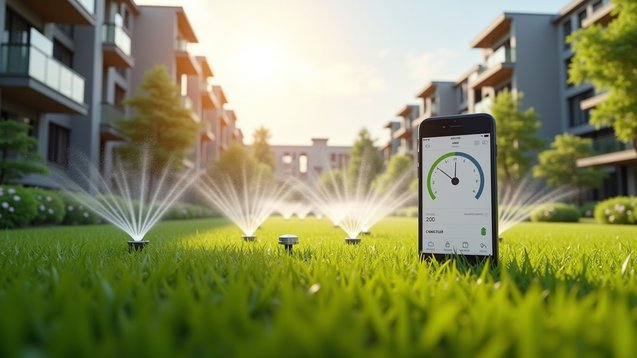
Smart irrigation systems refer to sophisticated watering solutions that automatically adjust water flow according to:
Soil moisture levels
Weather forecasts (rain, humidity, temperature)
Plant type and their watering needs
Real-time monitoring on mobile applications
Smart irrigation systems replace watering methods using traditional sprinklers or manual irrigation (e.g., hose). Smart irrigation systems provide the exact amount of water plants need, no more and no less.
Why Housing Societies Need Smart Irrigation
Water Scarcity in Urban Maharashtra
Pune (Baner, Hinjewadi, Kharadi) faces seasonal tanker dependency.
Mumbai (Andheri, Powai, Goregaon) residents often pay extra for water during summer shortages.
Nagpur (Civil Lines, Dharampeth) deals with long dry spells, making water-efficient landscaping vital.
Smart irrigation reduces unnecessary water wastage, ensuring societies are less dependent on expensive external water sources.
High Maintenance Costs
Large societies in Thane and Navi Mumbai spend lakhs annually maintaining lawns, gardens, and clubhouse landscapes. Smart irrigation reduces expenses by cutting water consumption by up to 50%.Sustainability Goals
With green certifications like IGBC and GRIHA gaining traction in Maharashtra, societies adopting smart irrigation improve their eco-friendly credentials, boosting property values.
How Smart Irrigation Systems Work in Societies
Soil Moisture Sensors
Placed in gardens and lawns, these sensors detect when the soil is dry and trigger watering automatically.Weather-Based Controllers
If rain is forecasted in Mumbai or Pune, the system reduces or skips watering, preventing overuse.Mobile App Integration
Residents or society managers can monitor and control irrigation schedules directly from smartphones.Drip & Sprinkler Combination
Smart systems often combine drip irrigation for flowerbeds with sprinklers for larger lawns, maximizing efficiency.
Benefits of Smart Irrigation for Housing Societies
Cost Savings
A housing society in Pune’s Magarpatta saved nearly ₹12 lakhs annually after switching to smart irrigation.
Reduced tanker dependency lowers monthly expenses significantly.
Healthier Landscapes
Plants thrive when watered optimally. In societies along Thane’s Ghodbunder Road, residents reported lusher gardens and longer-lasting greenery after adopting smart systems.Convenience
Society managers no longer need to manually schedule watering. Automation ensures efficiency even if staff availability is low.Government Support
Municipal corporations in Maharashtra encourage water conservation and may provide rebates for eco-friendly housing practices.Increased Property Value
On Property Aaj (https://www.propertyaaj.com), listings that highlight eco-friendly features like smart irrigation attract more interest, especially from environmentally conscious buyers.
City-Wise Adoption in Maharashtra
Mumbai (Bandra, Powai, Goregaon, Andheri) – Premium housing projects integrate smart irrigation to maintain rooftop gardens and landscaped podiums.
Pune (Baner, Hinjewadi, Kharadi, Magarpatta) – IT townships invest in smart irrigation to reduce water bills and align with green certifications.
Thane (Ghodbunder Road, Pokhran Road) – Large residential complexes use smart irrigation to manage vast landscaped areas.
Navi Mumbai (Panvel, Vashi, Nerul) – Integrated townships in Panvel are adopting these systems for sustainable water management.
Nagpur (Civil Lines, Dharampeth) – Rising awareness about water conservation is driving adoption in premium societies.
Nashik (College Road, Gangapur Road) – Villas and gated communities are implementing smart irrigation for vineyards and gardens.
Aurangabad, Solapur, Kolhapur – Still in early stages, but select new projects are piloting these systems.
Real World Examples of Success
Hinjewadi IT Township, Pune – Installed smart drip irrigation, reducing landscape water use by 40%.
Powai, Mumbai Luxury Apartments – Automation (as compared to use of tankers) resulted in savings of ₹8,000 per flat per year.
Civil Lines Nagpur Society - 300 flats, saved nearly 15 million litres of water in a year through sensor irrigation.
The Dangers of Implementing Smart Irrigation
Initial Cost - Installation costs more than conventional sprinklers but pay for themselves in savings in 2-3 years.
Maintenance - Systems need maintenance by someone trained to take care of them.
Gaps in Awareness - Many of the societies in smaller cities do not understand the long-term financial and environmental implications of smart irrigation.
Compatibility - Upgrading older societies that do not have automatic smart irrigation is a challenge.
Maharashtra’s Housing Societies Are Smart Irrigation Adoption.
Water scarcity is a growing concern and smart irrigation is likely to soon be standard in housing societies. Developers in Pune, Mumbai, and Thane are already starting to incorporate it as part of their project designs.
From a buyer perspective, what could be better than being able to buy a home in a society with smart irrigation as not only will this make living greener, but it will also mean lower maintenance charges and you will be aiding to help live more sustainably. Sustainable housing features like smart irrigation have transitioned from just an add-on design element to now being deal makers (as can be seen on Property Aaj - https://www.propertyaaj.com/).
Conclusion:
Smart irrigation systems are changing the game when it comes to how housing societies in Maharashtra manage their water. They help save costs, help manage sustainability reporting and even increase property assets value. This innovative product can be adopted in all types of housing societies from luxury towers in Mumbai to integrated townships in Pune and Thane.
In fact, for buyers or investors who are looking at more sustainable and future ready options, we recommend looking at properties with smart irrigation features or other sustainable features on Property Aaj (https://www.propertyaaj.com/) .
FAQs
How much water can smart irrigation save in housing societies?
On average, 30 - 50% vs. traditional watering techniques.Are smart irrigation systems expensive to install?
Yes, however societies recoup their installation costs in 2 - 3 years with lowered water bills.Can older housing societies also implement smart irrigation?
Yes, they can do so via retrofitting, however, costs may vary depending on the layout.Which cities in Maharashtra are adopting smart irrigation first?
Pune, Mumbai, Thane, and Navi Mumbai rank highest in overall adoption of smart irrigation, while Nagpur and Nashik are in the middle of the pack.Are smart irrigation systems easy to maintain and incorporate?
Yes, sensors and controllers require routine testing, but overall maintenance is easier than savings.Do smart irrigation system features impact resale value?
Yes, there is an immediate price increase in property value, as eco-friendly buyers appreciate societies with ecological features included in the system.Read more about property matters with our specialists and browse the latest property listings on Property Aaj. Download the app from the Play Store and App Store now for easy buying, selling, and renting!