Should You Compromise on Parking Availability?
Introduction
Parking something most homebuyers don’t think deeply about in the beginning often becomes one of the biggest daily frustrations later. You might find the perfect home: right location, good price, decent size. But then comes the catch limited or no dedicated parking. The question about whether to accept limited parking space exists for property buyers who want to obtain better real estate offers. The problem exists throughout Indian urban centers. The cities of Mumbai, Bengaluru, and Delhi NCR treat parking spaces as valuable resources. The architectural design of older buildings provides insufficient parking space, and new buildings require additional parking space which costs lakhs. Parking in Tier 2 cities like Nagpur and Surat has improved, but drivers still face unpredictable parking situations. In Tier 3 towns, people have more space but their spatial planning and distribution systems function less efficiently. The first time you see it, parking space losses look easy to handle because you do not have a vehicle yet. The circumstances undergo transformation after three years because of changed developments. This situation involves more than simple user benefits. This situation impacts your daily activities Your home resale value Your ability to attract tenants and Your capacity to maintain social connections. The following explanation will help you determine whether choosing to eliminate parking space represents an intelligent choice or a decision that will lead to expensive consequences over time.
Why Parking Has Become a Major Factor in Real Estate
India's vehicle ownership is growing very fast. Many middle-class families now own one or two cars and also two-wheelers. This has made parking an issue, especially in cities. In cities like Tier 1 there is not enough space so parking is a major problem. In cities like Tier 2 more people are buying cars because they have more money. In towns like Tier 3 there is space but good parking systems are still being developed. People who buy homes nowadays think about parking a lot more than they did ten years ago. When you look at homes on Property Aaj you will see that homes with their parking are in high demand and cost more. Parking is not something you can have. It is becoming a must-have.
The Cost Factor: Why Parking Feels Expensive
Let us examine numerical values. In metro areas dedicated car parking spaces require expenses that range from ₹3 lakh to ₹15 lakh based on both location and project requirements. The cost in Tier 2 cities operates at a lower rate but maintains significant financial impact. Most Tier 3 towns offer parking spaces which either come at no cost or have very low fees. This additional expense makes buyers look for other options. The extra expense of parking becomes essential when people already spend their existing budget limits. The situation presents a problem because people who save money at present will experience more difficulties during their daily life. Parking expenses should count as part of total investment when property comparisons occur on Property Aaj (https://www.propertyaaj.com).
Daily Convenience: The Reality of Living Without Parking
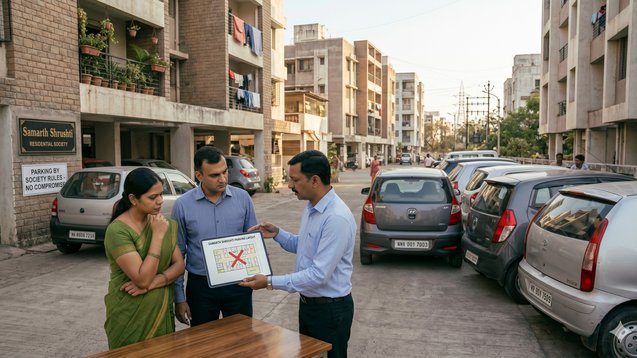
The actual situation starts at this point. You need to spend 15 to 20 minutes searching for parking after your long workday ends. You need to park your vehicle at a distance from your building and then walk back home after midnight. Parking space shortages create frequent conflicts in many communities. People who live in these areas park their vehicles in places that have no official parking spaces which creates conflicts. The situation in Tier 1 cities has become extremely severe. The situation in Tier 2 cities continues to expand. The situation in Tier 3 towns exists at a lower level of intensity which still affects socially disorganized communities. Every person who drives a vehicle today or intends to drive one in the future will experience daily parking-related problems. You experience convenience every day of your life. Most buyers do not recognize how essential parking facilities are to their daily experience.
Future Planning: What About Tomorrow?
The question is straightforward: do you expect to drive a car during the next five to ten years? Most people who do not own a vehicle at present will eventually acquire one because rising incomes and changing lifestyles and family needs drive people to own cars. Public transport does not provide complete mobility solutions for residents of metropolitan areas. People in Tier 2 cities now use personal vehicles as their main mode of transportation. Personal vehicles become necessary for residents of Tier 3 towns. Homeowners who purchase properties without parking space face two challenges: they cannot build parking spaces or they must pay extra for their installation. Future planning holds critical importance. Your property assessment for Property Aaj (https://www.propertyaaj.com) requires you to assess the situation through a long-term perspective instead of just your current state.
Impact on Resale Value and Demand
The presence of parking spaces determines the property resale value. Present-day buyers search for homes that come with their own parking spaces. Urban properties without parking spaces face greater difficulty in attracting buyers than those with parking spaces. Metro areas experience decreased demand when parking facilities are unavailable. The pricing structure in Tier 2 cities becomes affected by this situation. The situation in Tier 3 towns develops as buyers change their expectations about parking facilities. From an investor’s perspective, this is critical. A property with parking space offers better marketability because it sells at higher values and quicker rates. Parking facilities attract tenants to residential properties, particularly those who have families and work in professional fields. The decision to forgo parking will provide immediate financial benefits, but it will result in future financial losses.
Legal and Allocation Aspects
India needs more than available parking spaces because its parking system requires legal parking space access. The open parking spaces function as shared space areas which developers cannot sell to different parties according to established rules. The current parking system in modern developments distributes parking spaces according to established guidelines. The existing system in older buildings operates without any formal structure while disputes exist between different parties. RERA has improved transparency, but rules vary across states. The documentation process in Tier 1 cities provides better accessibility to information. The documentation process in Tier 2 and Tier 3 cities requires buyers to conduct thorough checks of their allocated assets. Before finalizing a property, ensure:
The agreement clearly states all parking arrangements
The document establishes specific rules for parking space assignment
The document establishes specific rules for parking space assignment
The document establishes no existing conflicts.
Platforms like Property Aaj (https://www.propertyaaj.com) can help you find listings with verified details.
Buyer Psychology is. This is affecting people's preferences.
Earlier a lot of buyers in India did not think about parking when they were buying a place. Especially if they did not own a car. Today people think about this in a way. Buyers now think that parking is something they must have. In cities parking is almost a must. In cities people are becoming more aware of the importance of parking. In smaller towns things are changing slowly but you can see the difference. Young buyers are really thinking about their plans. They know that what they need for their lifestyle will change over time. This change, in the way people think, is affecting what is happening in the market. If you do not think about parking now it may cause problems for you later. Buyer Psychology and parking are. This connection is very important.
When It Might Be Okay to Compromise
There are situations where parking compromises become necessary. For example:
You are purchasing property in a prime area which has limited parking space.
You have no vehicle ownership plans because you do not need to drive.
Public transport systems provide easy access to all areas.
The price difference between two options shows significant distinction.
In such cases, the advantages of location together with affordable pricing will exceed the disadvantages of missing parking spaces. The organization should reach this decision through careful assessment instead of making an easy agreement.
When You Should Not Compromise On Parking
In situations it is better to not give in on parking especially if you already own a car. Your family has vehicles and parking is important. The place you live has limited parking or the parking is very disorganized. You are buying a house to live in for a time. Parking is very important in cities like Tier 1 cities. It can really affect your daily life. In cities like Tier 2 cities parking may not be a big problem now but it will be a problem after some time. In smaller towns like Tier 3 towns parking may not be a big issue right now but it will matter someday. A house is something you buy to keep for a time. Parking should be considered a feature of a house just like parking is a necessary feature for cars, like your car. You should think of parking as something when you are buying a house because a home is a long-term investment and parking is a part of it.
Finding the Right Balance
The best solution requires you to search for a property which meets your financial limits and provides at least one dedicated parking space. If you have budget constraints, you should evaluate these options:
Dedicated parking spaces are available in properties which offer smaller residential units.
Properties in emerging areas
Projects which include combined parking facilities
The options on Property Aaj (https://www.propertyaaj.com) will enable you to achieve your ideal balance. Homeownership serves a dual purpose which extends beyond acquiring property because it brings convenience to your daily life.
Conclusion
Should you accept reduced parking space because of your parking requirements? In most situations, the answer remains negative. During the buying process, parking appears to be an unimportant element, but it transforms into an essential requirement for daily activities. The system determines various factors, including how easy it is to use the system and how secure it is and how much the system will be worth in the future and how satisfied users will be with the system for extended periods. The situations which allow for compromises to happen between two entities which need to reach an agreement should be treated as special cases which occur infrequently. The real estate market in India experiences continuous transformation while buyers now possess higher standards. People need parking spaces today as parking spaces became essential for their daily activities. Homebuyers can discover properties which match their financial plans and their essential requirements through effective assessment methods and the research instrument Property Aaj (https://www.propertyaaj.com). The primary purpose of a house exists to make your life easier through its functions while it should not create any additional stress for you.
FAQs
1. Is parking mandatory when buying a home in India?
The law does not require it but parking installation has become essential because vehicle ownership continues to increase and people have developed new living requirements.
2. Can I buy parking separately later?
The answer is no because parking lots exist throughout the property but there are no additional parking spaces available.
3. Does parking increase property value?
Yes, dedicated parking facilities enhance both resale value and market demand of properties particularly in urban environments.
4. Is parking more important in Tier 1 cities?
Parking space becomes essential for metropolitan areas because of their limited space and increased vehicle traffic.
5. What should I check before finalizing parking?
You need to check three things which include allocation verification and legal clarity and determination of parking space status whether it is covered or open or stilt.
6. Is it okay to skip parking if I don’t own a car?
You can skip parking requirements when you know that you will not need a vehicle later and you have easy access to public transportation.