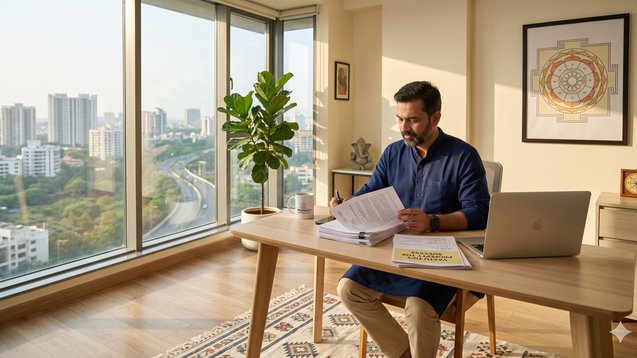
Introduction: Smart Decisions Beyond Location and Price
People consider property investment in India as the most secure method to create wealth which lasts over time. People enter real estate through their single goal of financial growth which begins with purchasing a small flat in a Tier 2 city and ends with their investment in premium apartments located in metropolitan areas. Many investors make this discovery too late because property value changes depend on various factors in each neighborhood. Some homes attract tenants faster. Some properties show appreciation at a higher rate. Other properties remain stagnant because their location provides good conditions. Why does that happen? Property performance over time depends on location and infrastructure and market timing, but its design and property layout also determine its success. Vastu serves as a practical system which helps assess how appealing and practical a space will be to future users who enter through building entrances. Indian investors now focus on property design and building orientation and residential space assessment because they want to invest in markets that include Mumbai and Delhi and Bengaluru and Lucknow and Indore and Coimbatore and Tier 3 towns. Many are now shortlisting properties through platforms like Property Aaj (https://www.propertyaaj.com) to compare options not just on price, but on usability and long-term potential. The Vastu principles show property investors how they should make investment decisions which will lead their investments to success and not only continuation.
Why Vastu Matters in Property Investment
We will examine the situation from a practical viewpoint. People who enter a house to purchase it or lease it do not evaluate Vastu through its technical aspects but rather through their first impressions of the space. A home that receives ample natural light and fresh air and maintains its open design creates an atmosphere of welcoming. A space which has poor lighting and excessive furnishings and disorganized elements creates an experience of discomfort. The demand on the market receives direct influence from this emotional response. The Tier 1 cities experience rapid rental market movement which creates a highly competitive environment where even minor layout variations produce different occupancy results. The functionality of products becomes a main deciding factor for customers in Tier 2 cities who want to find the most suitable option. The residents of Tier 3 towns prioritize comfort and convenience above all other factors because they use properties for personal purposes or keep them as long-term investments.Vastu enables you to discover all its practical benefits after you learn about its complete system.
Choose Properties with Good Natural Light and Ventilation
The fundamental Vastu element which brings maximum benefits to a space operates through natural sunlight. Sunlight that enters a home from eastern or northern directions creates an atmosphere which makes the space feel more open and positive and comfortable for its occupants. This directly improves buyer and tenant interest. In metropolitan areas such as Mumbai and Delhi which feature high-rise buildings natural light access has become a valuable asset. In Tier 2 and Tier 3 cities more space exists yet building design deficiencies create challenges for proper ventilation. Natural daylighting capabilities in a home lead to lower energy expenses while they enhance residents' emotional state and support their well-being. When you visit Property Aaj (https://www.propertyaaj.com) to check listings you should examine the images and floor plan information which shows how light enters and air flows through the space because it will affect your property value in the future.
Prefer Regular-Shaped Plots and Layouts
Designing irregular shapes creates aesthetic value, but it results in real-world design difficulties which designers must solve. The space between furniture items becomes wasted when the room layout does not match its actual dimensions, which makes the area harder to use. The passage of time decreases both the resale value and the demand for rental properties. The design process becomes easier through square and rectangular layouts because they provide simple methods to create spaces and select furniture items and manage the area. The design creates a feeling of equilibrium which makes the space appear bigger than its actual size. The efficient layout design at Tier 1 apartments needs to maximize every square foot of space. The presence of irregular plots in Tier 2 and Tier 3 homes becomes more common, yet these plots still limit the useful space. A simple layout design which contains well-planned elements will provide superior performance throughout an extended period of time.
Entrance Direction and Accessibility
The entrance to a building establishes the most significant impression that visitors will have of the space. The design of northern and eastern entrances to homes creates a more cheerful atmosphere that makes people feel more at home. Buyers of properties will react to the home environment because they will notice how open and bright the space appears even when they do not understand how it operates. The need for accessibility becomes equal in importance to the requirement for directional access. The entrance of the building needs to provide people with easy access to the building. The corridor needs to maintain its cleanliness while providing sufficient illumination. The building exists because there is a proper access road that leads to it. The entrance area of Tier 1 cities which contain large residential complexes extends throughout the building. The independent homes in Tier 2 and Tier 3 cities need to maintain proper access points and visible entrance areas. An entrance that functions effectively brings multiple advantages which include better resident experiences and increased property value.
Avoid Properties with Major Structural Imbalances
There are certain layout problems which become more challenging to repair after their initial implementation. The situation includes two specific elements which demonstrate the pattern. The house design includes bathrooms which serve as central facilities. The building contains rooms which lack windows and artificial light. The building contains large load-bearing beams which extend into its open living space. The kitchen design creates usability problems because of its incorrect location. The two issues will decrease everyday comfort and diminish market value of the property. Homeowners can make small Vastu changes after they buy the property but they will face difficulties and higher costs when they try to fix major building defects. The layout needs thorough assessment because layout assessment requires evaluation before any financial commitment.
Kitchen Placement and Practical Functionality
The kitchen serves as the most frequently used space in every household. The placement of a kitchen space affects both the daily life of people who use it and their ability to maintain their scheduled activities. The design should provide both proper airflow and simple pathways for users to move through the space. Modern apartments show compact kitchen designs because their smaller spaces need more functional solutions than traditional directional systems. Tier 2 and Tier 3 homes provide their residents with increased kitchen space, yet inadequate design can create operational problems. The usability of kitchens becomes a focal point for buyers and tenants, even when they do not express their interest in it.
Bedroom Positioning and Privacy
The value of a property depends on two main factors which are privacy and comfort. Designers need to arrange bedroom spaces to create spaces which provide both peacefulness and isolation from social areas. The southwest zone is often considered stable and suitable for master bedrooms, but the key point is comfort and practicality. Bedroom placement in shared living setups creates direct impact on tenant satisfaction for Tier 1 rental markets. In Tier 2 and Tier 3 homes, family usage patterns make privacy equally important. A well-designed bedroom layout increases both livability and long-term value.
Open Spaces and Flow of Movement
The property maintains better performance because it provides an open space that allows for easy movement throughout all areas. People should avoid homes which create a sense of confinement through their design. The space becomes restricted through poor layout design because it creates a feeling of restricted space despite high square footage. In metropolitan areas people need to maximize their living areas because they have limited space to work with. People should design their homes in smaller cities with spacious areas that maintain continuous flow without using unnecessary partitions. Open spaces provide better comfort and stress relief while improving the overall attractiveness of a space.
Check Surroundings and External Factors
Vastu extends its scope beyond interior design to include assessment of exterior environmental factors. The study requires assessment of nearby roads and connectivity together with evaluation of noise levels and area cleanliness and assessment of future infrastructure development plans. In Tier 1 cities, proximity to metro stations, business hubs, and schools increases demand. In Tier 2 cities, upcoming infrastructure projects can drive appreciation. In Tier 3 towns, basic connectivity and civic amenities are key. The website Property Aaj (https://www.propertyaaj.com) provides tools that allow users to assess property elements together with their respective evaluation criteria.
Legal Clarity and Compliance
The Vastu alignment cannot solve existing legal problems because it has no power to do so. The following items require verification before proceeding to Building Plan Approval, which requires the following documents: RERA registration and Clear property titles and Approved building plans and Proper documentation. RERA regulations require compliance across all states because regulations differ between states. The security system of Tier 1 cities operates with enhanced security through their strict regulations. The process of due diligence becomes more crucial in Tier 2 and Tier 3 cities. A property with legal validity provides its owner permanent financial security.
Think Long-Term: Appreciation and Rental Demand
Effective property investment requires investors to focus on its performance throughout extended time periods. Property investors should evaluate two questions about their planned investment. The first question asks whether the property will bring in tenants without difficulty. The second question requires assessment of whether the layout meets contemporary residential standards. The third question requires assessment of current area development. Tier 1 cities have high rental demand but require expensive entry costs. Infrastructure development in Tier 2 cities creates strong growth opportunities. The affordability of Tier 3 towns leads to consistent development that occurs throughout extended time periods. Property Aaj (https://www.propertyaaj.com) enables users to compare city options and find their optimal investment solutions.
Conclusion: Balance Practicality with Smart Selection
The combination of Vastu with practical thinking will create successful property investments according to its principles. The presence of adequate lighting and proper ventilation in a home design that follows correct building standards will create a space that attracts more potential buyers and renters. The property will maintain its value through the years. You don’t need to chase perfect alignment. The three main aspects of your work need to be evaluated according to their efficiency and comfort and their user experience. The same principles apply to both metro city apartment investments and Tier 2 market investments. The process of successful property investment requires buyers to make wise choices about which properties to acquire.
FAQs
1. Does Vastu really affect property investment returns?
The answer is yes because properties with balanced and functional design elements at the market price show better demand which leads to higher property returns.
2. Which direction is best for property investment?
People generally prefer properties that face north and east but the actual property design and functional performance hold greater importance.
3. Should I avoid properties that are not Vastu-compliant?
The answer is no because you should concentrate on critical matters. The process starts with major problems which need resolution and you can implement small changes after you complete the initial purchase.
4. Is Vastu important for rental properties?
Yes because tenant comfort and perception directly affect occupancy rates.
5. How do Tier 1 and Tier 2 markets differ in Vastu importance?
People in Tier 1 cities need functional spaces because space availability is limited whereas Tier 2 city buyers assess both Vastu and property layout.
6. How can I find Vastu-friendly properties easily?
Property Aaj (https://www.propertyaaj.com) provides a platform that enables you to evaluate properties using their layout design and directional orientation and their functional performance.
Read more about property matters with our specialists and browse the latest property listings on Property Aaj. Download the app from the Play Store and App Store now for easy buying, selling, and renting!