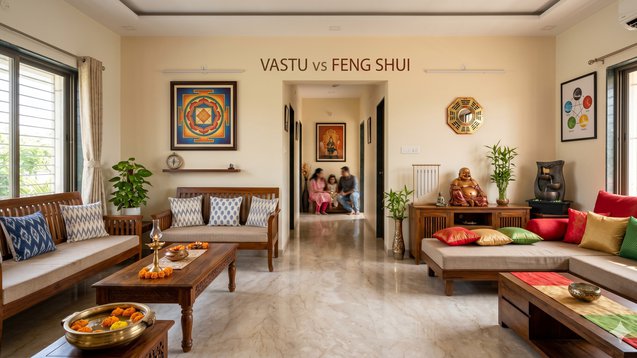
Introduction
People who want to enhance both their home's energy efficiency and its spatial arrangement will discover two widely used systems which are Vastu Shastra and Feng Shui. The two systems offer their users a way to achieve harmony with balance which results in enhanced living conditions through their different cultural backgrounds and philosophical foundations. Most people ask this question because they want to know which of the two options should be selected. People need to make a decision between two options which requires more effort than choosing one particular option. The Indian real estate market currently emphasizes practical solutions for people who want to buy a flat in Mumbai or a villa in Jaipur or an independent home in a Tier 3 town. Buyers search for homes that provide both comfortable living spaces and practical features which will remain useful throughout their future needs. People evaluate properties through Property Aaj which enables them to first assess layout and lighting and usability and then they use Vastu and Feng Shui as supplementary tools which help them make assessments. To determine which system provides superior results, we must assess the complete range of benefits each system delivers to contemporary Indian life.
Understanding Vastu Shastra: The Indian Approach to Space
Vastu Shastra exists as an essential element of Indian architectural designs and traditional practices. The study examines the building process which includes both construction methods and building orientation. The study shows that direction determines human existence because north south east and west directions control different aspects of life. The purpose of this system is to design a residence which follows the natural patterns of sunlight distribution and air movement and magnetic field distribution. Vastu demonstrates its practical application through the following requirements:
The correct arrangement of rooms
Design elements which depend on specific directions
Spaces which maintain open areas and achieve symmetrical design
The use of natural light and fresh air circulation
Vastu remains a significant factor for property buying decisions throughout India especially in Tier 2 and Tier 3 cities. Many buyers in Tier 1 cities choose homes which partially adhere to Vastu principles. Property Aaj (https://www.propertyaaj.com) shows multiple listings with Vastu-friendly layouts because builders create their projects according to this market requirement.
Understanding Feng Shui: The Chinese System of Energy Flow
Feng Shui originates from China and studies how energy moves through spaces by studying Chi energy flow. Feng Shui provides more flexible design options than Vastu because it does not depend on specific direction requirements. The system evaluates energy movement through two elements which include object positioning and environmental energy distribution. The essential components of Feng Shui include through which elements include three main elements. The system uses furniture placement and color selection together with element choice to establish energy equilibrium while creating pathways for energy flow and eliminating obstacles. Existing homes use Feng Shui more effectively because its methods require no building modifications. Homeowners in urban Indian apartments find Feng Shui suitable for their Tier 1 city homes because it operates effectively in their small living areas.
Core Difference: Structure vs Arrangement
The biggest difference between Vastu and Feng Shui lies in their approach. The field of Vastu requires people to follow specific guidelines. The construction process of a house needs Vastu to determine its building methods and room arrangements and directional alignments. Feng Shui permits users to choose their own design elements according to their personal preferences. The system helps users design their spaces through furniture arrangement and color selection and object placement to create better energy flow throughout the environment. Vastu requires you to devise house construction plans while Feng Shui requires you to design interior spaces. The distinction between these two systems helps people choose which system to follow. Vastu becomes relevant for people who want to purchase new properties. Feng Shui implementation becomes simpler for people who already exist in their current home.
Which Works Better in Modern Indian Apartments?
Let's approach the situation with a realistic viewpoint. The majority of residents in Tier 1 cities which include Mumbai and Delhi and Bengaluru, live in apartments that have predetermined designs. The building supports must remain intact because major structural alterations are prohibited. The situation requires complete Vastu compliance which proves to be unachievable. Feng Shui, with its flexible approach, becomes easier to apply. The process allows you to change furniture positions and enhance lighting conditions and modify interior spaces through minor alterations.The planning of new developments in Tier 2 cities now includes Vastu principles which architects use to guide their work. The location offers you an opportunity to achieve equilibrium between unbending construction standards and adaptable design elements.
The construction process in Tier 3 towns which feature more independent homes permits Vastu compliance to remain intact. Your property type determines which option proves to be the superior choice.
Impact on Property Value and Buyer Demand
The market value of Vastu in India has a greater impact on property assessments than any other factor. A Vastu-friendly property: Attracts more buyers Is easier to sell Often commands better resale value This situation exists particularly in Tier 2 and Tier 3 markets. Feng Shui, while useful for improving interiors, does not significantly impact property value in the Indian context. The difference between these two things becomes important when you invest in real estate. Property Aaj users who search for properties on the website (https www.propertyaaj.com) use Vastu compliance as their main property filtering criterion in specific areas.
Scientific and Practical Perspective
From a practical perspective both systems maintain identical operational functions. The two systems share several essential elements which they both present as their central focus. The two systems show their main focus through three essential elements which include: The first element requires The second element needs The third element demands The fourth element needs. The basic design principles which these ideas represent exist as actual design principles without any mystical connection. The first example shows that a clutter-free home improves focus. The second example shows that natural light boosts mood. The third example shows that organized spaces reduce stress. The principles of Vastu and Feng Shui create better living conditions through their dedicated application.
Common Misconceptions About Both Systems
Many people misunderstand both Vastu and Feng Shui. People believe that these two things guarantee wealth or success and they think that small changes can solve major life problems and they believe that perfect alignment is necessary. People believe these statements as myths. People need to establish their financial planning and career development and decision-making skills because neither system functions as a complete replacement. Your environment will receive support from them but your life will remain beyond their capability to control.
Cost and Implementation: What’s More Practical?
The Vastu system needs structural alterations which become mandatory for its complete implementation. The process brings additional expenses because of this requirement. The flexible nature of Feng Shui makes it more accessible for implementation at a lower cost than other systems. Urban modern homes need both cost efficiency and functional value as essential elements. Homeowners tend to select a hybrid method because it allows them to apply Vastu principles and use Feng Shui methods for their indoor modifications.
A Balanced Approach for Indian Homebuyers
What actions should you take now? If you’re buying a property: First check the location and budget and legal requirements of the property. The layout and ventilation and usability of the space should be examined. Vastu should be treated as a personal choice rather than a binding requirement. Existing home renovations require homeowners to implement Feng Shui-based design changes throughout their interior spaces. The process requires people to remove unnecessary items from their space and create organized systems. The project requires people to enhance both their lighting systems and their capacity to distribute air. Platforms like Property Aaj (https://www.propertyaaj.com) provide users with tools to assess properties according to actual environmental conditions which helps them create optimal assessment processes.
Conclusion: It’s Not About Better It’s About What Works
Which is superior to Vastu or Feng Shui? The honest answer is: neither is universally better. Vastu is more relevant for construction and property buying in India. Feng Shui provides better flexibility for people who need to make interior space changes.Your living experience will improve more through actual improvements than through choosing one option at random. A complete home design needs to provide comfort while maintaining operational efficiency because it offers better value than a space which adheres to design rules but lacks functional design. The two systems should be used as operational tools because they restrict your ability to work. Your ideal home exists as the space which meets all your personal requirements because it functions perfectly for you.
FAQs
1. Which is better, Vastu or Feng Shui?
Neither system has universal superiority because Vastu serves construction needs while Feng Shui provides better guidance for interior design work.
2. Is Feng Shui popular in India?
The practice is becoming more popular in cities but Vastu remains the more prevalent tradition.
3. Does Vastu affect property value?
In India Vastu-compliant homes demonstrate higher market demand and resale value.
4. Can I use both Vastu and Feng Shui together?
Homeowners frequently use both systems to create their ideal home design.
5. Is Feng Shui cheaper to implement?
The answer is yes because Feng Shui implementation requires only furniture movement without any need for building modifications.
6. Should I prioritize Vastu when buying property?
You should consider it but actual property needs assessment should begin with location and layout and legal aspects.
Read more about property matters with our specialists and browse the latest property listings on Property Aaj. Download the app from the Play Store and App Store now for easy buying, selling, and renting!