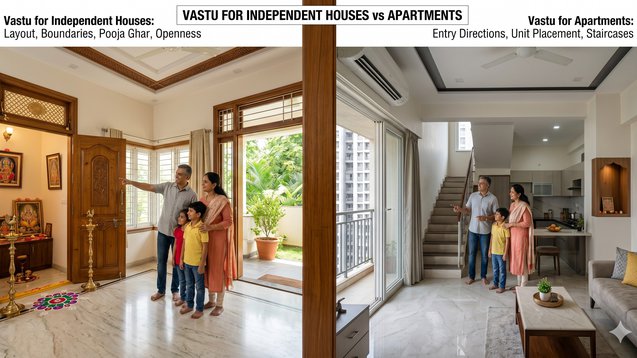
What Really Works in Modern India
Introduction:
The home search process in India begins with two important questions which people keep silent during their search. The question becomes crucial when a person needs to choose between two different housing options. Independent houses appear to provide superior Vastu benefits when people evaluate both housing options. The user obtains full authority to decide all aspects of design and layout and building orientation. People choose real estate properties today through multiple decision-making pathways. Cities with restricted land area availability present apartments as the main housing solution. The independent home remains the preferred housing option in developing towns. The better option between two choices does not exist; instead Vastu needs to be examined through its practical applications in each situation. Property Aaj (https://www.propertyaaj.com) enables buyers to evaluate multiple aspects of their property through direct side-by-side comparisons which include both directional orientation and property layout and property functionality and future market value estimation.
We will explain the home buying process through its modern steps which reflect actual consumer behavior.
The Core Difference: Control vs Constraint
The primary distinction between independent houses and apartments centers around control rights. An independent house provides you with complete authority to design all aspects of the house including its entrance path and room arrangement and outdoor area design. This design approach enables better adherence to Vastu principles through its increased simplicity. Efficiency defines apartment design because it needs to accommodate multiple residential units which results in standardized building layouts that developers must use. The available options show existing products which buyers must select instead of creating personalized designs. But here’s something many people don’t consider. More control over housing systems does not increase residential space quality. A poorly planned independent house can feel cramped or inefficient, while a well-designed apartment can feel open, comfortable, and practical despite minor Vastu compromises. The actual comparison assesses two different aspects which determine the effective application of adaptable features.
How Vastu Works in Independent Houses
How Vastu Works in Apartments
The architectural design of apartments establishes predefined boundaries which restrict buyers from modifying any building components. The builder has already established the entrance direction together with room locations and the complete building design. The design requirements of Vastu Shastra make it impossible to achieve full compliance with its standards in apartment buildings. Vastu Shastra still maintains its importance despite this fact. The practice of Vastu Shastra changes from its original form to a new flexible form. Buyers nowadays prefer Vastu-compliant features which they consider better than existing options. Buyers choose to buy properties which have east-facing living rooms that provide enough light for their needs and kitchens that offer sufficient airflow even if these spaces do not match their ideal location. The website Property Aaj (https://www.propertyaaj.com) displays this trend through its property listings which showcase both layout efficiency and natural light as essential design elements and Vastu requirements. The method functions effectively within urban spaces because it maintains essential usability factors together with its need for space.
Entrance and First Impressions
The entrance is one of the most talked-about aspects of Vastu, and it behaves differently in independent houses and apartments. In an independent house, you can choose the entrance direction during the design phase, which makes it easier to align with traditional preferences like north or east-facing entries. In apartments, however, the entrance direction is tied to the unit you select. This means buyers often have to compromise. Interestingly, in Tier 1 cities, many buyers are less rigid about entrance direction because factors like location, connectivity, and amenities take priority. What remains consistent across both property types is the importance of how the entrance feels. A clean, well-lit, and welcoming entryway creates a positive impression regardless of direction. This is one area where simple design choices can make a noticeable difference.
Room Layout and Daily Living
Room placement is where the difference between independent houses and apartments becomes more visible. In an independent house, you can position rooms according to Vastu principles, such as placing the master bedroom in the southwest or the kitchen in the southeast.In apartments, room placement is fixed, so buyers adapt instead of redesigning. This often involves arranging furniture thoughtfully, choosing the right sleeping directions, and ensuring that each space is used efficiently. What’s interesting is that many modern apartment layouts are already designed with functionality in mind. Even if they don’t follow Vastu perfectly, they often provide good flow, ventilation, and usability. In real life, these factors tend to have a stronger impact on comfort than strict directional alignment.
Open Spaces, Light, and Ventilation
The primary benefit of independent houses enables residents to design their properties with outdoor areas. Vastu permits you to design gardens and terraces and internal courtyards because these spaces create natural airflow and visible space in your building design. The available outdoor areas of apartments located in crowded urban regions prove insufficient for their residents. The buildings achieve superior height and their windows expand in size while the architectural design delivers better airflow throughout the space. The experience of living in a higher-floor apartment with proper sunlight exceeds the experience of residing in an independent house that has buildings surrounding it. Independent houses permit higher potential achievement but actual results depend on how well execution works. Well-designed apartments provide bright and airy living spaces which most people desire as their primary requirement.
Cost, Practicality, and Market Trends
Homebuyers decide which type of residence to purchase based on their financial situation and their preferred neighborhood. Most buyers in Tier 1 cities choose apartments because high land prices make other options unfeasible. The premium market restricts access to independent houses for buyers who reside in these regions. Tier 2 cities provide their residents with multiple housing choices. Some people select apartments because they offer convenience, while others prefer to live in independent houses which provide them with greater freedom to design their spaces. People in Tier 3 towns prefer independent houses, while Vastu principles become more important for them when they make their choices. Vastu has less impact on property value than location and infrastructure and demand for the property. Buyers using Property Aaj (https://www.propertyaaj.com) conduct comparisons between these elements to establish balanced assessments which help them evaluate properties for their long-term worth.
Buyer Mindset: Tradition Meets Practicality
The principles of Vastu extend beyond building design to include the emotional responses that people have toward their residential spaces. Buyers who purchase independent houses demand Vastu compliance because they possess the ability to create their preferred design style. The apartment market shows buyers who adopt an open-minded approach. Buyers are willing to accept minor deviations as long as the home provides them with both comfort and functionality. The shift has become most evident in Tier 1 cities because residents there prioritize their modern lifestyles instead of following established customs.The traditional beliefs of Tier 2 and Tier 3 markets maintain their significance but practical needs begin to gain more importance. The contemporary understanding of Vastu exists as a result of people combining traditional beliefs with their modern thought processes.
Common Mistakes Buyers Should Avoid
The first mistake people make is to think that independent houses always perform better because they can implement Vastu principles more effectively. The design of their space needs to be organized first before they can achieve their desired apartment efficiency results. People base their apartment rejections on minor Vastu problems because they do not recognize the apartments' excellent location advantages and their convenient access to public transportation and their complete facility features. Some buyers also attempt to implement Vastu changes that decrease usability which results in their home becoming uncomfortable for them to live in. The key is to avoid extremes. The two options of complete belief and total denial both fail to produce effective outcomes. A balanced approach leads to better decisions.
Conclusion: It’s About Living Well, Not Just Following Rules
The assessment of Vastu between independent houses and apartments leads to an outcome which shows two options that work together with your life requirements and financial capacity and your main objectives. The Vastu principles can be followed through independent houses because they provide flexible building options. The urban environment benefits from apartment buildings which need fewer changes than other types of buildings because they provide better access and operational efficiency. A person needs to create a residence which provides them ease of use during their daily activities while maintaining its worth throughout time. Vastu can contribute to this, but it should not override practical considerations. Your decision will succeed when you understand all aspects of your situation to evaluate both property types. The property comparison tool at Property Aaj (https://www.propertyaaj.com) enables you to evaluate different properties while making your final decision which will meet your life requirements and your Vastu needs.
FAQs
1. Is Vastu easier to follow in independent houses than apartments?
The design of independent houses provides greater flexibility because their entire layout can be created from the beginning. The house needs appropriate planning to maintain operational efficiency and comfortable spaces while achieving Vastu requirements.
2. Are apartments always less Vastu-compliant?
The structural design of apartments prevents them from achieving complete Vastu compliance which results in partial Vastu implementation. The design of modern apartments aims to create Vastu-friendly spaces which combine traditional design elements with the needs of contemporary life.
3. Does Vastu matter more in Tier 3 cities compared to Tier 1 cities?
Vastu compliance holds greater importance for homebuyers in Tier 3 cities than in other regions. In Tier 1 cities people choose to focus on practical aspects and geographical factors instead of following Vastu regulations exactly.
4. Can a well-designed apartment feel better than a Vastu-perfect house?
Absolutely. A home with good layout, ventilation, and lighting can feel more comfortable than a poorly designed house, even if the latter follows Vastu perfectly.
5. Should I reject a property due to minor Vastu issues?
Not necessarily. Most minor problems can be resolved by making changes to how furniture is arranged and how spaces are used. The overall quality and usability of the home should be assessed before evaluation starts.
6. How can I compare properties based on layout and Vastu?
You can explore platforms like Property Aaj (https://www.propertyaaj.com) to compare different properties based on layout, pricing, and features, helping you make a more informed decision.
Read more about property matters with our specialists and browse the latest property listings on Property Aaj. Download the app from the Play Store and App Store now for easy buying, selling, and renting!