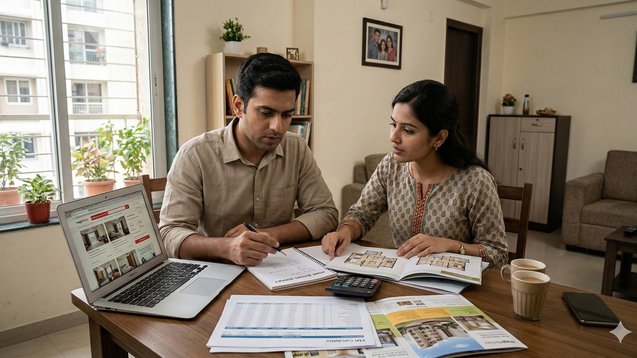
Introduction: The Classic Homebuyer Dilemma
The primary inquiry which Indian homebuyers make relates to the decision to purchase property or to postpone their buying decision for several years until they can accumulate sufficient funds. The option to wait for financial reasons appears to be the most responsible choice. A greater down payment enables borrowers to decrease their total loan amount which results in reduced monthly payments and gives them the option to select superior properties. Yet simple solutions do not exist for this situation. The Indian real estate market operates through multiple forces which include property value increases, interest rate changes, inflation trends, and individual economic conditions. Properties in Mumbai and Bengaluru and Delhi NCR have shown continuous price growth because of decreasing land availability and their high market demand. The real estate market in Tier 2 cities like Pune and Lucknow and Indore develops through the construction of new infrastructure and the establishment of new employment opportunities. Urbanization in India leads to increased demand for housing in Tier 3 cities throughout the country. The requirement for better financial resources leads to higher future property prices because of the current financial conditions in the market. Homebuyers who decide to buy a house before they develop enough financial resources will experience monetary difficulties which will continue through multiple years. People must understand that home loans represent long-term financial responsibilities which will impact their personal living choices and their ability to save money and their career path. Buyers need to assess their financial status together with prevailing market factors before they reach their purchasing decision. The website Property Aaj (https://www.propertyaaj.com) provides buyers with tools to examine property values and assess different locations while they evaluate purchasing options in various cities to determine their best timing choice between immediate buying or future waiting.
Understanding the Financial Advantage of a Larger Down Payment
Property purchases become more affordable when buyers increase their savings before making their purchase. The borrower needs to pay less money to the bank when they make a larger down payment because it decreases their total loan amount which results in decreased monthly payments and interest costs. A buyer who wants to buy a ₹60 lakh property needs to pay 20% of the purchase price as down payment which equals ₹12 lakh. The buyer must obtain ₹48 lakh of financing through a loan. The buyer will need to borrow less money from the bank after waiting for a few years because they will increase their down payment from 20% to 35%. The borrower will save hundreds of thousands of rupees throughout the entire loan period because of this advantage. Indian banks require borrowers to make a down payment of 10 to 20 percent which varies according to the loan size and the borrower's financial situation. Financial experts recommend that borrowers should pay more than the minimum percentage because this practice establishes better financial security for their future. Higher down payments enable borrowers to secure their loans more easily while also giving them power to negotiate better interest rates with their lenders. Buyers who possess strong financial capability can enter the housing market at any moment when suitable properties to buy become accessible. The process of saving for a larger down payment takes considerable time because property prices keep increasing during that duration.
The Risk of Property Price Appreciation While Waiting
The main danger of waiting to make your decision lies in the risk that property values will rise at a faster rate than your savings capacity. This situation occurs frequently in areas that experience rapid urban development. The construction of multiple infrastructure projects throughout India has caused residential markets in surrounding areas to experience rapid price growth. Property values experience immediate growth after the completion of metro rail extensions and expressway road construction and the establishment of new business centers. The residential property market in specific regions of Bengaluru and Hyderabad has seen substantial price growth since the establishment of new IT corridors. The cities of Ahmedabad and Pune have observed property value growth because better transportation links and industrial development have occurred. Real estate prices in Tier 3 cities with lower property values usually increase when nearby development projects bring universities and manufacturing centers and highways to the area. The waiting period for buyers leads to a situation where their planned property purchase becomes financially unreachable. The savings accumulated during the waiting period may not be enough to offset rising property prices in such cases. The buy-versus-wait decision requires market timing to become a critical element of the process.
Interest Rates Can Change Over Time
Home loan interest rate changes represent a critical element that requires evaluation. Reserve Bank of India policies and current economic conditions determine the housing loan rates that exist in India. Low interest rates enable cheap borrowing which helps buyers to purchase homes more easily. The pattern of interest rate cycles operates on a timeline that extends beyond present-day events. Postponing a purchase until future time will lead to higher EMIs when interest rates increase even though property values will stay the same. A 1 to 2 percent interest rate difference leads to substantial repayment cost differences throughout a 20-year loan period. Buyers who want to build equity at the start of property ownership in lower interest rate periods. Some buyers will wait because they expect interest rates to decrease to lower levels in the future. Property Aaj (httpswww.propertyaaj.com) offers loan comparison tools which let users analyze financing costs for better financial decision making.
Rent Versus EMI: The Cost of Delaying Ownership
The expense of paying rent until the home purchase takes place functions as another practical aspect that needs to be considered. In India, many cities display rental costs which become major financial burdens for residents yet do not create any potential wealth accumulation.
The annual cost of a tenant who pays monthly rent at ₹25,000 amounts to ₹3 lakh. The total cost for five years reaches ₹15 lakh from this expense but does not result in any ownership value creation. Homebuyers who make early property purchases transform their housing costs into financial investments. Property owners establish ownership rights to their real estate through each EMI payment that they make. The rental agreement provides tenants with the ability to adjust their living situation according to their current requirements. Tenants can easily relocate for job opportunities without worrying about selling property. Young professionals who require frequent work related city moves find this particular form of flexibility to be extremely important. The buyer needs to decide between two options which present different benefits based on their current life circumstances.
Job Stability and Financial Security Matter
The best time to purchase property occurs when buyers maintain their financial situation in a state of stability. People who wait to accumulate additional funds will achieve a safer financial position at work. Young professionals in their early stages of work continue to investigate different employment options and various locations. Most people who take out home loans at this point of their life will face two main challenges, which include reduced ability to move and extra pressure. Early real estate acquisition provides direct advantages to people who maintain stable income streams and develop plans for their extended professional growth. Self-employed professionals and entrepreneurs may also prefer to build stronger financial reserves before committing to a home loan. The larger savings reserve helps them to maintain their financial stability during times when their earnings decrease. Proper financial readiness requires more than having sufficient funds for a down payment. The evaluation process requires assessment of job security and emergency funds and the ability to generate stable income in the future.
Psychological Comfort and Lifestyle Considerations
The process of buying property requires people to assess both financial aspects and their emotional connection to the property and their way of living. Homeownership delivers to people an enduring feeling of security combined with a personal milestone achievement. Homeownership serves as a security measure which provides Indian families with permanent stability. Parents usually choose to buy homes in safe neighborhoods which allow their children to experience comfortable growth. Younger people who want to advance their careers through travel should choose to rent their housing until they establish permanent residency. The process of waiting to gather additional funds will enable you to select a superior home in an improved area. The process of waiting too long will create delays that affect your essential life events including family formation and permanent relocation to your chosen city. People need to find a way to combine their financial needs with their life targets before they reach this point between real life and theoretical existence.
Regional Differences Across Indian Cities
The timing of the decision to purchase property depends on the particular city where the buyer intends to buy a property. In Tier 1 cities, where property prices are extremely high, waiting to save more may help buyers afford better locations or larger homes. The cities experienced price increases which created financial burdens for those who chose to postpone their purchases. Tier 2 cities provide people with good opportunities because property prices remain low while infrastructure development progresses to create future market expansion. The price structure in Tier 3 cities establishes an entry point which enables buyers to enter the property market at a younger age. The local economic growth and development projects produce different appreciation rates for the area. Buyers use Property Aaj (https://www.propertyaaj.com) to investigate regional trends while they assess different market possibilities across various locations.
Government Policies and Tax Benefits
The Indian government establishes homeownership incentives through its regular implementation of new benefits. Home loan interest deductions together with principal repayment deductions offer taxpayers a way to decrease their total financial obligations. Firsttime homebuyers receive benefits through certain programs which provide either subsidies or preferable loan terms. State governments establish stamp duty rates which they change at regular intervals to determine the total expenses involved in property transactions. Some buyers may gain advantages from postponing their purchases until better policy conditions become available but these beneficial situations remain unpredictable. Buyers who possess sufficient financial resources tend to make their purchases instead of waiting for uncertain future rewards. People need to grasp both legal requirements and financial elements of property deals because this knowledge helps them choose their best timing for property purchases.
Conclusion: The Right Time Depends on Your Situation
The decision about whether to buy property now or to save more before making a purchase needs to be decided through an evaluation of both market conditions and personal financial situation and professional development and individual needs. Homebuyers who wait until they have saved additional funds before making their purchase will experience lower financial stress and gain access to superior housing options. Buyers who postpone their property purchase face multiple dangers which include rising real estate costs and fluctuating mortgage rates and extended periods of rental payments which do not result in property ownership. People who possess a stable income and emergency funds and plan to remain in one city for an extended period should consider buying their first home sooner. The people who still need to establish their financial foundation should wait before making any major financial commitments. Through their property research and comparison work, Property Aaj (https://www.propertyaaj.com) enables buyers to assess various property options throughout India while determining the ideal moment to enter the real estate market. The best choice determines your financial strength and life objectives.
FAQs
1. How much savings should I have before buying a home in India?
Your savings should reach 20 to 30 percent of your home value according to financial experts. Your total costs include your down payment and registration charges and stamp duty and emergency reserves that cover unplanned costs.
2. Is it risky to buy property early in your career?
The situation becomes hazardous when your income remains unstable and you plan to move between cities. When your job situation remains steady and your work location stays the same for a long time, purchasing property at an early stage helps you accumulate wealth over time.
3. Do property prices always increase in India?
Property values experience long-term growth because of inflation and urban development, yet their worth can change during short periods due to market dynamics and infrastructure progress and economic shifts.
4. Should I buy property if I am currently paying high rent?
When your rent equals potential EMI payments and you intend to remain in the city for multiple years, purchasing property becomes a beneficial long-term financial decision.
5. How do interest rates affect the decision to buy a home?
The home loan costs decrease when interest rates fall, which leads to lower monthly payments and total repayment expenses. Rising interest rates increase borrowing costs, which may affect affordability for many buyers.
6. How can I compare property options across different cities?
Online real estate platforms such as Property Aaj (https://www.propertyaaj.com) allow buyers to compare pricing, amenities, and locations across multiple cities, helping them make informed decisions.
Read more about property matters with our specialists and browse the latest property listings on Property Aaj. Download the app from the Play Store and App Store now for easy buying, selling, and renting!