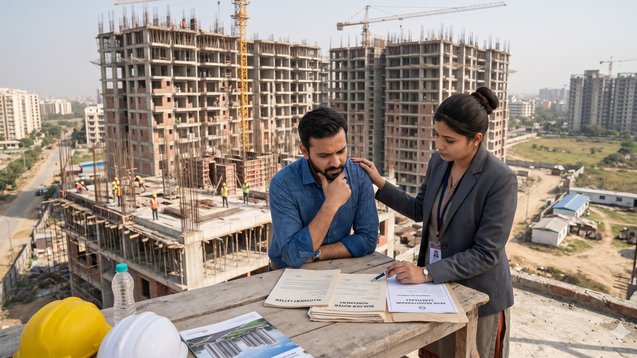
Introduction: The Big Question Is Buying Under-Construction Worth It in 2026?
The Indian real estate market faces one persistent question that requires resolution for all buyers. Home buyers must decide between purchasing properties that are still being built and those that are immediately available for occupancy. The lower starting costs of under-construction projects attract buyers who want to benefit from future value increases. Buyers face two types of risks because they invest\nin into projects that remain under construction which will only become clear after they buy these projects. The current situation in 2026 shows different conditions from those present in 2016. RERA has increased transparency because developers now face greater responsibility for their actions. The current risks need to be handled through different methods than previous approaches. The same basic elements apply to premium projects in Gurgaon and mid-segment apartments in Noida and affordable housing units in Nashik and Indore which are located in Tier 2 cities. You are putting money into an asset that has not yet reached its ultimate development stage. The real question asks whether people consider construction projects as beneficial or harmful. The essential question requires users to determine which situations require them to use construction projects and which situations require them to stay away from these projects. The following explanation presents everything in a way that people can understand through real-life experiences.
Understanding What “Under-Construction” Really Means
An under-construction property is any project that is still in the development phase and has not received a completion certificate. The construction timeline of projects extends from their initial development phase to their final construction phase when developers anticipate project completion within the next two years. The stage of construction plays a major role in determining both risk and pricing. The least expensive projects exist at their earliest development phase and carry the greatest level of uncertainty. The project costs near completion but provides better project visibility and decreased project risk compared to other stages of development. Many buyers fail to differentiate between these stages and treat all under-construction properties the same which can lead to poor decision-making.
The Biggest Advantage: Lower Entry Price
The main reason buyers select properties which are still being built is because of their affordable pricing. Developers use discounted prices during initial project development stages to secure funding while attracting initial customers. Buyers can purchase properties at much lower than existing market prices which apply to ready-to-move properties. A 2 BHK apartment which is still being built in Noida Extension shows a price range of ₹50 to ₹60 lakh whereas a comparable ready-to-move unit in that area has a price range of ₹70 to ₹90 lakh. The price difference between these two options brings significant impact to first-time buyers. The decision with regard to the project requires assessment of three main elements which include project worth for investors, developer requirements, and necessary operational expenses. The team needs to assess all three elements through their established assessment process.
Flexible Payment Plans: Reduced Financial Pressure
The flexible payment plans which developers of under-construction properties provide serve as one of their primary benefits. Buyers make payments in multiple stages which depend on how much construction work has been completed instead of making one big payment at the start. The solution helps people who work in salaried positions because it decreases their financial obligations. Developers provide developers subvention schemes and deferred payment options which help developers control their money flow. Buyers need to understand the hidden requirements which come with these programs according to their terms and conditions.
Appreciation Potential: Gains Over Time
Under-construction properties provide better appreciation potential than already completed homes. The value of a property increases when its project development reaches completion and surrounding infrastructure development occurs. The investors can gain profit through price increases which occur before they receive their property rights. The emerging areas of Greater Noida West and Gurgaon new sectors and Tier 2 city developing zones contain particular relevance to this matter. The market value of a property will increase through appreciation but this process lacks any guarantees. The process depends on three factors which include location and demand and overall market conditions.
Customisation Options: More Control Over Your Home
Homebuyers who purchase properties at the construction stage of development receive opportunities to select custom home features. Homebuyers can select from three types of changes which include layout alterations and interior design choices and extra building components. The option exists for buyers who want custom home designs to select their preferred option although not all developers provide this feature.
The Biggest Risk: Project Delays
The main problem that affects all construction sites which are currently working on projects has become delays. The RERA regulations create a framework for construction projects yet various financial challenges and approval requirements and construction difficulties lead to project delays. The project which received a three-year completion commitment now requires five years to finish and may take even more time. Homebuyers face a double financial burden because they must pay both their rent expenses and their home loan commitments. The evaluation of a builder's previous work history functions as an essential requirement which investors must complete before they start their financial commitment.
Construction Quality Uncertainty
The process of purchasing an incomplete building requires you to place your complete trust in the construction company to deliver high-quality results. The finished product of a property which is ready for immediate occupancy cannot be examined by potential buyers until they make their buying decision. The sample flats show a general idea of what to expect but they display the most favorable outcome instead of showing what will actually be delivered to customers. The builder's previous work requires assessment because of the existing uncertainty.
Legal and Approval Risks
The Real Estate Regulatory Authority provides better property transparency but smaller cities still face legal hazards. Projects encounter delays or complete shutdowns because of land ownership disputes and approval processes and environmental clearance requirements. Buyers must ensure that all necessary approvals are in place before investing. The process creates permanent issues which extend beyond the present time.
Market Risk: What If Prices Don’t Increase?
People purchase properties that are not yet complete because they believe their value will increase. The current market conditions exist because there is no active market process. When supply levels rise to excessive amounts while demand levels drop, price movements will either stay the same or start to decrease. The situation occurs most frequently in regions that maintain large quantities of available stock, which includes specific areas within NCR. Investors need to study how demand and supply work together in a particular area before they make their investment decision.
Builder Risk: The Most Critical Factor
The biggest risk in under-construction projects is not the market it exists in but the builder who is responsible for construction. A reliable builder can deliver on time and maintain quality and ensure legal compliance. An unreliable one can create years of delays which result in long-term financial difficulties. The process of builder selection requires more importance than both pricing and amenities because it determines all future project outcomes.
Tier Comparison: Risks Across Different Cities
The cities which include Delhi NCR and Mumbai and Bangalore demonstrate better regulatory frameworks together with increased transparency. The market reaches a state of domination by large developers who provide some protection against business risks. The development of Tier 2 cities and Tier 3 cities faces increased danger because these areas lack proper regulatory frameworks while their development needs remain unmet. The markets offer two pricing advantages which provide greater cost savings to customers. The system requires users to choose between two opposing factors which include danger and cost efficiency.
Who Should Consider Under-Construction Projects?
The best time to purchase under-construction properties exists when buyers need to wait until their future living space becomes available. The properties serve as perfect investment opportunities for both long-term investors and first-time buyers who seek more affordable entry costs. The solution works well for buyers who require immediate access to the property but who cannot tolerate waiting times. The decision-making process requires you to understand your timeline first before you proceed.
How to Reduce Risk While Buying
A structured method operates as the essential requirement for decreasing risks. Buyers need to check RERA details and investigate builder history while inspecting their completed projects. The process of examining different choices leads to increased understanding of the situation. The platform Property Aaj (https://www.propertyaaj.com) enables buyers to access confirmed property listings while they track market price developments and assess construction companies.
Investment Perspective: Balancing Risk and Reward
Under-construction properties present investors with both risk elements and potential financial returns. The possibility of property value increase leads to higher potential earnings but creates greater risk of unpredictable outcomes. The success of an investment will be determined by selecting an appropriate construction project which is currently at its optimal development phase and requires the right construction contractor.
Conclusion: Not Risky If You Know What You’re Doing
The projects which are currently under construction do not include any dangerous elements. Danger arises from two factors because people do not know things and because they make bad choices. When assessed through proper evaluation methods, they deliver outstanding value and long-lasting benefits. The key to success requires people to maintain their focus on practical matters. The essential elements to evaluate are builder reputation and legal transparency and location development possibilities. The trusted platforms which include Property Aaj (https://www.propertyaaj.com) allow users to compare different options which helps them make better decisions. The most intelligent choice in real estate investment requires investors to understand and control risk instead of trying to eliminate it altogether.
FAQs
1. Are under-construction properties safe to buy?
The project becomes safe for purchase when it receives RERA approval and the developer proves his reliability.
2. What is the biggest risk?
The most frequent problem which arises during projects shows itself through project delays.
3. Do under-construction properties appreciate more?
Properties under construction usually experience greater value growth potential which depends on existing market conditions.
4. Can I customize my home?
Some builders allow limited customisation during construction.
5. Should I invest for short-term gains?
The best investment choice for under-construction projects requires investors to commit
their funds for extended periods.
6. How can I reduce risk?
The website Property Aaj (https://www.propertyaaj.com) enables users to compare projects which have undergone verification.
Read more about property matters with our specialists and browse the latest property listings on Property Aaj. Download the app from the Play Store and App Store now for easy buying, selling, and renting!