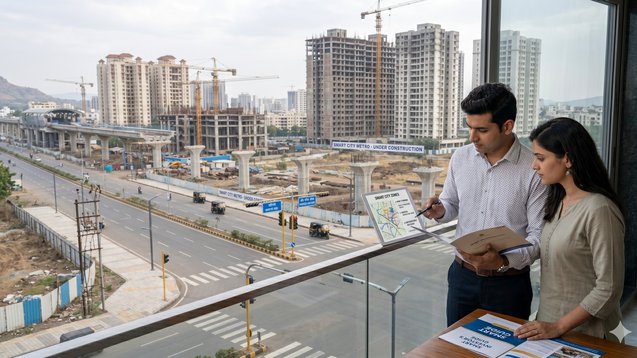
Smart Cities in India Best Places to Invest Early
Introduction
The real estate market in India has shown continuous growth throughout the past years according to the one term which appears most frequently in research on this field Smart Cities. The term has evolved beyond its government use because it now affects property investment decisions throughout various regions. Smart city initiatives provide citizens better living conditions through their infrastructure developments which include advanced road systems and digital network enhancements and upgraded water distribution systems and better city development methods. The main issue requires us to investigate whether initial investments in these cities provide financial benefits. The short answer is yes but only if you understand where to look and what to expect. Smart cities operate beyond the boundaries of major urban centers which include Bengaluru and Pune according to their definition. The actual investment potential resides in cities which have been designated as Tier 2 and Tier 3. These locations maintain ongoing development of their infrastructure while their current costs remain low and their user base enters its initial expansion period. This market presents buyers and investors with a special opportunity. The market currently exists between entry level pricing and approaching market saturation. This blog will analyze the connection between smart cities and property investment while identifying the top investment areas through India. The platform Property Aaj (https://www.propertyaaj.com) enables users to make intelligent decisions which will prepare them for future developments.
What Exactly Are Smart Cities in India?
The term smart city needs proper definition before we proceed to evaluate investment opportunities in India. The government established the Smart Cities Mission program which provides financial aid and urban planning assistance to more than 100 selected cities for their urban development projects. The project encompasses all aspects of urban development which include smart traffic management systems and electronic government services and waste disposal systems and public green areas. Many investors fail to recognize that smart city construction requires multiple development stages which take time before reaching completion. The development process occurs through multiple stages. A city initiates its development process by enhancing both its transport systems and street infrastructure. The city later develops its business areas before constructing new residential districts. The initial investment prospects of this particular development model emerge through its process of gradual progress. Smart cities in Tier 1 cities use advanced technologies to enhance current building systems. The real estate market in Tier 2 and Tier 3 cities undergoes fundamental changes through these development initiatives. Which investment option do you prefer: investing in markets that maintain steady growth rates or investing in markets that experience fresh growth?
Why Early Investment in Smart Cities Makes Sense
Real estate needs time to show its true value which makes smart cities an ideal investment opportunity. Property values experience a delay after infrastructure development announcements because they need time to reach their full potential. Demand reaches its peak after a period of two to five years following infrastructure development. This situation enables early investors to gain maximum profits. Let’s take a hypothetical scenario. A buyer invests in a developing smart city zone near a proposed metro corridor. At the time of purchase, connectivity is average, and prices are affordable. The property value increases substantially after five years because the metro system starts operating and commercial areas begin to develop. This pattern has already played out in cities like Pune and Ahmedabad. Platforms like Property Aaj (https://www.propertyaaj.com) help users discover early-stage investment chances because they provide property listings in developing areas alongside established markets. Early investment isn’t about luck, it's about spotting infrastructure before it fully reflects in pricing.
Tier 1 Cities: Stable but Limited Upside
Tier 1 metropolitan areas will be the most stable with little upside their government sponsored Smart City Projects help modernize what is already built, while creating no new room for increased building density. Therefore, in these cities, you have very limited options to find potential for significant price appreciation (value increase is already at high values). The price of homes will grow slower in Tier 1 Cities, because (as an example) building more roads creates new values for developing a piece of land versus already developed). However, rental rates continue to increase in all of Tier 1 Cities. Therefore, if your investment goal is to seek consistent rental income; Tier 1 Smart City Zones are still good for real estate investments. As an example, areas around (within 3 km.) transit lines or office parks will remain constant tenants. However, if you are focused on capital appreciation, Tier 1 cities no longer offer the “early investor advantage”. Overall, Tier 1 cities offer the same if not better levels of safety, predictability but less growth opportunities than other types cities.
Tier 2 Cities: The Real Sweet Spot for Investors
Now we’re entering the stage when actual interesting developments begin. The smart city mission program has transformed Indore Lucknow Coimbatore Jaipur and Nagpur into modern urban centers. The cities have developed into large urban centers because their infrastructure system development and employment opportunities have expanded.
What makes Tier 2 cities ideal?
First, affordability. The market remains accessible because investors can enter at various price points which include affordable options.
Second, infrastructure-led growth. The construction of new roads and airports and IT parks and public transport systems currently takes place.
Third, rising demand. People are moving to Tier 2 cities because they want better living conditions in response to increasing metropolitan area costs.
The MIHAN project and metro system of Nagpur have started to affect property values in nearby regions. The Property Aaj website (https://www.propertyaaj.com) shows that various Tier 2 cities have undervalued emerging localities which will grow in value. This location serves as the point where intelligent financial decisions combine with intelligent urban development systems.
Tier 3 Cities: High Risk, High Reward
Tier 3 cities are often ignored. They are worth looking into. Places like Dharwad, Ujjain and some parts of Northeast India are included in the city plan. Development in these areas is slow. It takes a long time to build infrastructure. That's why it's very cheap to get in. The risk is that it might take a while for people to move in. The rental market might not be strong at first. The reward is that if the city develops like it's supposed to, the value of the property can go up a lot. This is good for investors who want to wait 7 to 10 years for their money to grow, not for people who want to make a profit. It's not for everyone. For the right investor Tier 3 smart cities can be a great find. They can be hidden gems if you are willing to wait. The smart city initiative in Tier 3 cities is something to keep an eye on.
Infrastructure as the Real Growth Driver
Smart cities exist for more than their branding purposes. The actual worth of the system depends on its fundamental infrastructure components. Key drivers include:
Metro rail connectivity
Expressways and highways
IT parks and industrial zones
Smart utilities (water pipes and electricity systems and waste management services)
The combination of these components establishes a community that people can reside in. Real estate markets in the area increase their value according to how suitable the location is for residential living. The metro system has established new access points to previously distant micro-markets which exist throughout Pune and Hyderabad. Areas that were once considered "far" suddenly become accessible. Your investment evaluation requires you to assess both the property and the surrounding development.
Rental Trends in Smart Cities:
Employment opportunities and connectivity are two very huge drivers of rental demand. In Tier 1 cities, rental yields are stable but relatively low due to very high property prices. On the other hand, rental yields in Tier 2 cities are seeing an improvement in yields because many new professionals have moved to Tier 2 cities for employment; therefore, rental income and appreciation are pretty balanced opportunities. With respect to Tier 3 cities, rental demand is still in the development stage. As an example of this type of tertiary rental growth, you buy a property located near a future IT park in a smart city. In the beginning, you may have very little demand for a rental property. But as soon as businesses start up in the IT park, the tenant demand for rental properties in that location will rise significantly and quickly. However, this gradual demand increase is something smart investors plan for. Emerging rental locations can also be tracked by using websites such as Property Aaj (Check it out at: https://www.propertyaaj.com), which display many of the rental properties in the emerging employment zones.
Buyer Psychology Is Changing
Today's home buyers are really smart now. They do not just think about how big a house is or what things it has. They think about what it will be like in the future. A person who wants to buy a house in 2026 wants to know things like:
Will I be able to take the metro from this area in five years?
Is someone going to build a place where people can work and shop near my house?
How will they?
Does the air quality change?
Cities that are smart think about these things and make plans to make them better. This change in the way buyers think is important because it affects what people want to buy. When more buyers start thinking about the term houses, in areas that are going to be smart cities become popular faster. So when you buy a house early you are doing what buyers will want in the future. Not what is popular now. Buyer Psychology Is Changing means that buyer psychology is changing and buyer psychology is really important. Home buyers and buyer psychology are. This is what buyer psychology is doing to home buyers.
Legal and Financial Factors to Consider
When investing in cities you still need to do your homework. The rules for RERA compliance are not the same. Some states are more on top of it than others. Stamp duty costs also vary. For example Maharashtra, Karnataka and Uttar Pradesh have systems in place. These costs can affect how much you pay overall. Getting a home loan is usually easy in cities and major towns.. In smaller towns banks might be more careful depending on the project. Here are some things to always check:
RERA registration
The developers, past projects
Clear ownership of the land
An infrastructure project can't make up for a bad choice of property.
How to Find the Best Smart City to Invest In
Not every city project is a guaranteed success. Here is a simple way to evaluate them:
Look for areas where projects are already happening, not planned.
Check if there are improvements in connectivity like metro lines or highways.
See how close the area is to where people work.
Compare the prices with areas that are already developed nearby.
For example, let's say two areas are 10 km apart. One is fully developed. The other is being developed as a smart city. If the price difference between them is big the second area might have potential for growth. You can use websites like Property Aaj (https://www.propertyaaj.com) to compare areas, see how prices are trending and understand what the future might hold. Investing in cities is about getting in early when you see potential. Smart city projects are about making cities better. Smart city investments can be very good if you choose the one.
Conclusion: Smart cities are here to stay in India. They are the future of our cities.
The real chance to make money is in timing. When a city becomes fully smart most of the benefits have already been taken. If you want to invest in property look at city areas in smaller cities. They have a mix of affordability, chance to grow and quality of life. Big cities are safer for getting income. Smaller cities are good for investors who can wait.
The important thing is to think about the future.
Think about what this area will be like in 5 to 10 years.
That is where you will find the value.
With research and websites, like Property Aaj (https://www.propertyaaj.com) you can make smart choices that fit with how India’s cities are changing.
FAQs
1. Are cities in India a good investment option in 2026?
Yes they are. This is especially true for Tier 2 cities. These cities are building infrastructure. If you invest early you can benefit when prices go up as the city gets better connected and gets amenities.. You have to pick the right location and project.
2. Which type of city offers the returns Tier 1 2 or 3?
Tier 2 cities give you a good balance. They are affordable. Have room to grow. Tier 1 cities are stable. Give you good rental income. Tier 3 cities can make you a lot of money. They take longer to develop and are riskier. Smart cities in India are an option. Tier 2 smart cities in India are growing fast.
3. How long should I hold a property in a city to get good returns?
I think you should hold a property in a city for about 5 to 10 years. The thing is, smart city projects take a long time to fully develop.. Usually the value of the property goes up after the infrastructure is complete and more people start living there.
4. Do smart city projects guarantee that the price of the property will go up?
The truth is, no investment is completely guaranteed to work out. When they build infrastructure it can make people want to live there more which can drive up the price of the property.. There are other things that can affect how much money you make, like if the project gets delayed or if there are legal problems or if the market is not doing well. You should always check the details of the project and the area where it is located before you invest in a property in a city.
5. Is the income strong in smart cities?
The rental income is not the same in every city. It is stronger in some cities than in others. Cities that are considered smart and have lots of jobs and good transportation have a lot of people who want to rent homes. These cities are called Tier 1. Tier 2 smart cities. Some cities are called Tier 3. They may not have as many people who want to rent homes right now. It may take some time for these cities to have a lot of people who want to rent homes.
6. How can I find opportunities to invest in smart cities?
You can use websites, like Property Aaj to find opportunities to invest in smart cities. You can look at their website https://www.propertyaaj.com to see what is available. You can compare prices of homes in areas. You can also see what new roads and buildings are being built. It is also an idea to visit the cities and see how they are growing before you invest your money in a home.