How to Avoid Real Estate Fraud in India
People view property ownership in India as a major life achievement which demonstrates their financial stability and success and provides them with permanent security. The real estate market contains two sides which share genuine market prospects while also hiding its fraudulent activities. The fraudulent activities span all cities and all property price ranges because criminals use fake documents and duplicate sales and fake project information to conduct their operations. The criminal activities occur across various locations which include Mumbai luxury apartments and Nashik mid-range residential properties and small towns at their affordable plot areas. The tricky part? Most frauds don’t look like frauds at first. The three types of sales come to people as "limited-time deals" and "urgent distress sales" and "pre-launch offers." A buyer who feels emotionally attached to the property or wants to finalize the transaction will miss important danger signals. The 2026 regulations through RERA enforcement have established better transparency standards but they have failed to eliminate fraud because criminals have developed new methods to commit their crimes. Scammers use three types of online operations which include digital listings and forged approvals and impersonation methods. What methods should you use to defend your personal information? This guide provides you with actual methods which you can use to prevent real estate fraud in India. The information provided here will help you make safe decisions for your first home purchase or land investment by staying one step ahead of potential threats.
Understanding Common Types of Real Estate Scams
To avoid scams you must know what they look like. In India some scams happen in cities. One common scam is title scam, where the seller does not own the property. Another scam is selling the property to many buyers In cities scams often involve buildings that are not yet built. Builders promise things that do not exist. In cities land scams are more common. People sell farm land as if it were land for homes. Think of a buyer investing in a town, on the edge of a city. The ads look great and the price is low.. The land is not approved for homes. Knowing these scams helps you be careful. If a deal seems good to be true it probably is.
Always Verify Ownership and Title of Property
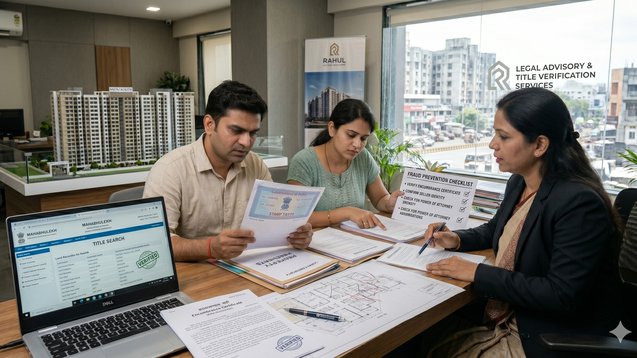
This is the first and most critical step you must take. The seller must have a clear and marketable title, meaning the seller has legal ownership and the right to sell the property. In the major cities, ownership records are often digitized, making it easier to verify ownership; however, in smaller communities, many records will still be kept manually, which may require additional effort to acquire the information you need. You need to check the following items:
Title Deeds
Historical Ownership Records
Encumbrance Certificates
Let's suppose you're looking to purchase a resale condominiums. You see that the seller says that they are the party in possession of the property, yet you find out that the property itself is still secured by a mortgage. Therefore, if not discharged properly, the previous owner’s liability will likely transfer to you. Even when browsing listings on Property Aaj where many of the properties listed have been verified with independent sources, you should verify ownership before buying any property that’s indicated as 'sold' by independent sources for your own peace-of-mind.
Don’t Skip RERA Verification for New Projects
New projects need to complete RERA Verification before they can proceed. RERA has introduced a revolutionary change which requires users to fully utilize its features. All real estate projects which meet RERA requirements must register with RERA. The system establishes transparency about project information together with schedule information and approval processes. The majority of established construction companies in Tier 1 cities adhere to RERA regulations. The smaller construction companies in Tier 2 and Tier 3 cities will attempt to avoid RERA registration requirements. Here’s a simple rule:
If a builder refuses to provide RERA information you should leave the property.
Check:
Project registration number
Completion timeline
Approved plans
A RERA listing allows you to monitor both project development and any submitted complaints. The system provides users with the simplest method to prevent deception through false advertising.
Be Careful with Deals that Sound Too Good to be True
We all love a bargain.. When it comes to real estate, really cheap deals can have hidden problems. In cities scammers might tell stories about distress sales to make you act fast. In towns you might find land being sold very cheaply with unclear papers. Think about this: if a property is 20-30% cheaper than usual it should make you wonder.
Why is it so cheap?
Is there a problem with the law? Is the ownership unclear?
Scammers try to rush you. They might say things like:
Deal closing today
Many people want to buy it
Don't hurry. Take your time to check everything. Smart buyers usually look at listings on sites, like Property Aaj to understand the real prices before buying. They check listings to know the market value. Property Aaj helps them make decisions.
Be Informed About Land Use And Local Approvals
Plot buyers should be especially cautious to check all land classification and approvals prior to making a purchase as there have been many instances of fraud, where land that should have been designated agricultural was incorrectly sold as residential. In India, land use is determined by land classification, such as agricultural, residential, commercial, etc. To change land use from an agricultural classification to a residential classification, all of the proper legal documentary evidence must be in place. Many of the fraud cases in tier 2 and tier 3 cities involve agricultural land that should be converted to residential prior to selling to the purchaser. The following must be verified;
NA (Non-Agricultural) Status
Local Authority Approvals
Layout Approval
Failure to verify these items may result in you owning land on which you cannot legally build a home. While the chances of zoning issues are less when constructing in urban areas, there are still some unauthorized constructions that have unclear listing classifications.
Avoid Cash Transactions and Unofficial Deals
Cash deals may look like an idea because they save you money on stamp duty costs. The truth is that they can get you into big trouble. In cities like Tier 1 cities the government has made rules to stop people from doing cash deals. In towns people still do cash deals but this is happening less and less. Here is why you should stay away, from cash deals:
No proof that you paid for something
You might have to pay tax penalties
It is hard to sell the thing
You should always pay for things by transferring money from your bank or using a method that leaves a record. If someone selling something wants you to pay a lot of cash that is a sign. It is always better to do things in a way even if it costs a little more at the start.
Verify the Builder or Sellers Background
Reputation is very important. In cities well-known builders have a history that you can check. But in cities smaller developers may not have much history so you need to do your research. Here are some things to look for:
Past projects
How long it took them to deliver
What customers say about them
If you are dealing with a seller make sure to check their identity and papers carefully. A simple background check can tell you a lot. Many buyers like to use platforms, like Property Aaj because they have checked listings, which makes it safer to deal with sellers you know.
Never Skip Legal Verification
Even if everything looks perfect, get a legal expert involved. Property laws in India are complex and vary by state. A lawyer can identify issues that may not be obvious to a buyer. In Tier 1 cities, legal verification is almost standard practice. In smaller towns, some buyers skip it to save money but that’s often a costly mistake. A lawyer will:
Verify documents
Check for disputes
Confirm legal compliance
Think of it as a safety net.
Understanding the role of Home Loans, in preventing fraud is important.
Home Loans can actually help people avoid fraud. Banks do things before they approve a Home Loan. They do things like:
Legal checks
inspections
Title verification
If many banks approve a property, that is a sign. It means the property is probably okay. Do not just think everything is fine because banks approved it. Banks are looking out for their interests, not yours. So if no major bank will give a Home Loan for a property you should find out why that is happening with the Home Loan.
Be Vigilant While Registering and Finalizing Your Payment
Sometimes fraud occurs at the final stage of transactions, as opposed to the beginning. The most common types of fraud are from:
Last minute changes to agreement terms
Fake representatives (formerly referred to as agents)
Altered documents
While registering:
When possible, ensure all persons are present
Confirm identification
Double-check documents
Digital systems in Tier 1 cities reduce some of the risk associated with fraud; however, there is greater risk in Tier 2 and Tier 3 locations because of the lack of digital systems and increased need for extra vigilance. Do not make final payment until all conditions have been satisfied and all documentation has been validated.
Conclusion:
The Basic Rule for Protecting Yourself From Real Estate Fraud in India is Awareness. There’s no question that real estate scams still occur every day throughout India, however if somebody is aware of the types of fraud that exist they will have a very low probability of becoming a victim of real estate fraud. Whether you're purchasing a luxury apartment in a metropolitan area or developing a piece of land in a rural area, the same rules apply; check everything out thoroughly, have a healthy scepticism towards the parties involved, and never make a hasty decision. The level of detail and time associated with doing your due diligence may seem excessive at times, but with regard to protecting your investment, it’s worth it. You can rely upon reputable sources for additional verification of real estate, such as Property Aaj , while at the same time conducting your own research. Ultimately, a successful real estate transaction may not only be about ownership, but ultimately can provide you with personal peace of mind that cannot be compromised.
FAQs
1. What are the most common real estate frauds in India?
The common frauds include fake ownership claims and double selling and unapproved layouts and misleading project advertisements. The frauds occur in all cities but they show different patterns depending on the specific area.
2. How can I verify if a property is legally safe to buy?
You need to examine the Title Deed and Encumbrance Certificate and RERA registration documents which apply to the property. The complete legal verification process requires you to consult a property lawyer.
3. Is RERA enough to prevent fraud?
The implementation of RERA brings additional transparency, yet it fails to remove all existing risks. Buyers still need to verify documents and builder credibility independently.
4. Should I avoid properties sold below market value?
The situation requires investigation when price differences reach significant levels. The situation may involve legal problems, conflicts over property ownership, or undisclosed financial responsibilities.
5. Can banks help in detecting property fraud?
Yes banks do checks to make sure everything is okay before they give loans.. Buyers should not just trust the bank's approval. They need to do their research too.
6. Is it safe to buy property without a lawyer?
Well you can do it. It's not a good idea. A lawyer makes sure all papers are correct. Finds problems that buyers might miss.