Introduction
Have you ever walked into a beautiful new apartment and thought, “This feels perfect,” only to realize six months later that you’re running out of space to keep basic things? The toys are under the sofa. Winter blankets are stuffed into random cupboards. Kitchen counters are crowded. The home that used to feel open now appears to have lost its space. This pattern repeats throughout all Indian metropolitan areas. Families living in Mumbai compact apartments and Lucknow expanding townships and Tier 3 town independent houses all make the same mistake of underestimating their need for storage space. Our focus centers on carpet area and available amenities and the cost per square foot measurement. Actual daily comfort depends on the locations of all household items. Indian households need storage space as an essential requirement. The system enables us to handle various aspects of our life which include festivals and guest visits and seasonal clothing storage and children growing up and keeping emotional value of items. Intelligent home design with appropriate storage solutions establishes a peaceful environment which allows organized living and adaptable space usage. The most valuable property becomes disordered without proper storage solutions. The storage space requirement exists because it serves as an essential component for every Indian family that experiences growth.
Understanding how family needs expand over time
The first home purchase leads couples to focus only on their current requirements. A 2BHK seems sufficient. The closets appear to provide enough space. The kitchen cabinets show sufficient space for storage. Families grow and their needs change. A baby requires parents to purchase cribs, walkers, feeding chairs, diaper storage, and extra bedding. Children require more space because their school books and uniforms and sports equipment and hobby materials and birthday gifts keep expanding. The Indian custom of hosting relatives requires us to acquire extra mattresses and bedsheets and utensils. The residents of Delhi and Bengaluru face immediate space limitations because their apartments lack space and cost too much in Tier 1 cities. The initial space relief from Tier 2 cities larger layouts gets countered by storage design flaws that create disorganization. Residents of Tier 3 towns can choose between independent houses and built-in wardrobes and store rooms which create identical storage challenges. Property Aaj (https://www.propertyaaj.com) shoppers should evaluate properties through more than total square footage measurements because this practice shows their actual property value. The floor plan demands your full attention for study. You need to evaluate whether the home will meet your needs during the next five years.
Why clutter impacts family well-being
Clutter exists beyond its visual disorder because it impacts how people feel and think. A home filled with scattered items creates subconscious stress. Parents spend extra time searching for essentials. Children need assigned storage areas to keep their belongings organized. The morning schedule turns into a disorganized mess. The limited storage space in metro cities with their small apartment sizes decreases available living areas. Boxes occupy corners throughout the space. The dining room serves as a makeshift storage area. The house develops a feeling of excessive occupancy with each passing day.The missing storage facilities in bigger houses which exist throughout Tier 2 and Tier 3 cities create the same psychological effects. The actual dimensions of a space do not matter because its organizational system determines its usability. Smart buyers using Property Aaj (https://www.propertyaaj.com) often zoom into kitchen layouts, bedroom wardrobes and utility areas before making decisions. The retrofitting of storage systems after you relocate needs to be paid for because it causes operational disruptions.
Smart storage design in modern family homes
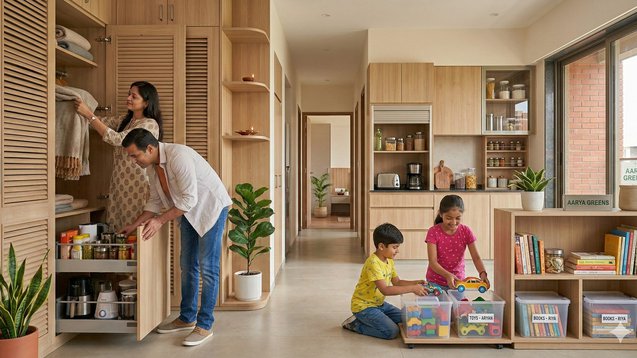
Developers today understand that Indian families need more storage than ever. However different projects provide different levels of success. The search should focus on bedrooms which feature either full height wardrobes or special wardrobe spaces. The kitchen design should include overhead cabinets which extend to the ceiling. The examination needs to determine whether the utility balcony provides space for washing machines and storage racks. Vertical storage needs in Tier 1 cities serve as a basic requirement. Floor-to-ceiling cabinets create maximum storage capacity without requiring additional floor space. Storage beds and modular shelves function as useful furniture solutions. The dedicated store rooms in 3BHK units of Tier 2 and Tier 3 cities offer slightly bigger space through their dedicated storage rooms. Homeowners need to create their customized independent homes through initial planning work. Interior aesthetics should not be the only aspect you evaluate while browsing Property Aaj listings. The practical aspects of the layout need to be evaluated. The design of storage spaces determines whether homes provide comfortable spaces or create inconvenient situations.
Storage and child development
Children develop their habit formation process through their storage needs. When kids have dedicated shelves and compartments for their books and toys and school supplies, they learn to take responsibility for their belongings. The process of cleaning up becomes a routine that people follow throughout their entire day. Children living in homes without organized storage systems will place their belongings anywhere they can find open space. The result of this behavior develops into a pattern of creating untidy spaces. The compact layouts of Tier 1 cities create organizational challenges for families because these layouts do not provide space for flexible storage solutions. The absence of proper cabinetry design in Tier 2 and Tier 3 cities causes operational challenges because available space remains unused. A home with proper organization enables people to develop self-control which creates an environment of order. The home environment establishes essential rules and these rules enable children to maintain their academic work.
Kitchen storage: the real test of practicality
Indian kitchens demand serious storage planning. The kitchen area serves as a storage space for our entire collection of grains, lentils, spices, and bulk grocery items together with our pressure cookers, festival cookware, tiffin sets, and multiple utensils. Indian homes require more space because their kitchens need both more space and more kitchen equipment than Western homes. The modular kitchens in Tier 1 apartments present a stylish appearance but they do not provide sufficient space for pantry storage. The overflow dining space extends into the dining room. The kitchen area in Tier 2 cities offers bigger dimensions but storage solutions show design faults which lead to ineffective results. The first step involves searching for tall pantry storage solutions. The second step requires checking the storage space located under the sink area. The third step needs inspection to determine whether cabinet systems reach their full height to the ceiling. The fourth step involves testing drawer storage systems which function as an alternative to standard open shelving units. The kitchen images with layouts for evaluation purposes in Property Aaj (https://www.propertyaaj.com) need to receive special attention from property evaluators. The kitchen space of a house shows its complete operational capacity.
Future-proofing your investment
The process of buying a house represents an extended financial obligation. Effective storage design affects both resale value and rental market attractiveness. In Tier 1 cities, buyers prefer efficient home designs that incorporate smart storage solutions because they understand space restrictions. The middle-class population in Tier 2 cities now values functional residential spaces more than they value high-status facilities. The market for independent houses in Tier 3 towns shows strong demand for properties that offer both well-designed space and exclusive storage areas. When families do not have enough storage space, they will leave their home before they reach their expected stay. Families need to either sell their home early or pay for costly home improvements. A home built to accommodate future changes gives people both financial security and adaptable ways to manage their money.
Flexible spaces and evolving lifestyles
Families in present-day society need to adjust their behavior because their environments keep changing. A guest room today might become a study tomorrow. A storage room might transform into a home office. People can move between different activities when their homes contain built-in cupboards that operate in various spaces. Convertible furniture and wall-mounted storage systems enable compact living in Tier 1 cities. The slightly bigger homes of Tier 2 and Tier 3 cities provide dedicated storage space which residents can use for temporary needs. People should think about the future. How will this property function a decade from now? The storage options in your home provide you with different organization methods which will suit your changing needs.
Conclusion
People who visit a site tend to overlook storage space because it lacks attractiveness. The material does not shine like expensive tiles nor does it create the same level of attraction as a clubhouse. The element exists in daily life as it operates yet it controls all aspects of comfort. Indian families develop bigger collections through their daily lives because they accumulate seasonal apparel and holiday decorations plus kids' items and kitchen supplies. People need storage solutions because spacious houses become constricted without them. People who want to buy property in a metro or Tier 2 city or Tier 3 town must properly evaluate storage space. People should examine storage space through its actual worth. The building design needs to be examined. Visualize your upcoming years. A home that maintains organization provides more than storage space to its users because it creates tranquility and saves time while enhancing relationships among family members through time.
FAQs
1. How much storage space does a family of four realistically need?
The storage requirements of a family of four start with built-in wardrobes for each bedroom and continue with full kitchen pantry storage plus loft spaces and one extra storage space dedicated to seasonal items and guest needs. As children grow up their needs become larger.
2. Are modern apartments in Tier 1 cities designed with enough storage?
Newer developments concentrate on visual appeal which leads to storage space reduction because of their limited available space. Buyers must review floor plans carefully before booking.
3. Do larger homes in Tier 2 or Tier 3 cities automatically solve storage problems?
The answer to this question is no. The larger dimensions of a space bring advantages, yet the presence of proper cabinetry and dedicated storage locations remains essential because clutter can still develop without these elements.
4. Does good storage increase property resale value?
Yes. Family buyers prefer practical property designs which include functional storage space because these features enhance resale value and market appeal.
5. What should I specifically inspect during a property visit?
You need to verify wardrobe depth and kitchen cabinet height and utility area dimensions and loft existence and the potential to use unused spaces.
6. Is vertical storage important in Indian apartments?
Absolutely. Vertical storage allows Tier 1 cities to utilize all available space in compact homes while maintaining original carpet area, which creates more functional living spaces.