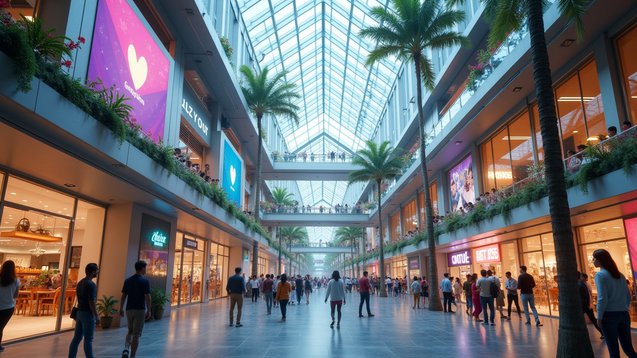
Introduction
For decades, malls have been the primary places for retail therapy, entertainment, and social contact. Families shopping in Phoenix Mall in Mumbai, Amanora Mall in Pune, or Empress City Mall in Nagpur typically spend the entire day shopping, eating and going to movies. The introduction of e-commerce platforms such as Amazon, Flipkart, and Myntra has put the role of malls into question.
Rather than becoming extinct, however, malls in Maharashtra's urban centers (Mumbai, Pune, Thane, Navi Mumbai, Nagpur and Nashik) are adapting. Malls are taking the lead in becoming more than simply shopping venues, and are now the focal point for lifestyle, entertainment, and cultural activity. Given the trends with wider commercial property in the duration of the e-commerce age and platforms like Property Aaj (https://www.propertyaaj.com) to track that commercial property, the reinvention of malls becomes relevant to investors and shoppers alike.
Why E-commerce Challenged the Mall Culture
Convenience: Online shopping reduces inconvenience with the option of delivery to the home and ease of returning.
Variety: Customers can look through thousands of products, without even leaving their homes.
Discounts: Heavy discounts during online shopping brought about a pricing competition for brick and mortar stores.
Changing habits: Younger generations are more inclined to be "browsing" on their phone than doing it in person while window shopping.
It soon became apparent to malls if they are to survive, they'd have to offer experiences, community, & exclusivity.
How Malls Are Reinventing Themselves
1. Turning into Lifestyle Destinations
Malls now focus less on “just shopping” and more on experience-driven visits. For example:
High Street Phoenix, Mumbai has premium dining, luxury fashion, and fitness centers.
Amanora Mall, Pune blends shopping with entertainment parks and community events.
Inorbit Mall, Vashi integrates gaming arenas and multiplexes to keep families engaged.
Instead of competing with online retailers, malls are positioning themselves as places you visit for fun, leisure, and social connection.
2. Integrating Digital Experiences
Malls are adopting technology to stay relevant:
Augmented Reality (AR): Virtual try-on mirrors for clothes and accessories.
Smart Parking Apps: For hassle-free entry and exit.
E-commerce Tie-ups: Some malls allow customers to order online and pick up in-store.
In Pune’s Phoenix Marketcity, shoppers can scan QR codes for discounts while browsing. This hybrid approach merges the digital with the physical.
3. Focus on Food, Entertainment, and Events
Food courts, cafes, and restaurants now take up more floor space than traditional retail outlets. People may not always shop, but they definitely dine.
Nagpur’s Empress City Mall hosts food festivals and live music.
Nashik’s City Centre Mall has bowling alleys and gaming zones.
Thane’s Viviana Mall conducts cultural festivals, book fairs, and art exhibitions.
This makes malls a community hub—something e-commerce cannot replicate.
4. Rise of Mixed-Use Developments
Malls are now integrated with:
Co-working spaces (ideal for professionals and startups)
Serviced apartments and hotels (perfect for business travelers)
Healthcare and fitness centers
For instance, Mumbai’s Oberoi Mall is part of a larger ecosystem of residential and office spaces, ensuring constant footfall.
5. Premium and Luxury Retail Growth
E-commerce dominates the budget and mid-range segment, but luxury shopping still thrives in malls. Affluent buyers prefer in-store experiences where they can feel and try products.
Palladium Mall, Mumbai hosts brands like Gucci, Louis Vuitton, and Jimmy Choo.
Phoenix Marketcity, Pune has exclusive outlets for Apple, Michael Kors, and Armani.
This premium positioning ensures malls continue to attract high-income shoppers.
6. Green and Sustainable Malls
With rising awareness about sustainability, malls are going green:
Rainwater harvesting systems in Thane’s malls.
Solar panels in malls across Pune and Nagpur.
Waste management initiatives in Navi Mumbai’s Seawoods Grand Central Mall.
These practices attract eco-conscious buyers while reducing operational costs.
7. The “Phygital” Mall Model
Malls are embracing phygital (physical + digital) concepts:
Customers browse products online but experience them in-store.
Retailers inside malls provide AR-based catalogs.
Click-and-collect counters allow easy pick-ups.
This approach acknowledges that consumers want the best of both worlds—digital convenience and physical assurance.
The Role of Property Platforms in Mall Evolution
For investors and retailers, understanding mall trends is crucial. Platforms like Property Aaj (https://www.propertyaaj.com) help by:
Listing commercial spaces in high-demand malls.
Highlighting upcoming mall projects in Pune, Nagpur, Thane, and Navi Mumbai.
Offering insights on rental yields and footfall trends.
Whether you are a brand seeking retail space or an investor looking at commercial property, Property Aaj makes decision-making more informed and reliable.
Case Studies of Reinvention in Maharashtra
Phoenix Marketcity, Pune: Expanded from retail to host music concerts, comedy shows, and art festivals.
Seawoods Grand Central Mall, Navi Mumbai: Integrated with a railway station, making it one of India’s first transit-oriented malls.
Viviana Mall, Thane: Pioneered digital touchpoints for navigation and partnered with NGOs for sustainable initiatives.
These examples show how malls are adapting creatively to remain central in people’s lives.
Maharashtra's Malls of the Future
Experience First Design: More rooftop cafes, theme parks, and wellness centres.
Technology Enabled Shopping: Virtual trial rooms, AI reference options and cashier-less purchases.
Expansion into Tier-2 Cities: New malls are being built in cities like Aurangabad, Solapur and Kolhapur with rising urban saturation.
Work Life Play Intermeshed: Malls offer retail, offices, gyms, co-working and entertainment in under one roof.
Malls by 2030 will be less about "buying things" and more about living experiences.
Conclusion
The e-commerce boom may have changed shopping habits, but malls are not disappearing in Maharashtra, they are transforming. By focusing on experience, community, luxury and technology, malls are solidifying their place in the future of commerce in the digital landscape.
For shoppers - malls will always remain the place to socialise, eat, and experience. For investors, malls continue to remain viable real estate assets; especially for those guided by platforms like Property Aaj (https://www.propertyaaj.com) to navigate the dynamic landscape of commercial real estate.
In summary, malls are not dying; they are becoming lively ecosystems of shopping, lifestyle and community all under one roof.
FAQs
Are malls in India becoming irrelevant because of e-commerce?
Not at all, Malls are evolving into lifestyle and experience locations to remain relevant.What are the best malls in Maharashtra that are harnessing the trends?
Phoenix Marketcity, (Pune & Mumbai), Viviana Mall, (Thane), Seawoods Grand Central, (Navi Mumbai) and Empress City Mall (Nagpur).What type of technology are malls engaging with to remain competitive with e-commerce?
In addition to AR and smart parking, they now offer QR-based offers and click and collect counters.Are malls in Tier-2 cities becoming more engaged with experiential/recreation space?
Yes, malls in cities like Nashik, Aurangabad, and Kolhapur are creating entertainment and mixed-use elements.Are Malls still a viable investment option?
Definitely, They are still very viable, especially in the important Maharashtra cities where footfall is still high.How does Property Aaj assist the business in finding retail areas in malls?
Property Aaj provides verified listings for retail commercial spaces, monitors new projects, and can offer local area rental rates.Read more about property matters with our specialists and browse the latest property listings on Property Aaj. Download the app from the Play Store and App Store now for easy buying, selling, and renting!