Introduction
The process of buying or establishing a residence in India extends beyond simple measurement criteria of walls and rooms and square footage dimensions. The process involves emotional elements. People seek three particular outcomes when they create their personal spaces: comfort and personal development and mental tranquility, along with positive energy that most people believe exists. The discussion introduces Vastu Shastra as a hidden element of the dialogue. The question about home compatibility arises when you consider purchasing a small flat in Mumbai which belongs to Tier 1 cities and a mid-sized apartment in Indore which belongs to Tier 2 cities and an independent home in a Tier 3 town. The home must provide both physical comfort and energetic comfort to the occupant. Most homeowners begin to consider Vastu principles only after they move into their new house because this is the first time they experience minor discomforts. People often see poor sleep and lack of focus and frequent stress as lifestyle problems, but it is vital to understand that your physical environment has a greater impact on your daily life than you understand. The good news? You can establish a positive space through Vastu principles without needing a fully Vastu-compliant space. Your home energy flow will experience major enhancement through proper space knowledge and basic space modifications. The guide presents Vastu tips which modern Indian homes require because they provide practical solutions that architects can implement in apartment buildings which lack structural change possibilities.
Understanding Positive Energy in a Home
The home environment creates positive energy through its directional and spatial elements. The way your space makes you experience its energy defines your positive home energy. Two houses exist with different characteristics. The first house meets all Vastu requirements but has a lifeless atmosphere. The second house has more flexible design elements which create an inviting and tranquil atmosphere.Which one would you prefer? Vastu principles establish equilibrium between light and air and space and directional orientation. The need to optimize essential elements becomes critical in Tier 1 cities because people rely on compact living spaces. The Vastu layout alignment process becomes simpler in Tier 2 and Tier 3 cities because their spatial constraints are less restricted yet designers frequently disregard this standard. Positive energy comes from: Natural light flow Proper ventilation Clutter-free spaces Functional layouts When you browse properties on Property Aaj (https://www.propertyaaj.com),don’t just look at price or location. The building's window design and its window opening directions and its overall space between windows should be examined. The factors operate behind the scenes to create an impact on your routine activities throughout the day.
Main Entrance – The Gateway of Energy
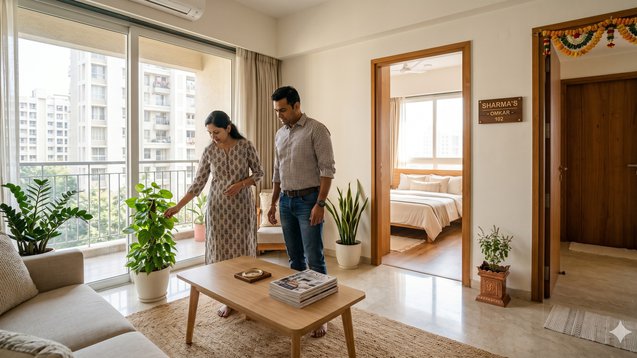
The main door in Vastu functions as the point which lets energy enter a building. The design element functions as more than a symbol because it determines how light and air and movement enter your home. Northern and eastern and northeastern entrance doors provide the most beneficial entrance options according to ideal standards. The practical situation shows that residents of apartments face limitations which prevent them from selecting their preferred entrance direction. The most important aspect of entrance maintenance involves two main tasks. The area should remain free from all types of clutter. The area requires sufficient illumination during nighttime hours. The area should remain free from both shoes and dustbins which should not be placed at the entrance. The use of a nameplate brings both identity and stability according to existing beliefs. First-level apartment complexes feature entrances that lead directly into their main living spaces. The use of a basic partition or indoor plant enables residents to control energy movement within their space. The small modifications made in this area produce an immediate effect on the atmosphere that people experience when they enter your home.
Living Room Creating a Balanced Social Space
The living room serves as the primary space for family activities and guest interactions and all types of conversations. The entranceway creates the first impression of your residence. Vastu principles state that the ideal living room location should face either the north or east direction. Apartment buildings impose design restrictions which limit their layout options. You should direct your efforts towards elements which you have the power to manage. The southern or western sections of the room should contain all substantial furniture pieces such as sofas. The north and east sections need to stay mostly empty. The use of light colors will create brighter spaces. All dark corners should be eliminated through lamp installation. All dark corners should be eliminated through lamp installation. The guidelines show more flexible implementation because Tier 2 and Tier 3 homes offer bigger living rooms. Small urban apartments can improve their room layout through furniture changes. The Property Aaj website (https://www.propertyaaj.com) home selection process requires users to choose house designs that provide natural sunlight to their living room space because it creates an uplifting atmosphere.
Kitchen Placement – Where Energy Meets Nutrition
The kitchen serves as a functional area which also functions as a space that promotes health and provides nourishment. The southeast direction is considered ideal for kitchens, as it aligns with the fire element. Your kitchen location does not match this requirement but you should remain calm because modern apartments do not follow this rule. The following tasks should be addressed by you. The stove needs to be positioned so that you can cook while facing east. The kitchen needs to be maintained through proper cleaning and organization. The stove area needs to be kept free from all forms of clutter. The sink and gas stove need to be kept separate from each other because they represent two different elements. Modular kitchens in Tier 1 cities need to use complete kitchen solutions which require space-efficient designs. The need to maintain both cleanliness and order shows increased importance in these situations. A kitchen which receives proper maintenance creates an environment that brings peace and control to the household.
Bedroom Vastu Sleep, Stability, and Peace
The bedroom space serves as the most important area where Vastu principles create their strongest impact. Your bedroom arrangement determines whether you will experience restful sleep or restlessness during the night.
Key tips:
You should position the bed in a way your head will face south or east during sleep.
You should not place mirrors in a position that allows them to reflect the bed directly.
You should keep electrical devices to a minimum on your premises.
The room should be decorated with calming colors which include beige and light blue and pastel shades.
The bedroom dimensions in Tier 1 cities become smaller which forces residents to make bedroom layout compromises. The right bed position in a room works as a solution to make a positive impact on the bedroom environment.The bedroom layout requires careful evaluation by families who want to purchase homes through Property Aaj httpswww.propertyaaj.com because they will use this space every day.
Natural Light and Ventilation The Simplest Vastu Rule
People fail to recognize that a simple home Vastu can work properly when your house has adequate natural light and fresh air. Homeowners receive positive energy from natural sunlight which functions as one of the most powerful energy sources. Brightness and airiness create homes which automatically enhance both mood and work efficiency. High-rise buildings in Tier 1 cities create shading problems which block sunlight based on their building direction. Independent homes in Tier 2 and Tier 3 cities provide residents with superior access to daylight compared to other housing options.
Tips:
Open windows on a daily basis
Lightweight curtains should replace heavy drapes
People should not use furniture to block access to windows
When property assessment begins through online Platforms The first question you need to evaluate Is this home receives direct sunlight. The matter holds greater significance than your assessment indicates.
Decluttering – The Most Ignored Vastu Principle
Most houses do not have a Vastu issue because their main problem is excessive clutter. The space is occupied by old items and unwanted furniture and damaged appliances which create obstacles for both physical movement and mental focus. In smaller urban apartments, people tend to accumulate clutter at a faster rate. However every residential property in Tier 2 and Tier 3 cities will experience this problem. The basic guideline states that people should decide whether to keep an item after they have not used it for one year. Pathways should remain unobstructed. The space needs to maintain a balance between its decorative elements and its available space. Homeowners achieve a peaceful atmosphere through their organized and tidy houses. The house does not require any costly Vastu solutions for this purpose.
Bathroom and Toilet Placement Awareness
People believe that bathrooms waste energy according to Vastu principles. The best location for bathrooms is either the northwest or the west. Modern building designs do not provide complete control over this aspect. The solution requires following these steps: People should keep bathroom doors closed. Proper ventilation needs to be established. People must repair all leakages without delay. People need to maintain cleanliness throughout the entire day. The basic requirements of these things have a major impact on your home's atmosphere.
Indoor Plants and Elements for Positive Energy
People who study Vastu believe that specific plants bring positive energy to their homes. The following plants serve as popular Vastu-friendly choices for Asian residential spaces. The Tulsi plant holds special significance for Indian households. The Money plant functions as a popular Vastu-friendly plant. The Bamboo plant functions as a popular Vastu-friendly plant. People who live in small city apartments should use balcony plants and indoor pots as their preferred plant options. People who own bigger homes should test various plant options to develop their indoor plant designs. People should avoid plant overindulgence because excessive plant presence in confined areas produces humidity problems. People need to achieve equilibrium between their different activities.
Color Choices – Subtle but Powerful
Colors determine our emotions in ways that are more powerful than most people understand.
- The light shades create a state of mind that produces calmness and peacefulness.
- The bright shades create an energetic atmosphere which people find difficult to handle.
- The dark tones create a homey atmosphere which makes the space feel less bright.
The best home design for Indian households combines neutral colors with minimal color accents. Before moving into a new home purchased through Property Aaj (https://www.propertyaaj.com), you should repaint the space because it helps create a new atmosphere.
Conclusion – You Don’t Need Perfection, Just Awareness
Here’s the truth most people don’t tell you: you don’t need a perfectly Vastu-compliant home to live happily. The first step towards achieving your goal requires you to become aware of your current situation. A home that receives natural light and fresh air and maintains cleanliness with organized spaces will always provide a better experience than one that follows rules without understanding their actual use. The process of buying your first flat in a metro city or upgrading your home in a growing Tier 2 location or constructing your home in a smaller town requires you to first consider livability and then examine Vastu requirements. Use Vastu as a guiding tool, not a rigid checklist. When you explore listings on Property Aaj (https://www.propertyaaj.com) you should examine more than just the price and square footage of each property. You should consider how the area will assist you in your daily activities. People create positive energy through their actions because it cannot be purchased.
FAQs
1. Can I fix Vastu issues without structural changes?
Most Vastu problems can be solved through methods which do not require wall demolition. The home energy flow can be improved through simple modifications which include furniture movement, lighting changes, decluttering activities, and the introduction of indoor plants.
2. Is Vastu important for flats in big cities?
Basic Vastu requirements, which include proper light distribution and air circulation and appropriate building design, remain essential even though Tier 1 cities make it difficult to establish perfect building layouts.
3. Which direction is best for positive energy in a home?
Home energy flow reaches its highest point through the north and east directions which permit sunlight to enter and positive energy to circulate.
4. Do Vastu remedies really work?
The remedies operate through psychological and environmental effects which lack any mystical power.
5. Should I reject a property if it’s not Vastu-compliant?
Not necessarily. First, identify your crucial requirements which include location selection, budget determination, and building assessment.
6. How does Vastu affect mental health?
A home which provides bright lighting and proper organization delivers two benefits: stress reduction and improved concentration capability. The use of Vastu principles establishes a healthy home environment even though Vastu itself does not offer medical treatment.
Read more about property matters with our specialists and browse the latest property listings on Property Aaj. Download the app from the Play Store and App Store now for easy buying, selling, and renting!