Introduction: What Every Homebuyer Should Know
Everyone who enters an Indian home must notice one special fact about balconies. The balcony serves multiple purposes because it functions as a space for drinking morning chai and drying clothes and growing plants and resting after work. The area functions as an essential part of everyday activities despite its limited size. Most people shopping for homes miss this detail. The balcony location determines which atmosphere the house will create. The direction of your balcony will determine how light enters your home and how air circulates and how warm your house becomes and how you experience different moods during the day. This is the main reason Vastu Shastra considers this aspect very necessary for evaluation. In Indian cities which belong to Tier 1 status, building design determines how balconies should face, especially in Mumbai and Bangalore and Delhi. You don’t always get to choose. People who learn about direction patterns will discover better methods for their choices. People who live in Tier 2 and Tier 3 cities, which have more independent homes and larger properties, will find better options to control their environment. Vastu guidance becomes important at this point. We need to approach this situation by using practical methods instead of following rules. Which balcony direction is ideal? Which ones need caution? What steps can you take to improve your current home which lacks perfect design?
Why Balcony Direction Matters in Vastu
Balconies function as spaces that bring in daylight and fresh air into buildings. The Vastu system considers balconies to be pathways which enable energy to move throughout space. The direction you choose to position your balcony determines which types of energy will enter your residence. The east-facing balcony of a building permits entry of sunlight during morning hours. The day begins with this effect which creates positive energy through its ability to bring fresh air and clear light into your environment. A north-facing balcony provides homeowners with permanent access to dim natural light which generates a comfortable atmosphere without causing overheating issues. Now compare that to a west-facing balcony. The space receives intense sunlight during the afternoon which causes your house to become hotter in Indian weather conditions. South-facing balconies generate additional heat which forces homeowners to use more cooling systems to maintain comfortable temperatures. The limited space in Pune and Hyderabad creates challenges for you to find suitable solutions. The knowledge of these distinctions enables you to create optimal interior designs which use direction to determine the best placement for curtains, plants and seating arrangements. When you search for properties on Property Aaj (https://www.propertyaaj.com) balcony direction in floor plans becomes a critical factor which many buyers overlook.
Best Balcony Directions as per Vastu
The best balcony orientation choice for you involves east and north-facing balcony designs. East-facing balconies are the most ideal option according to most people. The design permits early morning sunlight to enter the home which brings health benefits and Vastu advantages. Natural light provides an energizing effect which helps people start their day better than artificial lighting does. North-facing balconies come next. The system provides complete light coverage for all daylight hours while preventing excessive thermal gain. The system serves a critical role in Indian climate zones which require effective air conditioning for indoor spaces. North-facing balconies serve as the preferred balcony option because they provide better comfort during the intense summer weather that affects Tier 2 cities in India. The resale value of these locations increases because they draw more prospective buyers. Property Aaj (https://www.propertyaaj.com) listings showcase these specific features because they provide genuine value to properties.
West-Facing Balconies – Pros and Challenges
West-facing balconies receive divided opinions because people have valid reasons to react this way. The balconies provide stunning evening illumination which creates a dual advantage for viewers who appreciate sunset views and balcony time after municipal work hours ends. The setup actually suits most urban workers according to their common preference. The opportunity presents itself to work with. The Indian summer period brings especially intense sunlight which creates severe outdoor conditions. Indoor temperatures rise because of this and it causes damage to furniture and flooring material throughout an extended period. West-facing balconies appear throughout Tier 1 cities because their high-rise buildings serve as the primary architectural design element. Builders design their projects to create optimal view experiences and functional building designs while excluding Vastu principles from their planning process. What method should we use in this situation? The installation of heat-resistant curtains or blinds together with plants will decrease sunlight that enters the area. The vertical garden system provides effective solutions because it creates a dual benefit of aesthetic improvement and heat protection. The decision to construct west-facing balconies does not constitute a problem. The organization requires proper methods to handle all west-facing balcony spaces.
South-Facing Balconies – Should You Be Concerned?
Vastu discussions consider south-facing balconies to be less suitable. But let’s bring some realism into this. The south-facing direction brings about a more powerful energy than other directions. The combination of direct sunlight with this space results in warmer temperatures which create uncomfortable conditions. The modern home design provides a valid option for contemporary living. South-facing balconies provide advantages for both cold climate areas and winter months. People in Tier 2 and Tier 3 cities balance their south-facing balconies through intelligent design elements which include shading structures and plants and partial coverings in their common independent home spaces. You should remain calm about your south-facing balcony situation. Your main objectives should be ventilation and greenery and shading. The project requires only small changes which will create significant results.
Balcony Size, Shape, and Design in Vastu
The design of your balcony space requires consideration of both its size and its shape. Research shows that rectangular and square balcony designs provide superior energy flow because they establish symmetrical movement paths. The design of spaces with narrow sections and unusual angles creates an experience that users find to be restricting. A balcony that offers ample space creates an atmosphere of openness and hospitality. The usability of Tier 1 apartment balconies improves when residents add even minor extensions to their limited space. You should keep your space free from unnecessary items which create physical obstacles and block energy movement. This Vastu guideline serves as your most useful Vastu recommendation. A balcony becomes unusable because its cluttered state creates two problems: it limits space and it obstructs energy distribution. Property Aaj (https://www.propertyaaj.com) requires users to assess homes by evaluating both square footage and actual balcony space which can be used.
Balcony Usage – Turning Space into Positive Energy
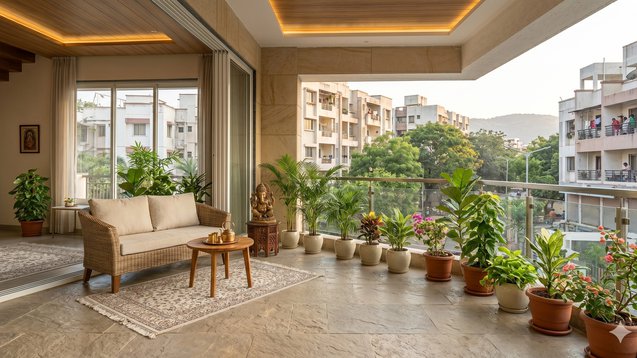
The importance of balcony activities equals the importance of balcony location. A balcony which contains plants and clean seating and receives natural light creates a positive area. Plants that face north or east according to belief systems present a beneficial advantage. The balcony space becomes stagnant energy when people use it to store unwanted items and old furniture. The balcony should be treated as a space which extends your home instead of being an unoccupied space. The space can be completely transformed with just a single chair and some plants and proper lighting. Balcony spaces have become popular among homeowners in Bangalore and Pune who want to create their own relaxation areas. The upgrade which requires minimal effort produces significant results.
Differences Across Tier 1, Tier 2, and Tier 3 Cities
The orientation of balconies holds importance in all locations yet people choose different methods of handling this issue according to their respective locations. Urban areas present a space shortage which forces people to utilize whatever resources they possess. People need to choose their balcony direction according to their specific circumstances because they must use their available resources. People have the freedom to select their preferred architectural designs which exist between two distinct options. In Tier 3 cities, plot-based homes dominate. Vastu principles become more accessible through design-based implementation which starts at the beginning of the design process. Buyer psychology also differs. Vastu compliance ranks as the most important requirement for people living in small towns. People in metropolitan areas choose practical solutions based on location yet Vastu still impacts their ultimate choices.
Common Balcony Vastu Mistakes to Avoid
The common error occurs when people build heavy structures which use grills to entirely block their balcony space. The structure prevents light from entering while it blocks natural air circulation through the space. The second problem arises from insufficient maintenance because an unclean balcony space creates a negative impact on the entire home atmosphere. The heavy appearance of a space results from using dark colors but light tones create better results because they reflect light and produce open space. The last problem involves people who refuse to handle ventilation needs. A balcony should enhance airflow, not restrict it.
Simple Vastu Remedies for Balcony Imbalance
Your balcony orientation needs improvement but functional solutions exist to create better outcomes. The easiest solution to create better results involves using plants as strategic design elements. The space becomes more attractive through the use of money plants and tulsi and flowering plants. The installation of appropriate lighting creates a balcony space that people find more enjoyable because the area becomes evenly lit. People should use curtains or blinds to manage sunlight because this method works best for west and south-facing balconies. The space requires both cleaning and organization because those activities alone will solve half of the existing problems.
Conclusion: It’s About Balance, Not Perfection
The orientation of a balcony holds significance for its value. A balcony which architects designed to meet their requirements will not provide any benefit because its space remains blocked with objects. Your preferred area in the house will develop from a balcony which architects designed to achieve specific outcomes despite its slight design flaws. Indian homes are undergoing changes. Buyers today possess advanced knowledge and they exhibit practical tendencies while choosing between traditional and contemporary home designs. Vastu should be considered in your planning work. However, you should not let it restrict your abilities. Treat it as your reference material which you should not use to establish strict guidelines. Homebuyers should investigate Property Aaj (httpswww.propertyaaj.com) to examine different home designs and features in order to reach their best choice for a home which matches their personal preferences.
FAQs
1. Which balcony direction is best as per Vastu?
East and north-facing balconies represent the most optimal choice because they provide natural light and positive energy movement while maintaining comfortable temperature conditions.
2. Is a west-facing balcony bad?
The answer depends on specific circumstances because the west-facing balcony permits strong afternoon sunlight, which people can control through the use of curtains and plants and shading devices.
3. Can I improve a south-facing balcony?
The answer is yes because the solution requires implementation of plants and shading systems and ventilation systems.
4. Does balcony direction affect property value?
The answer is yes because Vastu principles influence buyer preferences in India according to research which shows that people prefer east and north facing balconies.
5. What should I avoid keeping on the balcony?
People should keep their balcony area free of clutter and their space clean without damaged items and unneeded furniture.
6. Are small balconies a problem in Vastu?
Small balconies do not create any Vastu problems.
People can create positive spaces through their design work, which needs proper lighting and clean space, even when they work with small balconies.
Read more about property matters with our specialists and browse the latest property listings on Property Aaj. Download the app from the Play Store and App Store now for easy buying, selling, and renting!