Introduction
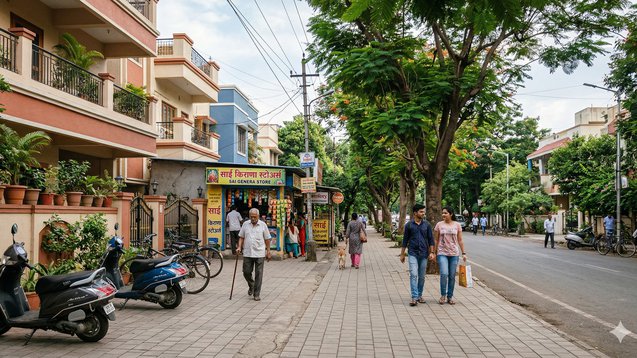
The Indian real estate market establishes location as its most important factor. The last few years have seen increased interest in walkability which represents a specific element of location. Is it possible for you to leave your building and reach a grocery store through safe walking paths? Does your neighborhood contain footpaths which your parents can use for their evening walks? Are your children able to cycle safely without having to avoid fast-moving bikes? These questions need urgent attention during this time period. Traffic congestion has turned short drives into frustrating experiences for people living in Tier 1 cities like Bengaluru and Mumbai and Delhi NCR and Chennai. The urban design of Indore and Kochi and Jaipur as Tier 2 cities begins to change through their expanding city boundaries. The growing number of vehicles in Tier 3 towns leads to decreased pedestrian safety and comfort. A walkable neighborhood provides residents with all its elements to achieve their daily needs. The situation mainly impacts four health factors which include social contact and pollution exposure and stress management. People now recognize walkable home neighborhoods as vital to their existence. The choice brings both immediate benefits and future advantages because it improves comfort and property worth.
Why Walkability Matters in Daily Life
People who buy products do not realize the frequency of their outside activities for minor errands. People encounter daily life through their need to buy milk and medicine and visit ATMs and grab quick snacks and pick up school children. People in Tier 1 cities experience better time management through walking because car trips in their area require traffic signals and road congestion to reach their destination. Essential services in planned residential areas in Tier 2 cities become available to residents who live within a 500-meter distance from those services. Most street designs in Tier 3 towns already provide walkable spaces but increasing street traffic creates dangers for people who walk. People who live in walkable areas will find it easier to exercise throughout their daily activities. People find it more convenient to take walks during the evening. Children need to spend less time playing inside their homes. Older family members can live independently at home. People who practice this activity for multiple years will experience improvement in their physical health and mental health. The design of a home which enables users to move throughout their space will result in improvements to their quality of life through both visible and hidden advantages.
Check Footpaths and Road Design
Walkability requires more than distance measurements because it needs all elements of the built environment. The assessment includes all components of street systems which create safe ways for people to move about. The first tier cities contain premium areas that provide safe walking environments through their maintained sidewalks and pedestrian crossings and their traffic reduction features. The area continues to experience issues because footpaths remain damaged and people occupy restricted zones. The new townships in Tier 2 cities establish superior internal road designs for their gated communities but they fall short on creating designated walking areas outside their boundaries. The motor vehicles and pedestrians share the same area on the tight streets which exist in Tier 3 towns. The complete neighborhood around your selected property needs to be explored through a brief walk. The assessment requires checking whether footpaths remain complete and usable throughout their length. The assessment needs to identify both street illumination and secure pedestrian crossing points. People who find walking difficult during their visit will experience even greater difficulty when they need to walk throughout their regular routine.
Proximity to Essential Services
A truly walkable neighborhood provides access to daily necessities without long travel. The direct access to metro stations and local markets and pharmacies and parks in Tier 1 cities provides residents with major convenience benefits. The residential areas of Tier 2 cities develop residential clusters which include small commercial centers that serve their communities. The marketplaces of Tier 3 towns remain accessible to central marketplaces but their internal colonies do not provide all required amenities throughout their area. The assessment requires identification of grocery stores and clinics and schools and parks which exist within walking distance of 5 to 10 minutes. The assessment needs to establish an equilibrium between liveable space and market distance. The best experience comes from being somewhat distant from a busy market because it creates a peaceful atmosphere with good access to all activities. Smart buyers assess not just “what is nearby” but “how comfortably can I reach it on foot?
Safety for Children and Elderly
Neighborhoods need to provide walkable streets that maintain sidewalk safety. The high-speed traffic which uses main roads in Tier 1 cities prevents people from walking to nearby amenities. The fast growth of Tier 2 cities creates problems because their pedestrian systems cannot keep pace with development needs. Tier 3 towns may lack clearly marked crossings or traffic signals in residential zones. You need to check the speed of vehicles and the presence of zebra crossings and the condition of street lights. You need to observe how local people walk through their streets because they either walk freely or remain indoors. You should picture your aging parents and young children walking alone because they do not have companionship. You would assess their safety based on your comfort level about their protection. People find comfort because security exists at all distances from their home base.
Green Spaces and Open Areas
The presence of open spaces differentially affects how people walk through their environment. The presence of parks and lakes and tree-lined streets makes walking easier in Tier 1 cities. In Tier 2 cities, integrated townships often provide landscaped internal paths. Tier 3 towns may naturally have more open land but may lack maintained parks. The presence of green spaces enables people to walk comfortably through the area because it diminishes their pollution risk. The green spaces promote social connections between people which lead to stronger community ties. The Property Aaj website (https://www.propertyaaj.com) lets you explore properties while checking for parks and walking paths that exist in each project. A home needs to create outdoor space that invites you to explore because it should not make you stay inside.
Impact on Property Value and Demand
The value of real estate increasingly depends on how walkable an area is. In Tier 1 cities properties located in pedestrian-friendly neighborhoods with good transport links command higher prices and experience stronger rental demand. Young professionals and families make their choices based on both convenience and their desired lifestyle. The walkable corridors that emerge between business districts and educational institutions in Tier 2 cities currently show rising real estate values. The towns of Tier 3 now begin to realize why they need to implement proper urban development strategies. The demand for homes situated in areas that require cars for transportation will increase at a slower pace throughout the years. People who choose to live in walkable areas do so because they want to experience a particular way of life that will benefit their financial future.
Balancing Connectivity and Calmness
The process requires finding a way to connect people while maintaining peaceful spaces. The term walkable area refers to a space that enables people to move around without facing major obstacles but requires people to stay active throughout their time there. High-density commercial areas provide nearby access to facilities but create pedestrian discomfort because of their excessive foot traffic and loud environment. In Tier 1 cities people who reside near key transit points experience traffic disturbances. The street network in Tier 2 cities becomes congested with traffic during the times when most people travel. The growing corridors of Tier 3 towns offer only basic walking paths to their residents. The current solution aims to create a system that provides people with access to all facilities while maintaining a peaceful environment. The best residential areas exist between busy commercial areas and places that people need to walk to. Sustainability depends on balance between two opposing forces.
Future Growth and Urban Planning
The urban environments across India experience rapid transformations. The smart city projects of tier 1 cities lead to ongoing street redesigns throughout their entire urban area. The expanding pedestrian networks of tier 2 cities demonstrate their dedication to improving walking conditions. The road widening and commercial development projects of tier 3 towns will create new walking routes that connect different parts of the community. Review the municipal development plans which include upcoming projects. The street which currently allows pedestrians to walk will transform into a street that experiences heavy vehicle traffic during future developments. The evaluation process which anticipates future needs will establish a system of evaluation that enables assessment throughout the evaluation procedure.
Conclusion
People need to conduct more assessment for their upcoming home selection process because Google Maps distance check does not fulfill their requirements. People need to assess the road layout and pedestrian safety measures together with essential services and green spaces and future urban development plans. The walkability of Tier 1 cities helps residents experience less travel stress while they maintain their daily activities. The residential areas of Tier 2 cities which develop new corridors show potential for creating pedestrian-friendly environments. The traditional walking routes of tier 3 towns will remain accessible through proper selection methods which protect against rising traffic volumes. You should take the time to walk throughout the entire area before you make your purchase decision. You should visit the area during various times of the day. You should talk to the people who live there. Use Property Aaj (https://www.propertyaaj.com) to compare neighborhoods by using reliable platforms. The walkable home provides more benefits than fuel savings. The walkable home promotes better health outcomes while it fosters community bonding and streamlines everyday activities. Investing in property that enables you to walk home creates a peaceful walking experience.
FAQs
1. What defines a walkable neighborhood in India?
The neighborhood needs to provide safe walking paths together with vital services that are located nearby and sufficient street lighting and street traffic that remains at safe levels.
2. Does walkability increase property value?
Yes. The property value increases in Tier 1 cities because residents value both convenience and high-quality living standards.
3. Are gated communities automatically walkable?
The internal areas of gated communities provide walkable access, but the external environment still determines how people can reach different places.
4. How far should daily essentials be?
People need to reach essential items through a walking distance that takes between five and ten minutes.
5. Is walkability important for rental demand?
Very much so. Tenants prefer neighborhoods with easy access to offices, markets, and transport.
6. Can future development affect walkability?
Yes. Road widening or commercial expansion will result in increased traffic which decreases pedestrian comfort.
Read more about property matters with our specialists and browse the latest property listings on Property Aaj. Download the app from the Play Store and App Store now for easy buying, selling, and renting!