Introduction
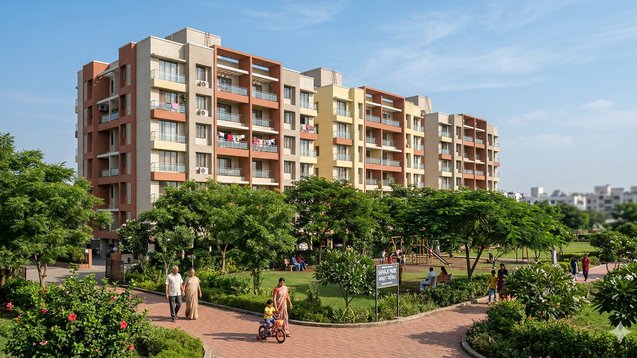
The buyers of a property concentrate their assessment on four main elements which include built-up area, available amenities, property connectivity, and price per square foot. Yet one of the most valuable long-term lifestyle advantages is proximity to parks and open grounds. Green spaces contribute to five main areas which include physical health, mental well-being and air quality and children’s development and property appreciation. The urban landscape in India faces escalating challenges because open spaces in Tier 1 cities of Mumbai and Delhi NCR and Bengaluru have become increasingly limited. The cities of Indore and Lucknow and Coimbatore still maintain better land distribution than other areas but their rapid growth has resulted in decreasing open space. The current space abundance in Tier 3 towns will decline as planned urbanization progresses throughout the area. Before shortlisting homes on Property Aaj (https://www.propertyaaj.com), it is important to understand how living near parks and open grounds can shape both daily comfort and long-term investment performance. The following section will investigate this topic through in-depth research.
Health Benefits of Living Near Green Spaces
People who select properties that are positioned close to parks receive their first health benefit which leads to better physical well-being. Residents in Tier 1 cities who face both traffic congestion and high pollution levels can access a nearby park which provides them with a secure area to walk and jog and practice yoga and do outdoor workouts. Parks function as essential resources which support the daily exercise routines of professionals who work in high-density areas. The residential development of Tier 2 cities includes public gardens and open areas which exceed the size of standard parks. The open fields of Tier 3 towns now exist together with the developing trend of establishing structured parks that include walking tracks. People who have access to green spaces will move more frequently which helps them develop better health outcomes through increased physical activity. People who live close to open areas will develop healthier everyday habits.
Mental Well-Being and Stress Reduction
The presence of green spaces has been scientifically shown to create a calming effect. People who spend time in natural settings with trees and lawns and open skies will experience decreased stress levels and better emotional states. The combination of rapid city life and extended commuting times in Tier 1 cities produces mental exhaustion among residents. A park located close to your home provides you with a natural space to relax without having to leave your residential area. People who take evening strolls or read peacefully beneath trees or watch greenery from their balconies will experience improved mental equilibrium. Open areas in Tier 2 and Tier 3 cities provide essential spaces for elderly citizens to relax with their communities. People require peaceful environments as vital resources which support their mental well-being throughout their entire lives.
Air Quality and Environmental Comfort
Parks and open grounds function as natural systems that filter air pollutants. The presence of trees enables them to take in harmful substances while they generate oxygen which helps to purify the surrounding atmosphere.In Tier 1 cities with high vehicle emissions, properties situated near green belts experience cleaner air conditions than those located in busy commercial areas. The microclimate difference creates an observable environmental impact although it does not completely remove all sources of pollution. Emerging residential areas in Tier 2 cities benefit from master planning which includes park development throughout their residential communities. The open spaces that remain intact in Tier 3 towns create ecological benefits for the environment. Improved air quality leads to better health outcomes for people especially children and elderly residents.
Child Development and Recreational Value
The presence of open spaces near their residence area between 2008 and 2010 brought about better development outcomes for their children. Public parks become essential because apartments in Tier 1 cities provide inadequate space for play. Children need secure outdoor environments because they require both exercise and chances to build social relationships. Parks provide space which supports creative development while enabling social collaboration and personal emotional progress. Residential colonies in Tier 2 cities offer their residents access to larger playgrounds which exceed typical playground dimensions. Tier 3 towns provide residents with open fields as outdoor areas but they do not offer residents any formal outdoor equipment for play. Parents use Property Aaj (https://www.propertyaaj.com) because they want properties which come with parks because parks provide developmental support for their children.
Property Appreciation and Market Demand
Green spaces enhance the value of real estate properties. In Tier 1 cities, park-facing properties usually sell for higher prices because these properties are less available than other types of real estate. Apartments that face large public gardens or green belts experience quicker value increases than apartments that face internal roads or commercial buildings. In Tier 2 cities, residential layouts with designated parks attract middle- and upper-income families which strengthens resale potential. Tier 3 towns are gradually witnessing similar trends as buyers become more lifestyle-conscious. Open space exists as a restricted resource. The limited supply of a resource will generate value growth when demand for that resource increases. You need to confirm that the park exists as official public land instead of being a vacant area which developers might use in the future.
Noise Levels and Community Activity
Parks create peaceful spaces yet they also attract people to come and spend time there.
The streets in Tier 1 cities experience moderate noise levels because morning joggers and children playing and special events happen during specific times of the day. Tier 2 cities may host local gatherings or seasonal events in open grounds. Public grounds in Tier 3 towns serve as venues for festivals and markets. Your activity pattern evaluation should determine whether it matches your personal preferences. Most residents find park-related noise pleasant and time-bound compared to traffic or commercial noise. You need to find a way to create lively space which also provides peaceful areas for people to enjoy.
Sunlight, Ventilation, and Visual Openness
Properties located near open spaces receive improved airflow and daylight access. In Tier 1 cities with high population density, park-facing buildings experience minimal building obstructions because which enables complete cross-ventilation and daily sun exposure. In Tier 2 and Tier 3 cities, open surroundings decrease population density while they increase air circulation. Sunlight provides health benefits while it controls indoor moisture levels and decreases the need for artificial light. People experience improved emotional well-being through visual openness. Residents who observe trees instead of building walls experience a feeling of open space and personal freedom. The property gains hidden worth through its environmental outlook.
Safety Considerations
Parks provide advantages, yet their security requires thorough assessment. Tier 1 cities maintain their parks as secure locations because these areas contain proper lighting and security patrols and active users. The poorly maintained open spaces become nighttime loitering hotspots. Some public areas in Tier 2 and Tier 3 towns lack adequate security systems. The property assessment should occur after assessing lighting conditions and cleanliness and foot traffic patterns. A public park that receives regular visitors becomes a safer space than an empty lot that remains unvisited.
Future Development Risks
Not all open spaces maintain their status as permanent space. The vacant lands of Tier 1 cities show open ground status but actually belong to private owners whom they subsequently transform into commercial and residential developments. The towns of Tier 2 and Tier 3 possess the ability to transform vacant areas into new development projects. The municipal records and developer documentation serve as proof for verifying land-use classification. The designated parks and green belts provide better protection than temporary vacant areas. Your view and your way of life will receive protection through your extended planning efforts.
Investment versus Personal Use Perspective
The self-use purchase of a property will bring you more lifestyle advantages than other benefits. The rental market needs assessment in your investment evaluation process after you identify your main investment objectives. The park-facing apartments in Tier 1 cities provide families and working professionals with better rental potential because they offer park views. The demand for green-integrated housing models shows an upward trend in Tier 2 markets. The residents of Tier 3 towns show a growing inclination toward such properties although their preference remains at moderate levels. The website Property Aaj (https://www.propertyaaj.com) allows you to compare similar listings for park-facing and non-park-facing units to determine their pricing differences. The strategic placement of assets will lead to enhanced financial returns that emerge throughout time.
Conclusion
People select properties that are situated close to parks and open spaces because they desire outdoor beauty and walking paths that lead to safe public areas which provide health benefits and create good emotional states and result in financial savings. Green spaces in Tier 1 cities offer inhabitants one of their few opportunities to escape from both urban congestion and air pollution. Integrated parks in Tier 2 cities improve the quality of family life throughout their entire process. The preserved open areas in Tier 3 towns provide sustainable environmental protection for all future generations. All potential customers must complete proper evaluation of park maintenance and safety and legal status and noise levels and future development plans before they make any purchase through Property Aaj (https://www.propertyaaj.com). Green spaces provide multiple benefits to residential areas because they create better living conditions and help children grow and develop and they improve mental health and they increase property value. A home near nature is not just an address. The residence functions as a home. The residence functions as an investment. The residence provides benefits which extend throughout a person's entire life.
FAQs
1. Do park-facing properties cost more?
Yes, they often command a premium because their supply remains limited while demand for them increases.
2. Are parks always beneficial for resale value?
The answer is yes because the park needs to receive official designation and proper maintenance.
3. Can parks create noise issues?
The public activities produce noise during certain times but this noise level remains lower than traffic sounds.
4. How can I verify if an open ground will remain undeveloped?
You need to examine municipal land-use records together with development plans.
5. Are park-facing homes better for children?
The outdoor areas provide children with secure spaces to play which supports their physical development.
6. Does proximity to green space improve air quality?
Tree cover together with reduced traffic congestion creates localized air quality improvements.
Read more about property matters with our specialists and browse the latest property listings on Property Aaj. Download the app from the Play Store and App Store now for easy buying, selling, and renting!