Introduction
Homebuyers typically evaluate a property based on five criteria which include its selling price and total square footage and available features and transportation access and expected value growth. Local demographic information exists as the primary element which determines human happiness. Local demographics refer to the characteristics of the people living in a neighborhood. The population of an area includes different age groups and family structures and income levels and cultural backgrounds and occupational patterns and educational levels and common lifestyle patterns. The social atmosphere of a region develops through these elements which make a direct impact on your ability to comfortably live there. The demographic makeup of Mumbai and Delhi NCR and Bengaluru shows enormous differences in their residential areas throughout their entire city spaces. Certain colonies in Indore and Lucknow and Coimbatore attract specific groups of professionals and families to their neighborhoods. In Tier 3 towns, demographic clustering may be influenced by community ties, occupation types, or historical settlement patterns. The local demographic profile needs to be assessed before making a property decision at Property Aaj (https://www.propertyaaj.com) because it helps people avoid future dissatisfaction while they find suitable properties to match their lifestyle needs. The following section presents a comprehensive explanation of the subject matter.
Age Distribution and Lifestyle Alignment
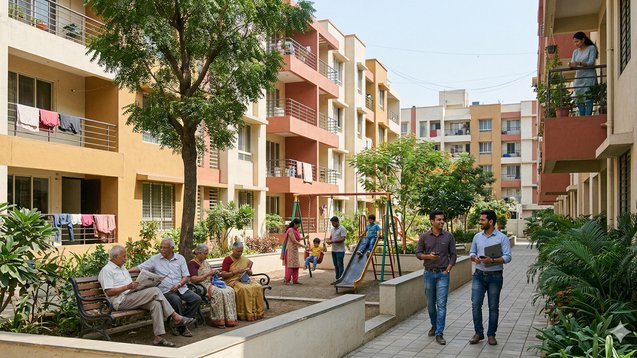
The age distribution of residents in a neighborhood determines how comfortable people experience their daily activities. The apartment complexes in Tier 1 cities exhibit their primary occupancy through young working professionals who live there. The areas experience active nightlife combined with social gatherings that occur frequently, which leads to high rental turnover rates. The neighborhoods showcase their dynamic energy, yet they do not provide suitable environments for families with young children or elderly people who prefer peaceful spaces. The city shows different family patterns, which result in other communities having more residents who belong to family units or elderly groups. The neighborhoods in this area concentrate on developing parks and educational institutions and religious temples and community centers. Residential areas in Tier 2 cities that exist close to schools and coaching centers attract students who need housing. The traditional neighborhoods in Tier 3 towns show their original design through multi-generational families who share their homes with close relatives. The young professional who spends time with colleagues from his age group will discover new people to meet and build connections with. The presence of other families in your neighborhood creates a safe environment that promotes social bonds within your community. People experience more comfort when their current age group matches their existing life stage.
Family Structure and Community Culture
Some neighborhoods are divided into areas that contain nuclear families and areas that contain joint families and shared accommodations. The rental-heavy areas of Tier 1 cities experience tenant turnover because people move out and new tenants move in. The approach reduces community bonding which lasts for extended periods while it provides people with more flexibility. Family-owned residential properties in Tier 2 and Tier 3 cities help residents build better neighborhood relationships and maintain their cultural customs. Joint family clusters may encourage close-knit community interaction but they will create more social contact than some individuals want to face. The rental-focused neighborhoods provide their residents with private spaces but they lack communal assistance. The choice of your residential area depends on your preference for interacting with neighbors and celebrating festivals with them. Your preference for privacy will make rental-heavy areas and professional neighborhoods better options for your needs. People find happiness when their lifestyle matches the requirements of their daily existence.
Income Levels and Maintenance Standards
Infrastructure quality together with maintenance standards receive direct impact from local income levels. Higher-income residential complexes in Tier 1 cities maintain superior security systems together with better landscaping and amenities than their lower-income counterparts. Mid-income areas can provide maintenance support but their primary resources remain limited to basic facilities. Lower-income communities experience difficulties which affect their ability to maintain public spaces and receive essential municipal services. The same patterns which exist in Tier 2 cities also exist in Tier 3 cities. Residents of well-planned colonies who possess financial stability demonstrate superior abilities to manage their drainage systems and security measures and cleaning operations. The distribution of income among people in a certain area impacts the value growth of their real estate. Areas that attract professionals who seek upward mobility will face increasing demand from these workers. When browsing properties on Property Aaj (https://www.propertyaaj.com) visitors should assess both the apartment and the surrounding social and economic conditions. A neighborhood that receives proper maintenance provides residents with increased comfort while boosting the market value of their property.
Occupation Patterns and Daily Activity Levels
Residents establish their daily patterns through their professional work experience. Employees who work during night shifts or have flexible work schedules need to stay in residential areas close to tech parks which exist in Tier 1 IT hubs such as Bengaluru and Gurugram. The situation causes drivers to follow unpredictable driving routes while people use the streets for their activities during nighttime hours. People who work in industrial facilities of Tier 2 cities will encounter morning traffic during their workplace travel to locations that lie close to factories. The residents of Tier 3 agricultural towns and small commercial towns begin their daily activities earlier while maintaining a quiet atmosphere throughout the nighttime hours. The study of these patterns enables predictions about noise levels and parking issues and the timing of public activities. A mismatch between your routine and neighborhood rhythm can create subtle daily discomfort.
Cultural and Social Compatibility
The neighborhood environment develops through local cultural traditions and social customs. The apartment buildings of Tier 1 cities provide residents with a multicultural experience because they house people from various backgrounds who speak different languages. The situation offers benefits but people must develop new skills to handle it. The cultural makeup of neighborhoods in Tier 2 and Tier 3 towns tends to remain consistent throughout their entire area. Common dietary habits and social practices during festivals follow traditional practices. The understanding of local customs creates compatibility between people from different backgrounds while it develops understanding between cultures. The process of building respect and understanding between people creates a comfortable atmosphere which lasts for an extended period.
Safety and Social Awareness
Security systems receive indirect influence from demographic factors. The existence of informal surveillance systems becomes stronger in family-dense areas because residents possess knowledge about their neighbors. This can deter petty crime. The presence of rental properties causes frequent tenant changes which leads to reduced neighbor familiarity, thus requiring these areas to implement advanced security measures. Gated communities in Tier 1 cities establish professional security systems. The residents of Tier 2 and Tier 3 areas create community watch systems which help raise security awareness in their neighborhoods. People perceive safety through their existing sense of security. The evaluation process requires assessment of three elements: lighting systems and CCTV cameras and community safety programs developed by residents.
Education and Child Development Environment
Family neighborhood demographics determine the complete development of their children. Families who want their children to succeed academically choose to live in Tier 1 cities because they want to reside near high-quality educational institutions. The educational environment in Tier 2 cities develops strong educational values which provide close access to coaching centers throughout residential neighborhoods. Tier 3 towns provide limited educational opportunities which only exist in designated educational areas. Children benefit from peer groups with similar educational priorities. The development quality improves through the availability of parks and tuition centers and safe walking paths. The selection of a neighborhood that matches your parenting beliefs will create greater family contentment throughout your family's life.
Property Appreciation and Liquidity
The property demand for the future will be determined by demographic patterns. Young professionals will provide high rental demand for neighborhoods which will result in increased tenant turnover. Family-dominated areas will experience steady growth through their continuous property value increases. Areas that lose population will experience decreased development speed. Migration patterns in Tier 1 cities create continuous changes to urban development. The growing infrastructure in Tier 2 cities creates new opportunities for different demographic groups. The industrial development of Tier 3 towns will lead to their transformation into urban centers. You need to assess the demographic trend before making your purchase decision. A neighborhood with positive demographic momentum strengthens long-term investment potential.
Emotional Comfort and Sense of Belonging
Infrastructure provides living comfort but emotional connections define which facilities people find comfortable. Do you feel at ease walking through this neighborhood? Do neighbors acknowledge each other with greetings? Does the space create a friendly environment? Do your daily activities match with the established schedules? You need to observe the property during different times of the day to understand its usage patterns. You need to observe how people interact with each other. You need to talk to the local shopkeepers and security guards. The social cues which people use to interact with each other create more information than what the brochures present. Your home achieves maximum comfort when you develop a sense of belonging.
Conclusion
Your daily life experiences get strongly influenced by the demographic makeup of your local area. Tier 1 cities require detailed analysis of different locations because their residents come from diverse demographic backgrounds. The growing urban areas of Tier 2 cities will create new opportunities for specific professional and family groups to settle there. The community based settlement patterns in Tier 3 towns continue to show their significant impact on development. The Property Aaj website (https://www.propertyaaj.com) requires all users to assess age distribution and income levels and occupation patterns and cultural compatibility and long-term demographic trends before making a home purchase decision. The wrong social environment makes a well-priced home less comfortable for its occupants. A home that costs moderately provides its residents with happiness during multiple years because it exists in an appropriate demographic environment. Your property selection process requires you to determine which community members will become your new neighbors.
FAQs
1. Why are local demographics important when buying property?
Local demographics determine residential comfort and safety and community culture and property value growth over time.
2. Should families avoid areas dominated by young professionals?
Families should check both lifestyle suitability and noise characteristics before choosing their residential area.
3. Do income levels affect property value?
Yes. Higher-income neighborhoods tend to have superior infrastructure which results in higher resale value for their properties.
4. How can I check neighborhood demographics?
People can learn about neighborhood demographics through visiting the area and talking with residents and observing school and community center facilities.
5. Do demographics change over time?
Yes. Neighborhood demographics undergo transformation through population movement and infrastructure development and economic expansion.
6. Is demographic compatibility more important than price?
The two factors matter for decision making but social compatibility determines how people will feel about their space for an extended period.
Read more about property matters with our specialists and browse the latest property listings on Property Aaj. Download the app from the Play Store and App Store now for easy buying, selling, and renting!