Introduction
Homebuyers typically consider five main factors which are location, price, size, amenities, and appreciation potential when they make their purchasing decision. Safety infrastructure stands as the most vital aspect which receives insufficient recognition. A property appears attractive on paper because its documentation shows value, but its security systems, emergency preparedness, and civic infrastructure require assessment because they determine long-term peace of mind and comfort. The term safety infrastructure encompasses security elements that operate within the property and public safety systems that exist beyond the property boundaries. The system includes gated entry, CCTV coverage, fire safety systems, emergency access roads, street lighting, police presence, disaster preparedness, and neighborhood design. High-density living in cities such as Mumbai and Delhi NCR and Bengaluru requires organized safety systems according to their Tier 1 city classification. The rapid expansion of Tier 2 cities such as Indore and Lucknow and Coimbatore requires an assessment of both private and municipal safety standards. Tier 3 towns provide peaceful surroundings, but they often lack modern emergency services. The process of selecting homes on Property Aaj (https://www.propertyaaj.com) requires users to learn how safety infrastructure affects their daily comfort and their property's future worth.
Gated Entry and Controlled Access
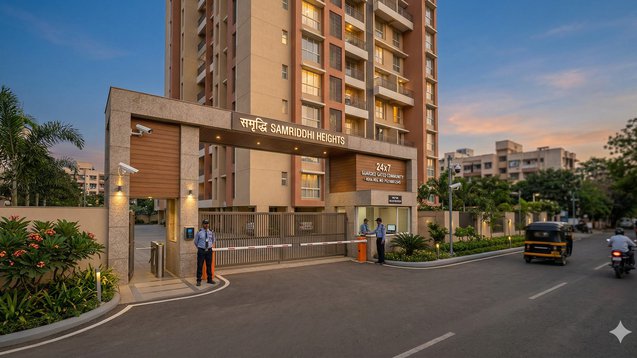
The first safety element which needs assessment begins with entrance access control. Most contemporary apartment buildings in Tier 1 cities provide secure entry points which include security staff and mechanisms to record visitors. The two primary methods used for visitor access at present include biometric systems and RFID tags and visitor approval through intercom systems. The security features implement these systems to establish better security protection measures against unauthorized access attempts. Entry security standards which permit access to specific areas constitute the entry control systems used by new residential developments in Tier 2 cities. In Tier 3 towns, gated communities become attractive to developers who want to create secure residential areas while residents maintain their connections through informal local networks. Controlled access systems function as essential security measures for families with young children and for professionals who travel extensively and for senior citizens who reside by themselves. Security begins at the gate.
CCTV Surveillance and Monitoring Systems
The operation of contemporary safety systems depends on the use of CCTV cameras as essential components. The CCTV system of Tier 1 apartment complexes provides security coverage to all entry points and all parking areas and all elevator shafts and all corridors and all common areas. The buyers must inquire about maintenance requirements and security monitoring systems because different systems have different footage preservation methods. The gated communities in Tier 2 cities now use CCTV systems for their security needs but their coverage levels vary throughout the area. The high-end developments in Tier 3 towns provide surveillance services to their residents while the older sections of the town lack any security monitoring system. CCTV systems do not stop every incident from occurring but they function as a security measure which helps to identify who performed specific actions. The camera system needs to operate as functional equipment rather than serving as ornamental elements.
Fire Safety Systems and Emergency Preparedness
The most important thing to consider when building homes is fire safety requirements. The fire safety regulations which apply to Tier 1 high-rise buildings must include sprinkler systems and fire alarms and extinguishers and refuge areas and emergency staircases. The projects have different levels of compliance with the established requirements. Always check the schedule for fire audits which should occur at regular intervals. New developments in Tier 2 cities meet current safety standards while older buildings do not possess contemporary fire safety systems. The verification process becomes essential because Tier 3 towns enforce high-rise fire regulations at a minimum level. You need to look for fire exits which display clear signs and alarms which work properly and stairways which you can access without hindrance. Find out if they perform fire drills as part of their safety training program.
A property without proper fire safety is a long-term risk.
Emergency Access and Road Design
Roads which surround a building determine how safe the area will be. The narrow internal lanes of Tier 1 cities create obstacles for ambulance and fire brigade operations. The property must provide adequate road space which allows emergency vehicles to access the site. Emergency situations create major problems because high-density areas experience extreme traffic blockages. Tier 2 cities have wider street designs in their contemporary projects while commercial development creates street blockades. The spacious surroundings of Tier 3 towns provide space but the towns lack adequate systems for emergency response operations. You need to check the property access from main roads to main roads because you need to check for traffic flow blocks. Emergency situations require immediate access which can protect human life.
Street Lighting and Public Safety
The way people feel about security depends on how much light is present outside their environment. The streets of Tier 1 cities which receive proper lighting establish safer conditions which make it easier for people to walk through the area during nighttime hours. The lighting conditions in residential areas depend on their specific requirements. The development of Tier 2 cities shows different patterns between their built areas and their less developed sections. The lighting systems in Tier 3 towns function with restricted public lighting resources. People should explore their neighborhood after dark. The investigation will assess light visibility in dark regions and the way people move through the area. A space with bright lights provides protection and helps people feel at ease.
Neighborhood Crime Patterns and Police Presence
The comprehension of local safety statistics holds substantial value. The crime rates in Tier 1 cities show significant differences between their various micro-locations. The existence of police stations and active patrol areas helps to enhance community protection. The residential areas of Tier 2 cities maintain low crime rates but they lack complete security monitoring. The towns in Tier 3 depend on their residents to keep watch over their streets. People should talk to the residents and shopkeepers to get a better understanding of what actually occurs. The presence of police officers who patrol the area between their response times and neighborhood watch programs creates positive effects. The way people feel about their safety matches the actual level of security which exists.
Disaster Risk and Structural Safety
Different natural disasters like floods and earthquakes and cyclones and waterlogging events affect various parts of India because of its diverse geographical features. Engineers need to assess the drainage systems of flood-prone areas located in Tier 1 cities which include Mumbai and Chennai. The Delhi NCR region needs to meet seismic building standards because of its earthquake risks. The two lower-tier towns face specific dangers which include seasonal flooding and extreme heat events. Ask about building structure compliance with seismic norms. The assessment needs to include drainage system performance together with basement water defense systems. Safety infrastructure includes structural resilience.
Parking Security and Vehicle Safety
Parking areas operate as security risk zones. The basement parking area of Tier 1 apartment complexes requires CCTV coverage together with sufficient lighting. The open parking area of Tier 2 and Tier 3 standalone buildings permits parking but restricts security monitoring. The assessment needs to check whether entry points operate under control measures and whether visitor parking areas exist separately from resident parking spaces. Vehicle security affects both property value and daily peace of mind.
Child-Friendly Safety Features
Child safety infrastructure exists as an essential requirement for families. The implementation of secure play zones that feature perimeter fencing and soft surface materials has become standard practice in Tier 1 gated communities. The complex requires effective methods for managing traffic which needs to be controlled throughout the entire area. The outdoor spaces of Tier 2 and Tier 3 neighborhoods with their low traffic volumes provide residents with safer walking areas that exist throughout their communities. Examine internal roads to see whether they contain speed breakers together with designs that support pedestrian movement.
The safety infrastructure needs to deliver protection for all residents who need special assistance to stay safe.
Impact on Property Value and Resale
The presence of strong safety infrastructure attracts more property buyers to the market. Buyers in Tier 1 cities show a demand for gated communities that provide advanced security systems. Organized layouts with professional management systems have become essential requirements for Tier 2 markets. Structured security systems now exist in premium projects across Tier 3 towns which gradually develop into organized security systems. Properties that display safety systems through visible means will experience faster resale times together with increased demand for rental properties. When you check out Property Aaj listings at https://www.propertyaaj.com, you should give priority to projects that have established security management systems and meet compliance requirements. Safety measures secure the financial assets of a business over extended periods.
Conclusion
A home selection process requires safe infrastructure assessment because it functions as a mandatory requirement. The organized security systems and fire compliance and surveillance systems in Tier 1 cities function as essential components which protect the urban areas from their high population and traffic volume. The rapid expansion of Tier 2 cities needs developers to conduct thorough assessments which apply to both their existing and future building projects. The buyers who want to purchase properties in Tier 3 towns need to confirm their homes' structural durability and their understanding of the local community. The evaluation of gated entry systems and CCTV coverage and fire safety compliance and emergency road access and street lighting and police presence and disaster preparedness should take place before consumers make their buying decision through Property Aaj (https://www.propertyaaj.com). A home should provide its inhabitants with comfort yet it must establish safety as its first requirement. Investment returns hold importance for investors. But the investor needs his mind to be at complete rest.
FAQs
1. Which safety features should I select as my top priority for an apartment building?
The gated entry together with CCTV coverage and fire safety systems and emergency exits are the main requirements for security purposes.
2. Do gated communities provide better security than other types of residential areas?
The system provides better security through controlled access points although the security level depends on how well they maintain their premises.
3. What steps should I take to verify fire safety compliance within a building?
You should request fire audit certificates and check all visible fire protection equipment which includes extinguishers and alarms.
4. Does safety infrastructure affect resale value?
Yes. Secure properties generate higher demand which leads to quicker resale times.
5. What benefits does visiting the area at night provide?
The safety assessment process requires you to observe how darkness affects both lighting conditions and people present in the area.
6. Is safety more important in Tier 1 cities?
All tiers require safety yet the higher population density of Tier 1 cities needs more effective safety systems.
Read more about property matters with our specialists and browse the latest property listings on Property Aaj. Download the app from the Play Store and App Store now for easy buying, selling, and renting!