Introduction
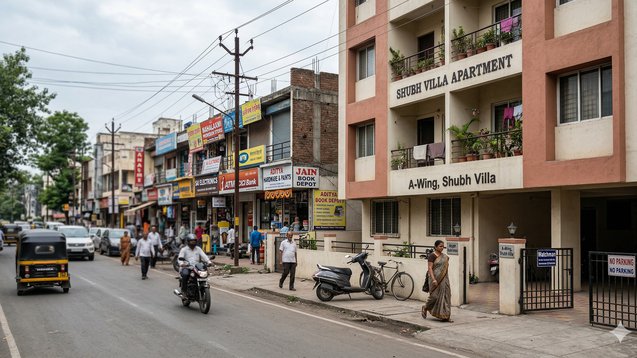
Most people who choose their homes make their most important choice when they decide between residential space and commercial space. Commercial areas include office complexes, shopping streets, markets, malls, hospitals, schools, IT parks, and mixed-use developments. The convenience of these hubs increases property value but their presence brings about noise problems and traffic issues and privacy loss and ongoing changes to personal life patterns. The process of urbanization in India has created a situation where people need to live in areas which combine commercial and residential zones. The mixed-use corridors of Tier 1 cities which include Mumbai and Delhi NCR and Bengaluru contain commercial spaces and residential districts and office buildings. The residential areas of Tier 2 cities which include Indore and Lucknow and Coimbatore are becoming semi-commercial spaces. The improved infrastructure of Tier 3 towns has started to bring about the same changes. People should ask themselves about two questions when deciding whether to live near commercial areas. Can you consider these areas as smart investments which will grow in value through time? Your answer will depend on three factors which include your personal values and your financial objectives and the particular location you are examining. The complete impacts of a property investment must be studied before you select your properties from Property Aaj (https://www.propertyaaj.com).
Understanding What “Near Commercial Zone” Really Means
Commercial zones differ from each other because they have different characteristics. A property next to a quiet office complex operates very differently from one adjacent to a busy wholesale market or late-night food street. Commercial zones in Tier 1 cities include IT parks and corporate towers and large malls. The areas experience heavy traffic during weekdays but become less active on weekends. Commercial expansion in Tier 2 cities occurs when retail stores and coaching centers and medical hubs develop in residential areas. Retail activities in Tier 3 towns occur at smaller market clusters and main-road retail locations. Distance also matters. The experience of living across from a commercial complex differs from the experience of living two streets away. A property slightly removed from the main road may enjoy benefits of proximity without full exposure to its downsides. Micro-positioning determines comfort more than the general label of "commercial. "
Advantages of Living Near Commercial Zones
The most significant benefit of living in Tier 1 cities arises from their workplace proximity which suits residents who face extreme commute challenges. Daily office work in Bengaluru's IT corridor and Gurugram's corporate hub offices enables people to save multiple hours. The advantages of shorter travel distances include reduced tension and lower expenses for fuel and travel exhaustion. People need daily necessities which provide them with another important benefit. People can reach grocery stores and pharmacies and banks and restaurants and clinics by walking to these locations. People in Tier 2 and Tier 3 cities can decrease their need for motorized transport when they choose to live close to market areas. Rental demand is typically stronger in such areas. Young professionals and small business owners prefer convenience. Properties located near commercial zones tend to achieve higher occupancy rates according to investor findings. The strength of appreciation potential exists in particular situations. Mixed-use areas experience land value increases through rising residential and commercial development requirements which result from infrastructure advancements. The two main advantages of the system provide users with multiple benefits.
Disadvantages You Must Carefully Evaluate
The benefits of being close to something will result in negative effects. The first problem which needs to be solved arises from traffic congestion. The commercial centers of Tier 1 cities create constant vehicle movement which peaks during their busiest times. Daily life gets disrupted by noise which comes from people honking their horns and delivery trucks and construction work. Tier 2 cities now face traffic problems which emerged because commercial areas expanded their boundaries. Market times lead to strong traffic flow which affects even the smallest Tier 3 towns. The need for parking creates additional difficulties. People who visit nearby offices or shops will park their vehicles on residential streets which decreases available parking space for local residents. The situation creates problems because people become unable to reach agreement. People need to consider how their actions will affect their ability to maintain confidentiality. Businesses located on commercial roads will experience increased foot traffic which results in greater visual access to their premises. The design of ground-floor homes creates security risks. People who work during late-night hours will create disturbances which interrupt their sleep. The constant operation of restaurants and cafés and medical facilities creates a situation where background noise becomes permanent. People should never let their need for convenience take control over their ability to maintain inner peace.
Impact on Property Value and Resale
Properties that exist close to commercial areas show different value growth patterns when compared to properties that exist in residential-only districts. The mixed-use corridors between Tier 1 cities show high demand because they provide easy accessibility to different destinations. The residential area begins to lose its appeal when there becomes too much commercial development in the area. Quiet internal roads attract family buyers who want to live in peaceful environments. The initial price increase occurs within Tier 2 markets when residential areas transition to semi-commercial zones. Family buyers will abandon the area when traffic problems reach unmanageable levels. Tier 3 towns show two opposite trends that develop simultaneously. Main-road properties may command premium rates due to potential business use, but interior residential lanes remain more stable for family living. The long-term zoning patterns require analysis before you make any purchases through Property Aaj (https://www.propertyaaj.com) website. A neighborhood that exists in peace today will undergo transformation into a commercial area that operates as a retail space. The study of master plans needs thorough examination together with proposed infrastructure development projects.
Health and Environmental Considerations
People who live close to active commercial zones experience higher levels of air pollution. Vehicle emissions together with dust build-up lead to respiratory problems which particularly affect children and elderly people. In Tier 1 cities, pollution levels near commercial arteries are often significantly higher than interior residential areas. Localized traffic congestion in Tier 2 and Tier 3 cities leads to air quality deterioration despite their lower pollution levels. The second major problem consists of noise pollution. People experience increased stress and sleep problems because background noise creates continuous sound without reaching high volume levels. The actual traffic conditions can be assessed by visiting the property during its peak traffic hours and late evening times. A home should serve as a place where people can recover from their everyday life.
Security and Crowd Dynamics
Commercial areas attract larger crowds. The rise in foot traffic leads to better street illumination together with enhanced police presence, while simultaneously boosting the likelihood of petty thefts and public disturbances. Professional security systems protect apartment complexes from threats in Tier 1 cities. The standalone houses which exist in Tier 2 and Tier 3 towns close to active markets need extra security systems for protection. The assessment needs to include all aspects of light conditions together with CCTV surveillance and boundary wall protection and the existing safety systems in the neighborhood. Security and comfort both depend on how many people are present in a particular space.
Lifestyle Compatibility
Your current life stage represents a key factor that determines which choice you will make. Young professionals in Tier 1 cities may prefer locations that provide both office access and social gathering spaces instead of choosing quiet environments. Dual-income couples in Tier 2 cities may prefer convenience for daily errands.However, families with young children or retirees may value quieter surroundings. Remote workers choose residential areas that provide distance from their homes while maintaining peaceful environments. Entrepreneurs who operate their businesses from home offices will find that commercial visibility helps their small enterprises. There is no universal answer. The right choice depends on your priorities. The Property Aaj website enables users to filter available properties through multiple criteria which include both price and size and the patterns of land use in the area.
Future Development Risks
Urban areas experience continuous growth because their development patterns keep changing. The development of new commercial zones in urban regions leads to expansion of nearby residential areas. New metro systems and expressways will create more traffic through the commercial areas of Tier 1 cities. The construction of new malls and office parks in Tier 2 cities will lead to an increase in daily visitors. Tier 3 towns that achieve smart city status will undergo fast changes to their zoning regulations. Verify the commercial development status of adjacent parcels. The things we handle now will become unmanageable after five years. Real estate decisions must consider future realities, not just present conditions.
When Living Near Commercial Zones Makes Sense
The property needs to be located beyond main commercial road boundaries yet needs to exist within close proximity to the street. The situation becomes advantageous when traffic on the road operates in an orderly manner rather than showing disorganized movement. The location possesses advanced infrastructure systems together with effective water drainage capabilities.Your investment plan includes rental properties as one of your methods to create income streams.Your lifestyle needs accessibility more than it needs peace and quiet. People should stay away from the following situations: The property needs to be located on main roads which link to busy traffic areas. The area experiences permanent high sound levels. The situation becomes difficult because there are extreme shortages of available parking spaces. The existing zoning rules permit businesses to extend their operations without any restrictions. People need to find a way to manage their accessibility needs while maintaining their need for comfortable spaces.
Conclusion
The assessment of homes located near commercial areas requires deep examination, which is essential for making a decision about their suitability for purchase. The rental market in Tier 1 cities shows high demand because of their proximity to destinations, yet this convenience results in decreased residential tranquility. Citizens need to conduct thorough investigations about the economic development of commercial areas which will develop in Tier 2 cities because they will bring new traffic patterns to their neighborhoods. The zoning changes in Tier 3 towns will enable rapid transformation of their local community identity. The best time to visit is during peak business hours. The next step involves interviewing local community members. The investigation requires a thorough examination of urban development records. The evaluation process requires detailed comparison of all available options which can be accessed through Property Aaj (https://www.propertyaaj.com). A residential property that exists near commercial zones functions as an advantageous investment opportunity. A residential property that exists in a bad location creates multiple daily problems. The decision requires your direct involvement.
FAQs
1. Is property near commercial zones good for investment?
The answer is yes because strong rental demand and good accessibility both exist, but noise and congestion dangers need to be assessed through detailed study.
2. Does living near a market increase noise?
The answer is yes because markets create noise during their busiest times which occur during peak shopping hours and weekends.
3. Are such properties harder to resell?
The answer is no because properties which connect with multiple highways will attract investors, but they will not appeal to most family homebuyers.
4. Is pollution higher near commercial belts?
The answer is yes because commercial areas generate greater traffic which leads to more pollution.
5. Should families avoid commercial areas?
People who have families will choose to live on quiet interior streets, but they will find it easy to reach commercial areas if they maintain a proper distance.
6. Can zoning change after I buy?
Yes. The system of urban master plans will eventually transform residential areas into mixed-use zones.
Read more about property matters with our specialists and browse the latest property listings on Property Aaj. Download the app from the Play Store and App Store now for easy buying, selling, and renting!