Introduction
Indian families today are undergoing changes. The joint family system which existed in the past continues to exist today because modern families now include step-parents and step-siblings and stepfamily members who join together after parents remarry. Blended families introduce special family dynamics which come with their own distinct family obligations and emotional challenges. Families who plan to purchase a house need different requirements than standard nuclear families. Blended families need to create their property selection process through dedicated assessment work. Creating a living space requires both proper size and sufficient location access because people need spaces that help them maintain peaceful relationships while keeping their personal areas and shared spaces movable throughout the day. Family members create different standards to define their ideal home space which includes their daily life activities and sleeping areas. The design of a home space enables people to experience social harmony because the design space helps people feel they belong to the home environment. Across India, property choices vary widely. The cities of Mumbai and Bengaluru and Delhi require careful space design because their limited areas charge high costs for every square meter. The cities of Pune and Jaipur and Indore provide their residents with more affordable housing options which come with larger residential spaces. The residents of Tier-3 towns enjoy extensive residential areas and peaceful living conditions but they need to assess the quality of urban facilities and transportation systems. Property Aaj (https://www.propertyaaj.com) provides online property platforms which allow buyers to evaluate three different types of verified property listings and to search for larger residential properties which have multiple sleeping areas. The right home can create a stable environment which enables blended families to develop their personal lives when people choose their home.
Understanding the Unique Needs of Blended Families
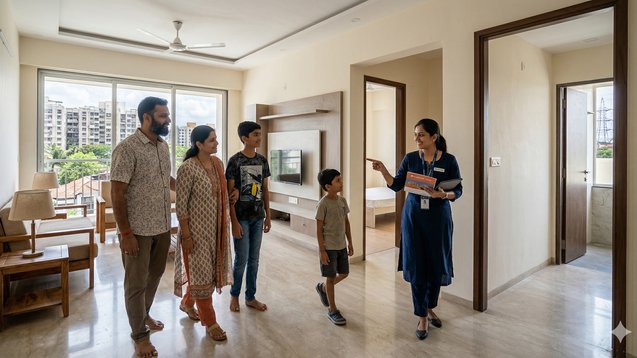
The members of blended families display difficulties in adapting to their newest household arrangements. The children experience difficulties while the parents develop existing family traditions. The household setting serves as an essential element which helps people achieve emotional stability and physical relaxation. Blended families need more than two bedrooms and multiple common areas because they require spaces which allow their members to interact together and their members to have private time. The need for privacy becomes crucial for teenagers who require time to adjust their response to changing family relationships. The presence of multiple bedrooms and dedicated spaces for different activities decreases the frequency of daily disputes. The design of a house which contains a family room and study area and separate bedrooms enables people to interact with each other while still maintaining their personal spaces. Through Property Aaj (https://www.propertyaaj.com) buyers search for bigger homes and apartments which feature flexible designs that meet various needs of their families.
Prioritizing Spacious Layouts
The layout of a home becomes crucial for blended families because they require both space and proper organization to function effectively. A property with poorly designed spaces can feel cramped even if it appears large on paper. Each child should have access to a comfortable sleeping space according to ideal sleeping arrangements. The study areas and storage spaces which siblings use for their personal belongings create boundaries that help maintain their private space when they share a bedroom. Family gatherings need living rooms and dining areas which provide enough space to entertain without creating a crowded atmosphere. The home design permits open interactions between house members while creating separate areas which people can use for specific purposes. The space limitations in Tier-1 cities force buyers to select home designs which use space efficiently. The larger apartments and independent houses in Tier-2 and Tier-3 cities provide more room for families than smaller living spaces. The Property Aaj website (https://www.propertyaaj.com) provides Property search tools which enable buyers to evaluate different floor plans and find homes which create comfortable environments for family living.
Balancing Privacy and Togetherness
The most difficult aspect of blended families requires them to discover suitable times for family activities while respecting their individual need for privacy. Children need time for personal space because they require rest when their family structure changes. Multiple bathrooms and quiet study areas together with separate bedrooms create an environment that supports this need. Parents require a special room which functions as their personal space to relax after completing their daily work responsibilities. The design of meeting spaces such as living rooms and dining areas creates opportunities for families to connect with each other. Families use these areas to develop fresh daily patterns while they construct common experiences. The home design uses a special layout which combines public spaces with private spaces to create a safe environment where every family member can feel at home.
Choosing Family-Friendly Communities
The residential neighborhood surrounding a blended family community provides essential support to their needs. Children in neighborhoods that include parks and playgrounds and recreational areas can use these spaces to meet friends and develop social skills. Gated communities attract larger families because these communities provide better security measures and restricted entry points and shared facilities which include swimming pools and sports courts and community halls. The shared spaces in these facilities enable residents to connect with one another while providing families the opportunity to create social networks which offer them assistance. Community friendships help children who experience new family transitions because these relationships give them both security and self-assurance. Buyers use Property Aaj (https://www.propertyaaj.com) to evaluate family-friendly residential projects because the website shows all available amenities and neighborhood characteristics of each property.
Considering School and Healthcare Access
The presence of children from multiple age groups in blended families makes it essential to have their educational and medical needs met through school and healthcare facility access. The proximity of schools to residential areas enables students to travel shorter distances while establishing regular school schedules. The demand for properties which are located near prestigious schools remains strong because these properties maintain their value over time in large metropolitan areas. The importance of healthcare access increases when families include young children and senior citizens. The ideal location for hospitals and pediatric clinics and pharmacies should be established to provide convenient access from residential neighborhoods. Across Tier-2 cities, educational and healthcare infrastructure has expanded significantly, making them attractive locations for families seeking a balanced lifestyle.
Evaluating Financial Practicality
The purchase expenses and upkeep requirements and utility charges for larger houses exceed those of smaller residences. Blended families should carefully evaluate their financial capacity before selecting a property. The home loan EMIs must stay within the limits of the family's monthly income. People who exceed their financial limits will experience both immediate monetary difficulties and long-term financial problems. Some buyers choose properties that offer future flexibility, such as homes with convertible spaces or additional rooms that can adapt to changing family needs. Property Aaj (https://www.propertyaaj.com) provides families with an opportunity to explore various price ranges and housing alternatives which help them find homes that meet their budgetary requirements while providing comfortable living spaces.
Planning for Future Changes
Family requirements experience developmental changes throughout different time periods. The process of growing up leads to shifts in educational necessities and changes in residential situations. Blended families require properties that allow them to adapt their needs for different situations. Homes which provide flexible room designs through their extra spaces that function as offices and guest rooms create permanent value. Compared to small apartments, independent houses and duplex apartments offer more flexible living options. In rapidly expanding Tier-2 and Tier-3 cities buyers discover properties which deliver affordable prices and spacious living areas. The homes of this design can transform themselves to meet the evolving needs of family members throughout their lives. Future planning ensures that a property will continue to meet family requirements for an extended period.
Creating a Positive Living Environment
The emotional comfort which a home provides needs to be present in addition to its practical functions. Blended families require spaces which create a warm atmosphere to establish their connections. Family bonds become stronger through warm indoor spaces which include shared areas and outside zones. Family members will find relaxation spaces through common elements which include balconies and small gardens. Families who move to new homes should choose properties located in neighborhoods where friendly residents create a supportive atmosphere. The property needs to provide a secure environment which allows all family members to feel important and have social connections.
Conclusion
The process of selecting a property for blended families needs careful assessment and understanding of the individual requirements of each family member. The home needs three essential elements which include space and privacy and flexible design options because these elements create a peaceful atmosphere. The Indian real estate market meets the housing needs of buyers who search for homes in Tier-1 cities and Tier-2 cities and Tier-3 towns. The different locations provide distinct benefits which include different space options and cost-effective solutions and transportation systems.Through the assessment of property designs together with the evaluation of community facilities and funding aspects and future development possibilities blended families can discover residences which enable them to maintain both self-sufficiency and family bonding. Reliable platforms like Property Aaj (https://www.propertyaaj.com) make it easier to compare verified listings and explore properties designed for larger households. The proper home selection process creates a base which enables people to develop new relationships while building stronger family connections in a safe space that enables blended families to succeed.
FAQs
1. What type of property is best for blended families?
The ideal home should contain multiple bedrooms and flexible room designs and large common areas. The design of these spaces enables family members to have separate areas while they use shared spaces together.
2. Are apartments suitable for blended families?
Yes, larger apartments in gated communities that provide amenities like parks and recreational areas especially meet the needs of blended families. However, buyers should ensure the layout supports multiple occupants comfortably.
3. Why is privacy important in blended family homes?
Privacy enables people, especially children who need to adapt to new family situations to create their own personal area and time for themselves.
4. Should blended families consider independent houses?
Independent houses or duplex homes provide residents with more space and flexible living options, but residents must pay higher expenses to maintain their properties.
5. Are Tier-2 cities good for blended family living?
Tier-2 cities provide residents with more affordable housing options which include bigger homes and better infrastructure development than Tier-1 metro cities.
6. Where can buyers compare suitable properties for larger families?
Through Property Aaj (https://www.propertyaaj.com) buyers can explore verified property listings while they examine different home designs and study residential areas.
Read more about property matters with our specialists and browse the latest property listings on Property Aaj. Download the app from the Play Store and App Store now for easy buying, selling, and renting!