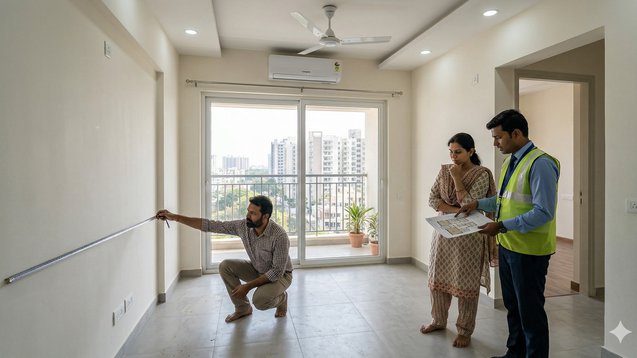
How to Judge Space Efficiency in New Projects
Home purchasing requirements today extend beyond location and price to encompass additional factors. Buyers across India have become more knowledgeable about properties which include Mumbai high-rises and Pune suburban areas and Indore and Coimbatore developing townships. Space efficiency represents a critical element which developers frequently forget when they design new residential buildings. The demonstration will show you an apartment which has 1,200 square feet of space. The space appears to be large. The entrance reveals that the living room area presents a small space while the bedrooms create a constricted feeling and there exists minimal room for keeping belongings. What happened? Poor space planning together with inefficient layout design typically causes the problem. The high per square foot costs in Tier 1 cities make inefficient space use a direct burden on housing expenses. In Tier 2 and Tier 3 cities, buyers expect larger homes, so inefficient layouts can impact resale and rental value. Space efficiency from different spaces affects three factors which include comfort and future value and daily activities. Property Aaj allows buyers to compare different projects through their rating system which evaluates both pricing and amenities. Understanding how to evaluate space within new developments enables you to gain a substantial financial and practical advantage. We will explain this information through an organized and useful approach.
Understand the Difference Between Carpet Area, Built-Up Area and Super Built-Up Area
The first step in judging space efficiency is understanding what you are actually paying for. Under RERA regulations developers must disclose carpet areas clearly to the public. Carpet area is the net usable floor area inside your apartment excluding external walls, balconies and common areas. This is the space you can physically use. Built-up area includes carpet area plus wall thickness and balcony space. The super built-up area goes a step further it includes your share of common areas like corridors, lifts lobbies and amenities. In many Tier 1 city projects the super built-up loading can go up to 30-40. In some cases buyers pay for 1 500 sq. ft but receive only 1 050 1 100 sq. ft of usable carpet area. That is a significant distinction. In Tier 2 and Tier 3 cities loading is generally lower but you must still verify it. A space-efficient project usually has lower loading percentage and better carpet-to-super built-up ratio. Always calculate: Carpet area ÷ Super built-up area. Higher percentage means better efficiency.
The layout of a building needs assessment
Because its dimensions do not indicate its actual value. Two flats with identical carpet areas can feel completely different. The reason for this difference exists in the layout planning process. People need to enter the sample flat through their critical approach. The presence of narrow corridors which extend for long distances creates an inefficient use of space, the space needs to be examined. The living room of the house has a shape which creates difficulties for its users. The bedroom design allows residents to arrange their furniture according to their needs. In Bengaluru, a 2BHK apartment with 1,000 sq. ft. carpet area becomes cramped when 120 sq. ft. of space gets used for passageways. The 950 sq. ft. apartment in Ahmedabad creates an illusion of more space because its design uses space efficiently. Ask yourself:
Can I comfortably place a sofa set and dining table?
Does the kitchen allow proper movement?
Is there enough wall space for wardrobes?
Space efficiency needs to be assessed based on actual operational needs, not on the numbers found in marketing materials.
Check Natural Light and Ventilation Design
A space-efficient home creates an open atmosphere which prevents people from feeling confined to their living space. Large windows and cross-ventilation together with smart balcony design create an atmosphere of spaciousness in compact homes. The high population density in Mumbai and Chennai makes ventilation design necessary for effective building operation. Builders in Tier 1 cities develop projects with smaller carpet areas by creating superior window systems which provide better exterior views. In Tier 2 cities homes may have larger dimensions than standard size yet their design fails to provide sufficient airflow which makes them uncomfortable to live in.
People should check these two areas of observation:
The distance between windows and the opposing building has reached 10 feet.
The bedrooms contain no windows which would allow fresh air to enter.
The kitchen area contains no windows which allow sunlight to enter.
Well-lit spaces create a feeling of spaciousness which expands beyond their actual dimensions. The presence of dark corners creates an optical illusion that makes spaces appear smaller than they actually are.
The study examines how furniture design affects actual space usage.
Developers create stunning show apartments through their design work. The décor creates an impression which requires evaluation of the entire environment. The designers use small furniture items because they create an effect which makes the space appear more expansive. The first step requires collecting measurements from the area. A standard queen-size bed requires about 60 x 75 inches. The space needs to include walking paths which connect to all areas. The bedroom needs to provide enough space for that item to fit inside. Young professionals in Hyderabad and Noida prefer to rent small 2BHK units which developers now offer in new real estate developments. The design of space-efficient layouts proves essential for renting purposes. Tenants prefer bedrooms which they can actually use instead of bedrooms with fancy designs that take up too little space. Home cooks in Tier 3 cities demand bigger kitchen and storage space because their families prepare more meals at home. A compact modular kitchen may not work for everyone. You must assess your actual daily requirements. People have different ways to experience their work productivity.
Look at Storage Integration
When we do not plan storage properly we waste a lot of space later on. The question is, does the project have these things:
Utility areas
Storage niches
Space for wardrobes
A separate utility balcony for the washing machine
In cities like Gurgaon or Mumbai people who buy homes want storage space so builders are starting to include it in their projects. In smaller cities like Nagpur or Lucknow this is not always the case. If we have to add cabinets later it takes up more space and makes the house feel smaller. The thing is, a good home is one that has storage space without making the place feel closed in. Storage is not just about having a house. It is about using the space we have in a smart way. We need to think about how we can organize our things in a way that makes the most of the space we have.
Common Areas and Amenity Design Matter Too
The process of space efficiency extends beyond the limits of your apartment entryway. The measurement of space efficiency extends beyond the apartment entryway of your home.
- Do the corridors have excessive width because they serve no purpose?
- Is there an excessive number of lobbies which create additional loading problems?
- Does the clubhouse function as a useful space or does it exist merely as a promotional tool?
The loading percentages for high amenity projects in Tier 1 cities built various forms of loading increase beyond standard requirements. The maintenance of amenities brings benefits to your lifestyle yet it decreases the value of your space according to its carpet area. Over-amenities projects in Tier 2 and Tier 3 cities create maintenance costs which will decrease their resale value in future years. The Property Aaj website lets users explore different projects while comparing their amenities to their total built-up space. An intelligently designed project creates an equal distribution between private areas and shared spaces.
Understanding Buyer Psychology helps to determine future resale value.
The resale value of a property depends on its spatial efficiency. In Mumbai and Delhi NCR, which have high property prices, buyers show great interest in measuring carpet area. The project with better carpet ratio attracts higher resale value because of its superior design. Buyers in Tier 2 cities like Jaipur and Kochi prefer to buy homes that are slightly bigger than average. Height layouts in a project will reduce its resale value because they create limited space for movement. Residents in Tier 3 towns prefer to live in houses that provide generous space. The value of a compact unit with poor design will decrease because its design makes it difficult to use functions efficiently. The value of this property depends on its space capacity to provide comfort for people who need it
The legal and regulatory system of RERA requires complete transparency.
RERA has brought improved transparency throughout India. The effectiveness of RERA implementation varies between different states. In Maharashtra and Karnataka RERA disclosures provide complete information that users can access through online platforms. Other states present challenges because their data remains difficult to obtain.
Before booking:
Check the RERA-approved carpet area.
Verify brochure information through actual measurement.
Review sanctioned layout plans.
On Property Aaj users can verify project information while comparing city-specific specifications. Customers should not depend exclusively on promotional content because official records provide the actual information.
The best way to assess carpet pricing requires
Comparing costs which use carpeted space instead of super built-up measurements. This basic method provides users with strong results. Developers promote their properties at a cost of ₹8,000 per sq. ft. However, this rate applies to which measurement system is super built-up or carpet area. The correct method to determine actual costs requires you to compute expenses for each carpet square foot. The following example demonstrates this point. The effective cost per carpet square foot becomes ₹10,000 when you purchase a 1 crore 1,400 square foot super built-up apartment that has 1,000 square foot carpet area. In Tier 1 cities, this difference creates higher EMI payments for borrowers. Home loan rates continue to increase which makes it essential for buyers to exercise greater caution. The pricing system in Tier 2 and Tier 3 cities creates detrimental effects because it makes pricing less valuable to customers who have limited financial means. Smart buyers use usable area value to evaluate projects instead of focusing on price numbers.
Infrastructure developments together with future construction projects
This creates visual changes which transform existing space. A compact home in a well-planned township may feel more spacious than a larger flat in a congested locality. The integrated townships of Pune and Hyderabad provide residents with open green spaces and walking paths together with wide internal streets. The apartment's moderate size together with its apartment space increase the overall living area. The carpet area of standalone buildings in smaller cities creates an illusion of space, yet their absence of open areas creates a feeling of confinement. Space efficiency is also about external environment:
The distance between buildings
The amount of green space that remains unbuilt
The configuration of parking areas
The pathways which allow vehicles to move through the property
The implementation of comprehensive planning methods results in better functional space development.
Practical Site Visit Checklist for Space Efficiency
The new project requires you to take your time before starting your work. You should bring a measuring tape to the site which will enable you to record room measurements. You should stand at the room corners to create a mental map of your daily movement pattern. The observer needs to determine two points of kitchen space. The bathroom needs to provide separate areas for dry and wet functions. The balcony space should be evaluated to determine its usability and its narrowness. Small design imperfections in Mumbai markets lead to major comfort decreases according to research findings. The developers in Tier 2 cities market balcony spaces which exceed practical limits. The process of observing space efficiency requires you to stop and watch. The process of observing space efficiency requires you to stop and watch.
Conclusion: Smart Homes Are Efficient Homes
Space efficiency assessment has become mandatory for all new construction projects in the current Indian real estate market. Property market trends in Tier 1 cities combined with increasing buyer knowledge in Tier 2 and Tier 3 markets make layout design and carpet area assessment essential for property buyers. A well-designed 1,000 sq. ft. home can feel luxurious. A poorly planned 1,300 sq. ft. flat can feel disappointing. Brochure specifications and high-end features should not lead you to underestimate actual building performance. Space usability building design ventilation systems and storage solutions should be evaluated based on their actual development costs. Users should utilize the platform which links to Property Aaj for detailed project comparison through accurate information examination and effective project selection process. Home functions as your permanent residence throughout your entire life. The space efficiency of a property affects its comfort level resale value and rental market success which determines customer happiness during their entire ownership period. Choose wisely. Measure smartly. Invest confidently.
FAQs
What is the acceptable loading percentage for residential projects?
The loading percentage that is okay is between 20 to 30 percent in cities in India. In cities, like Mumbai or Delhi it can be a little higher because of the amenities that are provided. You should always check the carpet area to built-up area ratio before you make a decision.
Does a bigger carpet area mean that the space is used efficiently?
That is not always true. How the rooms and corridors are planned is more important. If the corridors are not planned well or the rooms are shaped or the lobbies are really big then the space is not used well even if the carpet area is bigger.
How does space efficiency affect resale value?
Buyers look at carpet areas closely especially in big cities like Tier 1. A project with a carpet ratio and a functional layout usually has stronger demand when it comes to resale and the price goes up more.
Is the RERA carpet area always accurate?
The RERA rules say that the carpet area must be disclosed accurately.. To be sure you should check the approved layout plans and measurements when you get possession of the property. Sometimes there can be variations, within the allowed limits.
Are compact homes always inefficient?
No. Many modern compact homes are designed in a way with not much empty space. Good planning is often better than having a home that is not well laid out.
Should investors think about space efficiency too?
Absolutely. People who rent homes like it when the space is used in a way. Compact homes are easier to find renters for. They stay rented out more often especially in cities where a lot of people work in the technology field like, in IT-driven markets.