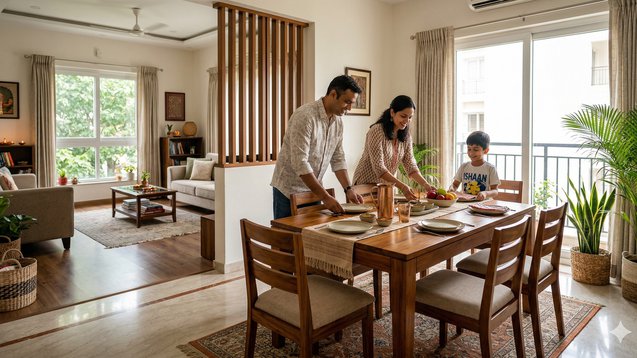
Choosing Homes With Separate Dining Areas
Indian families searching for a new residence prioritize four factors which include location and budget and connectivity and builder reputation. Very few people stop to consider the basic inquiry which holds great impact: Does this home have a separate dining area? The traditional dining room space has begun to vanish throughout modern society which features small apartments and open kitchen designs and versatile room configurations. Yet, many homebuyers later realize that the absence of a defined dining space affects daily comfort, privacy, and even the overall feel of the home. Space limitations in Tier 2 and Tier 3 cities leads developers to create residential designs which include separate dining areas. In metropolitan areas such as Mumbai and Bengaluru and Delhi NCR, buyers reduce their demands because they need to stay within their budget limits. The result: Dining tables get positioned into living rooms or become wedged against kitchen walls. The website Property Aaj shows growing interest in search options which include "spacious layouts" and "separate dining space."People now consider their future requirements throughout the purchasing process. And rightly so. Your choice of a residence which contains a dedicated dining space will affect your daily activities and resale potential and complete residential experience.
The Emotional Value of a Dedicated Dining Space
Indian culture considers food to be more than a source of sustenance. The act of eating represents people bonding with each other while demonstrating their hospitality. The dining area serves as the emotional core of the home during both normal evening meals and special Diwali celebrations. People consider dining in their living rooms to have a temporary existence. The hosts need to clear away the dishes because they must accommodate their visitors and television watching. The atmosphere does not create a special experience. A dining space that exists separately from other areas of the house establishes a specific area where families can spend time together. People in Indore and Coimbatore live in Tier 3 cities, which have homes that stand independently and apartments that come with three bedrooms. Families need designated areas for specific activities. Nuclear families who live in Tier 1 cities find open layouts sufficient for their needs. When children reach particular developmental phases and work-from-home requirements increase and parents stay for extended periods, families begin to need separate dining areas. The dedicated dining space increases discipline and bonding between family members. The system divides the times when people eat from the times when they watch screens. The particular design element creates an unexpected effect because it controls the daily routines for multiple years.
Better Space Utilization and Flow
Many buyers believe that creating a combined space for dining and living will enable them to obtain more room. The design process leads to restricted movement patterns which result in disorganization according to their planned paths. The design of a 2BHK apartment in Pune creates a situation where the dining table forces the sofa to obstruct balcony access. The design of a compact Mumbai apartment requires guests to navigate around furniture in order to enter the bedrooms. Small areas create inefficient designs which extend beyond their limited dimensions. A dining area that designers create through their work enhances space movement. The design enables furniture to achieve its most suitable arrangement. A dedicated dining area in 1,100 to 1,300 square foot apartments which exist in Nagpur and Jaipur, creates better movement throughout the space. Developers focusing on intelligent layouts understand this. Floor plan comparisons on Property Aaj show that two apartments with identical square footage create different spatial experiences based on their dining area design. The evaluation considers both size and structural aspects of the system. People experience comfort through the design of structural systems.
Impact on Property Value and Resale Appeal
Let’s talk numbers. The property value assessment determines a separate dining area as an essential component of residential value. The resale value of homes in Tier 1 cities increases when they have well-defined layouts because the market for those homes becomes more attractive to buyers. Buyers looking at premium 3BHK units in Gurugram or Hyderabad expect a separate dining space as standard. Its absence may not drastically reduce price but it can reduce buyer enthusiasm. The property value in Tier 2 cities increases according to the assessment of liveability factors for the area. A thoughtfully designed dining area can make your property stand out in resale listings. Many families upgrading from 2BHK to 3BHK specifically look for this feature. The rental markets demonstrate this pattern. Families who move from other states to Bengaluru’s IT corridors show a preference for structured living layouts which provide them with organized spaces. The addition of separate dining areas creates an impression of larger spaces even when the actual carpet area stays the same. The statement does not concern extravagant things. The statement focuses on essential elements which create enduring value during extended periods.
Indian homes frequently host relatives, festivals, and celebrations.
The separate dining area establishes a boundary which separates private family spaces from areas used by guests. The scene shows guests sitting in the living room while family members bring food from the dining area which is located next to the living room. The kitchen activity remains less visible, and serving feels organized. The absence of a separate space leads to all elements merging together, which includes cooking smells, utensils, TV noise, and conversation. The dining rooms of independent homes in Tier 3 towns provide direct kitchen access yet maintain separate visual boundaries from drawing rooms. This layout respects privacy. The dining nook provides effective space division in metro areas where dining areas become extremely limited. Space gets defined through sliding glass panels and wooden dividers and level changes which create distinct areas without creating a confined environment. Buyers searching through projects on Property Aaj now show greater importance to interior design details. Indian people consider comfortable entertaining to be an essential part of their cultural traditions.
Kitchen Hygiene and Practical Advantages
Open kitchens are trendy. The spices and oil splatters and aromas from cooking Indian food create an essential part of the cooking process. The design of dining spaces that connect to living areas creates cleaning needs which require frequent attention. A separate dining space which exists next to the kitchen but remains separate from the living room space provides an effective solution. New projects in Tier 2 cities introduce semi-open kitchen designs which connect to dining areas because these spaces combine aesthetic appeal with hygienic requirements. The design of ultra-modern compact houses in Tier 1 cities removes all transition spaces which results in two problems: clutter and door circulation issues. Defined spaces become essential for families who take care of elderly relatives. The space enables people to eat their meals in peace because it blocks out both television sounds and outside noises. People consider small details as unimportant but these details create significant impacts throughout our daily activities.
Psychological Comfort and Structured Living
The design of a home functions as a behavioural modifier. The presence of organized spaces leads to people practicing organized living. The design of separate dining spaces creates an automatic indication that people should follow their established eating patterns. The breakfast meal takes place in this location. The dinner meal takes place in this location. The dining area creates an environment that enables people to hold focused discussions. The dining table provides children with a space to study which results in reduced interruptions when the television area remains separate. People who need to work at home in Tier 1 cities that have small apartments must share their living space for office work and dining and entertainment activities. The absence of boundaries between different activities will lead to continuous mental fatigue throughout the day. Buyers from Tier 2 and Tier 3 markets frequently neglect this psychological aspect when they move from their homes to urban apartments. They later understand that their previous home design provided them with better spatial organization than their current apartment. Nostalgia does not exist. Spatial comfort exists.
Flexibility for Future Needs
The separate dining area provides people with flexible dining options because it provides them with multiple uses throughout the day. Today it may serve as dining. Tomorrow it can become a study nook, mini library, or extended work-from-home corner. Families in Lucknow and Kochi choose 3BHK homes because they need to prepare for future changes. Homeowners who want to change their space according to new needs will find their dining area design better supports their remodelling plans. Indian banks currently provide home loans which banks extend through competitive repayment periods that banks use to encourage customers to plan their payments between 15 and 25 years. The financial commitment of a multidecade investment necessitates a need for layout flexibility. Buyers who want to evaluate projects on Property Aaj should study the floor plans from the beginning. The question you should ask yourself about this space is whether it will maintain its operational function after you need to transform it. The value of future-proof homes always increases over time.
Cost Considerations Across Tiers
The first thing which needs our attention is the issue of expenses. The addition of a separate dining area to properties in Mumbai which has the highest per square foot rates in India results in increased total ticket size. Buyers sometimes choose compact 2BHK units without dining rooms to stay within budget. The additional space in Ahmedabad Bhubaneswar and Mysuru costs less because of their lower land prices. Here, using a dining room costs less than other options. Stamp duty variations across states ranging roughly between 5% and 8% also influence purchase decisions. A slightly larger apartment increases registration costs proportionately. People should look at values which last over time. A home with efficient zoning retains desirability better than a cramped layout. People should think about their long-term comfort when making short-term savings decisions. People should find a balance between necessary expenses and practical needs. That’s the real equation.
What to Check Before Finalizing
The presence of a separate dining space in a home selection process requires assessment of its dining area location. The dining area needs to have an assessment of its natural light availability. The building needs to have an assessment about its ventilation system efficiency. The building needs to have direct kitchen access which enables quick food delivery. The building design creates barriers which prevent people from entering the bedroom space. The actual carpet area measurement needs to be confirmed through RERA registration verification. The dining area which some developers advertise as a separate space actually functions as an extension of the living room without any visible separation. People should conduct physical inspections of sample flats because they are important. Photographs can create false impressions of reality. Think about the situation. A six-seater table requires assessment of its comfortable fitting space. The area needs to provide enough room for up to three people to walk without needing to use walls as support. A five-minute floor plan assessment helps to identify potential problems which will take multiple years to resolve.
Conclusion
The modern housing market allows people to experience separate dining areas as a conventional dining design. The practical needs of living space demonstrate that traditional design elements maintain their value. The structured space design maintains its enduring value because it exists throughout India from Mumbai high-rises to Jaipur gated communities and Tier 3 town independent houses. The structured space design between two areas enhances comfort and improves space utilization while fostering family relationships and increasing property value for resale purposes. The pricing pressures existing in metropolitan areas create a situation where people must make concessions to maintain their living arrangements. Open layouts appear fashionable in modern brochures but they fail to represent actual human existence. Home buyers who visit Property Aaj should examine more than just the number of bedrooms and balconies in each home. The layout requires detailed examination. Your regular activities should be imagined in your mind. You should picture celebrating holidays with your guests while your children reach adulthood. A separate dining area serves to enhance living spaces through its design. People who live their lives with careful consideration achieve emotional benefits together with financial rewards.
FAQs
Has a dining room become essential for dining needs in a 2BHK apartment setup?
The requirement is not essential yet it provides strong advantages for users. The installation of a partial dining area in small 2BHK apartments creates better space management and increased user comfort. The solution eliminates living room clutter while it increases the property's value for potential buyers.
Do homes with separate dining rooms cost significantly more?
The cost difference becomes visible in Tier 1 cities because of their higher rates which apply to every square foot. The price increase in Tier 2 and Tier 3 cities becomes moderate yet it provides added value through better usability.
Does a separate dining space make a rental more attractive?
Yes it definitely does, for families. They like structured layouts because they prefer living in spaces that are organized. This is in contrast to open-plan units which're more compact.
Can you turn a layout into a space with a dining area later on?
It really depends on how the building's designed. If there are walls that're not load-bearing you can add them to create a dining area. However you should always talk to engineers and check with your local authorities to see what changes are allowed.
What is the appropriate size for a perfect dining space?
The space requirement for a six-person dining table needs between 90 and 110 square feet for comfortable use. The design of a space should focus first on efficiency before considering its dimensions. Intelligent furniture arrangement enables optimal performance in even the most compact spaces.
Do modern apartments still need dedicated dining spaces?
Absolutely. Although design trends keep changing, people maintain their same lifestyle requirements. Indian real estate markets maintain their value for separate dining spaces because of their emotional ties and practical uses and their monetary worth.