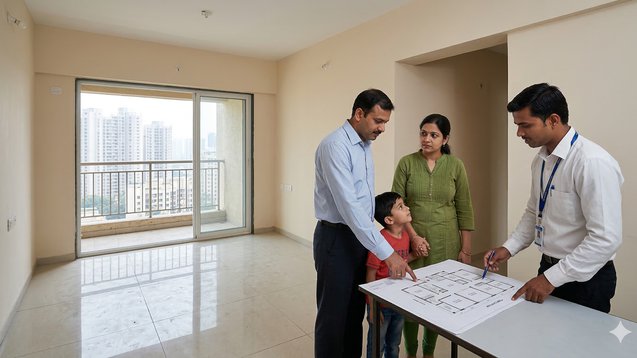
How to Select the Right Floor Plan for Your Lifestyle
Introduction
Home purchasing in India now requires buyers to consider more than just property location and market value. Current homebuyers base their purchasing choices on their personal lifestyle requirements. The floor plan you select will impact your everyday activities because it will remain in your space from the present time until future years. Many homebuyers concentrate on house size measurements because they do not understand how actual spaces work. A suitable floor plan creates better indoor comfort conditions because it provides people with private spaces and allows air circulation to flow through the building. A bad design will create an experience which makes premium spaces feel both restricted and difficult to access. Developers now provide multiple floor plan options in all three metropolitan areas of Tier 1 and Tier 2 cities and Tier 3 emerging towns because they need to show buyers various choices. The process of selecting properties on Property Aja (https://www.propertyaaj.com) begins after users establish their understanding of essential floor plan design principles which match their personal living preferences. The guide provides India-specific practical information which enables you to make a proper selection that meets your current requirements and future needs for the next 10 to 15 years.
Why Floor Plans Matter More Than Ever in India
Homebuyers in India require more than basic housing solutions because their needs now extend beyond essential shelter requirements. The current work-from-home trend together with nuclear family structures and modern lifestyle needs have resulted in major changes to customer requirements. The high costs of space in Mumbai and Bengaluru force these cities to prioritize efficient building designs over large building dimensions. The market in Tier 2 and Tier 3 cities offers buyers access to larger carpet areas yet they continue to face difficulties with inadequate site organization.
A smart floor plan affects:
Daily movement inside the home
Natural light and cross-ventilation
Privacy between rooms
Furniture placement flexibility
Future resale attractiveness
Two 2BHK apartments with identical carpet areas create two different experiences because their layout efficiency varies between the two. One area creates an open space which feels free while the other space creates an impression of being closed which contains too many things. When browsing listings on Property Aja (https://www.propertyaaj.com) users should always examine the space measurement details that go beyond the showed super built-up area. Users should examine the area that can be used and the dimensions of each room and the way different spaces connect. The functional design which Indian buyers increasingly choose to acquire shows that their design preferences have reached a correct point of understanding.
Your need to understand your lifestyle first before studying the layout.
Many buyers make this common error because they start to evaluate floor plans before they learn about their personal needs. The process should begin with him asking you specific questions which need to be answered.
Do you regularly complete your work duties from your home office?
Do you frequently invite people to your home?
Is it necessary for your family members to maintain individual confidentiality?
Do you plan to have senior family members stay with you?
Do you require a room dedicated to your work and leisure activities?
Young professionals in Tier 1 cities select compact living spaces which include dedicated work areas. Families in Tier 2 cities prefer their homes to have expanded living spaces together with distinct dining rooms. Buyers in Tier 3 towns still maintain their interest in kitchens which separate from dining areas together with additional storage space. A couple in Pune bought a beautiful 2BHK. The couple faced difficulties because their residence lacked a distinct work area. The couple had to turn their dining space into an office area which created an unsuitable solution. Your floor plan should reflect your actual living patterns instead of showing what appears impressive on paper.
Carpet Area vs Built-Up Area: Know What You’re Getting
Throughout India, the distinction between carpet area and built-up area remains unclear to buyers. RERA has improved transparency, but buyers still need to stay alert. The carpet area represents the total space which you can use within your home. The built-up area consists of walls together with certain shared spaces of the building. The super built-up area includes shared building facilities. The 50 square foot difference in carpet area becomes important because Tier 1 cities charge high prices for every square foot. The price effect decreases from Tier 1 cities to Tier 2 and Tier 3 cities, but people still need to understand how things work. A 900 square foot home with effective design provides more space than an inefficiently designed 1,050 square foot space. Look for:
Dead corridors should exist in minimal quantities
The bedroom sizes should match the entire building dimensions
The kitchen should operate through its main corridor
The balcony should be situated in the correct building position
When you evaluate properties through Property Aja (https://www.propertyaaj.com) you should first assess how efficiently the carpet area uses space before considering the total square foot measurements.
Open versus Closed Layouts: The Best Design Solution for Indian Homes.
Traditional Indian home design includes closed kitchens which create distinct room separation. Urban development projects in Tier 1 cities now provide open-plan design options as their preferred architectural solution.
Open layouts function effectively under the following conditions:
You prefer a modern aesthetic
Your family size is small
You entertain guests frequently
You want better visual spaciousness
Closed layouts may suit you if:
You cook elaborate Indian meals
You want kitchen privacy
You live in a joint family
You prefer noise separation
Residents of Indore and Jaipur in Tier 2 cities now prefer hybrid layouts which include semi-open kitchens. Buyers in Tier 3 markets continue to choose traditional compartmentalised designs. The search for an absolute best solution ends with this statement. Your decision process needs to rely on your personal behaviour patterns and your specific cultural background.
Ventilation and Natural Light: India-Specific Priorities
The Indian climate requires people to have ventilation systems because they need them for survival. People who investigate floor plans tend to ignore window placement and orientation details according to their building design specifications.
A good layout should provide:
Cross-ventilation in living and bedrooms
Adequate window sizes
Proper balcony access
Limited dependence on artificial lighting
Humidity levels in Mumbai and Chennai make airflow requirements more important for people who live in coastal Tier 1 cities. The natural light management system in Tier 2 cities with hotter summer months helps residents decrease their electricity expenses.
Red flags show up in these situations:
Bedrooms with only one small window
Long internal corridors
Kitchens without ventilation shafts
North-facing homes with poor sunlight (in some regions)
Smart buyers on Property Aja (https://www.propertyaaj.com) now routinely check floor orientation before shortlisting — a habit worth adopting.
Future-Proofing Your Floor Plan
The requirements which you have now will change over the next five years. This is especially true for Indian families. Future needs should be examined through these following situations:
The family will grow.
The parents will move into the house.
The children will need places to study.
People will work from home because their jobs require it.
The property can be rented out to tenants.
In Tier 1 cities, flexible layouts with multi-purpose rooms are gaining popularity. In Tier 2 and Tier 3 markets, extra utility spaces and store rooms still hold strong appeal. A future-ready floor plan usually includes:
At least one flexible room
Adequate storage niches
Space for wardrobes and study desks
Balcony utility areas
People should not choose designs which only maintain their attractive appearance in display apartments because these designs do not function well in real life situations.
Budget vs Layout Efficiency: The Real Trade-Off
The actual situation in India shows that better layouts require higher costs which people must pay when they work in metropolitan areas. Your budget should not be exceeded without any financial control because this method does not solve your problem.
In Tier 1 cities, you may have to choose between:
Prime location + compact efficient layout
Larger size + slightly less efficient layout
In Tier 2 cities, the trade-off is often between:
Branded developer + tighter plan
Local builder + larger but less refined plan
Tier 3 buyers typically get more space but must carefully evaluate construction quality and planning. The key is balance. The 5-8% extra expense brings better layout results which create long-term contentment and increase property resale value.
Rental and Resale Impact of Floor Plans
Smart investors don’t just buy for living — they buy for liquidity. The effectiveness of a floor plan determines how much tenants will rent a property and how quickly a property will sell in India.
High-demand layouts typically include:
The compact 2BHKs of Tier 1 cities function as complete living spaces.
The 3BHKs of Tier 2 cities provide extensive space for family use.
The independent-style layouts of Tier 3 towns serve practical purposes.
Urban rental tenants prefer to have:
A designated area for work
Daylight illumination
Space that is completely usable
The resale market rejects properties with unconventional room designs and inadequate airflow because their selling price lacks appeal. You should evaluate every property that you discover on Property Aja (https://www.propertyaaj.com) by asking yourself whether the layout would provide someone else with comfortable living conditions. Your investment becomes more secure when the answer to your question is affirmative.
Common Floor Plan Mistakes Indian Buyers Regret
Over the years, Indian markets have shown three different patterns which result in buyer regret. The most common errors which people make include three specific mistakes. People make the mistake of not considering how their furniture will fit into their space. Homeowners select large living spaces while they choose to have extremely small bedroom areas. Homeowners who purchase property make the error of not checking how much storage space they will receive. Homeowners who purchase apartments make the error of selecting units which contain extensive dark passageways. People who purchase property fail to check the space required by door movements. People who purchase property fail to check where their washing machine and utility equipment will go. In Tier 1 cities, the biggest regret is usually lack of usable workspace. In Tier 2 cities, poor kitchen design often causes dissatisfaction. In Tier 3 towns, buyers sometimes overlook ventilation because the home feels large initially. The lesson is simple: walk through the floor plan mentally as if you’re already living there. The small exercise which you perform will help you avoid major regrets which will occur at a later time.
Conclusion
The decision of which floor plan to choose for their home is an essential decision that most Indian homebuyers fail to recognize as important. People experience happiness through their home design because it affects their daily activities more than their home's market value. A home that architects built through careful design enables people to reach their daily goals while providing them with more attractive options for renting and selling their property. The expectations of buyers in Indian cities have changed throughout all development areas which include Tier 1 metros Tier 2 growth hubs and Tier 3 emerging towns. Homebuyers of today seek answers to two questions which begin with “How big is the flat?” and continue with “How well will this home actually work for me?”.
You should examine your actual lifestyle requirements and future adaptability and ventilation performance and carpet area efficiency before reaching your final determination. The property discovery process becomes easier through platforms like Property Aja (https://www.propertyaaj.com) which require users to evaluate properties through thorough assessment before reaching their ultimate understanding. Select a floor plan that matches your daily activities because of your financial situation. Real estate value increases through better comfort exactly like investment gains built over time.
FAQs
1. What is the most practical floor plan for Indian families?
Most Indian nuclear families need a 2BHK design which provides suitable ventilation and operational kitchen facilities and one room which can serve multiple functions. Joint families usually choose 3BHK designs which provide separate spaces for their family members to maintain personal space. The ideal choice depends heavily on family size and daily routine.
2. Is a bigger carpet area always better?
The answer to this question is no. A larger carpet area will create a disorganized space when designers use ineffective planning methods. Tier 1 city buyers now prefer compact homes which show smart design solutions that create maximum usable space while decreasing wasted areas such as extended hallways.
3. Should I prefer an open kitchen or closed kitchen in India?
A closed kitchen provides better odour control and privacy when your household needs to prepare complex Indian dishes throughout the day. Open kitchens suit smaller families and modern lifestyles. Many Tier 2 cities now adopt semi-open kitchens as their most common design solution.
4. How important is floor orientation in India?
The research proves that proper building orientation creates better natural lighting and airflow patterns which decrease energy consumption. Proper ventilation systems help to minimize cooling expenses in regions with high temperatures. Cross-ventilation and window positions require assessment before you make your property selection.
5. Do floor plans affect home loan approval?
Home loan approval depends on floor plans because banks prioritize legal requirements and property value assessment yet some poorly designed units receive lower property value assessments. Efficient market-friendly layouts sustain both property value and resale value through time.
6. Can I modify the floor plan after purchase?
Most apartment projects allow residents to make small interior modifications while maintaining existing structural walls. Villas and independent homes provide residents with increased design freedom. Before making any changes you should verify both builder guidelines and society rules.
Read more about property matters with our specialists and browse the latest property listings on Property Aaj. Download the app from the Play Store and App Store now for easy buying, selling, and renting!