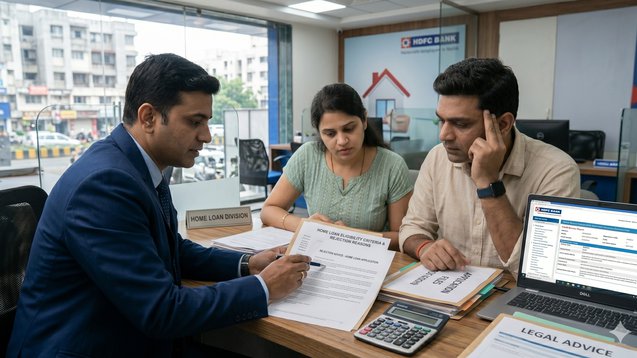
Home Loan Rejection Reasons & How to Avoid Them
The process of purchasing a house in India represents an emotional achievement but requires a buyer to make a financial obligation that lasts between 15 and 30 years. Most buyers depend on home loans to make their purchasing decision. Many people believe that they will receive home loan approval when in reality that process does not guarantee success. The majority of home loan applications get rejected because first-time buyers do not realize how much their financial information will undergo examination. You discover your ideal property and reach a favourable agreement only for the bank to reject your loan request days before your closing date. The situation creates multiple challenges because it causes mental distress and leads to economic losses. The situation occurs in multiple cities including Mumbai and Bengaluru which represent Tier 1 cities of India and Nashik and Jaipur which serve as Tier 2 cities and even in Tier 3 towns where people need more documentation. Most home loan rejections get avoided through proper planning. Your chances of receiving approval will increase through your knowledge about home loan requirements and the implementation of proper preparation steps. The Property Aaj platform which you can find at httpswww.propertyaaj.com shows that financial readiness holds equal importance to property selection. The article examines the main causes of home loan rejections in India while presenting methods which help you avoid these common errors.
Low Credit Score: The Silent Deal Breaker
Lenders first use your credit score as their primary screening method. The Indian credit system considers all scores below 700 to be dangerous. A low score indicates bad repayment patterns which result from either missing EMIs or defaulting on credit cards or maintaining high balances. Lenders in Tier 1 cities apply stricter requirements because their customers take out larger loans. Borrowers in Tier 2 and Tier 3 cities make a huge error when they apply for loans without checking their credit scores. Ramesh from Pune applies for a ₹50 lakh loan with a credit score of 640 because he has a history of delaying payments. The bank will either reject his application or charge him higher interest rates because his income remains steady. How to avoid this: Check your credit score at least 3–6 months before applying. You need to pay all your outstanding debts while stopping any new credit checks and keeping up your good repayment history.
Employment and Income Stability
Banks prefer reliable sources of income. When your income changes from month to month or when you have a pattern of changing jobs, banks view that as highly risky. The rapidly changing start-up job market in cities like Bengaluru and Hyderabad leads to this type of income and employment risk. Additionally, in less populated regions, local cash-based economies and informal employment do not have regular income documentation or a formal means of verifying work history. A freelance designer who typically has contract earnings of ₹1 lakh per month may be denied a loan because the supporting documents do not demonstrate enough consistency in the receipts issued for different clients over time. How to establish long-term stability: Obtain a job with the same employer for a minimum of 1-2 years before applying for any credit. If you are self-employed, you should file your tax returns appropriately so that you can demonstrate steady income via your tax returns and/or bank accounts.
High Existing Debt (Poor FOIR Ratio)
The financial industry uses Fixed Obligation to Income Ratio (FOIR) as an essential measure to evaluate borrowers. Your loan application will receive rejection when your current EMIs which include car loans and personal loans and credit cards consume excessive portions of your income. Metro cities experience excessive lifestyle costs which lead to residents exceeding their acceptable FOIR thresholds. Residents of Tier 2 cities accumulate multiple small loans through gold loans and consumer loans which operate under their financial radar. How to avoid this: Your total EMIs should not exceed 40-50 % of your income according to ideal standards. You should first pay off your smaller loans before applying for new credit. The closure of one credit card EMI will create a noticeable effect.
Incomplete or Incorrect Documentation
This is one of the most common yet avoidable reasons for rejection. The loan approval process faces delays because missing salary slips and mismatched signatures and incorrect address proofs create small problems. The verification process becomes more difficult because property documents in Tier 3 cities contain outdated or unclear information. A buyer in Indore lost a deal because the seller failed to show a clear title chain. How to avoid this: All documents need to be checked again. Your KYC details must match all your records. You should validate property listings and documentation through trustworthy platforms such as Property Aaj (https://www.propertyaaj.com).
Property-Related Issues
Your property, not your ownership of the property causes the problem which affects you. Banks conduct legal and technical checks before approving loans. The bank will reject your loan application if the property documents show unclear title information and unauthorized construction work and missing necessary permits. The situation occurs more frequently in Tier 2 and Tier 3 cities because the local developments in those areas do not adhere to all regulatory requirements. How to avoid this: Choose properties with clear legal status. RERA-registered projects and well-documented resale properties should be chosen as preferred options. The final decision requires you to obtain a legal opinion first.
Loan Amount vs Eligibility Mismatch
Many buyers overestimate their eligibility. The bank's loan advertisement which offers loans up to ₹1 crore does not guarantee your eligibility for that amount. High property prices in metropolitan areas lead buyers to extend their financial resources. Buyers in smaller cities make the incorrect assumption that they will receive approval for their applications because they believe that lower costs will benefit them. How to avoid this: Applicants should use loan eligibility calculators before they submit their applications. The person needs to assess their actual income and current financial obligations and ability to pay back debts.
Having a poor banking history is not good.
If you bounce cheques a lot or you do not have a lot of money in your account or if you do things with your account that are not normal it can hurt your credibility. In cities like Tier 1 cities it is easy for people to see what you are doing with your money because most transactions are digital.. In smaller towns people can still get worried if you are not good at managing your money. So how do you avoid having a banking history? You should make sure you have an amount of money in your bank account. You should not bounce cheques. Your bank account should show that you are good at managing your money for at least six months. This will help you have a banking history.
Making Loan Applications
It seems like a good idea to apply to many banks for a loan at the same time but it is not. Each time you apply for a loan the bank checks your credit history, which can lower your credit score and make lenders think you are really struggling to get a loan. Loan applications can hurt your chances of getting a loan. Here is what you can do instead:
Do your homework.
Choose the banks you apply to carefully.
You can use websites like Property Aaj (https://www.propertyaaj.com) to help you make a plan for your money so you do not have to apply to many banks. This way you can avoid making loan applications and protect your credit score. Property Aaj can guide you on how to apply for a loan in a way.
Age and Loan Tenure Factors
The age of a person is a factor when it comes to getting a loan. If you are young you have options.. If you are older you might get a loan for a shorter period and you will have to pay more money every month. For example if you are 45 years old you might not be able to get a loan for 25 years. This means you will have to pay a lot of money every month and it will be harder to get a loan. How to avoid this: You should try to apply for a loan in your career if you can.. You can think about getting someone to apply with you like a co-applicant to get better options for your loan and to be able to pay it back over a longer period.
Lack of Co-Applicant or Guarantor
Lenders need co-applicants for high-value loans because they use this requirement as their most effective lending method. Dual-income households in Tier 1 cities enjoy greater financial benefits than single-income households. Single applicants in Tier 2 and Tier 3 cities will face difficulties when trying to obtain loans that exceed their maximum borrowing limit. The following steps show how to prevent this situation: A spouse or family member who earns money should be added as a co-applicant. This practice leads to better eligibility results while decreasing the risk that lenders face.
Mismatch Between Property Value and Loan Request
Banks do their property valuation. If the price you agreed to pay is much higher than what the bank thinks it's worth they might cut down. Even reject your loan. This issue often pops up in areas where property prices are rising fast or in markets where people are taking risks. Here's how to avoid this: Make sure the property price is fair and in line with what others are paying. Don't pay much just because you really want the property.
Conclusion:
When you get rejected for a home loan it is not a problem. It is a sign that something needs to be changed. You need to look at your money situation or the house you want to buy. The important thing is to use this as a chance to learn and not give up. Over India whether you are buying a house in a big city like Delhi, a city that is growing like Nashik or a small town the basics are the same. You need to be careful with your money, have all your papers in order and pick a house. Take some time to think about your money. Make your money situation better. The most important thing is to not be in a hurry. You can use websites like Property Aaj (https://www.propertyaaj.com) to help you find a house and get your money ready. This will help you be better prepared when you apply for a home loan again. Because when it comes to buying a house waiting and being prepared can make a difference, between getting rejected and getting approved for a home loan.
FAQs
1. What is the minimum credit score required for a home loan in India?
Most banks like a credit score of 700 or more. Some lenders may think about scores but you will probably get a higher interest rate or tougher conditions for a home loan.
2. Can I get a home loan if I am self-employed?
Yes you can get a home loan if you are self-employed. You will need to show that you have an income, you need to file your income tax returns for at least 2 or 3 years and you need to have stable business records. You need to have all the documents to get a home loan.
3. How many times can I apply for a home loan after my home loan application is rejected?
You can apply for a home loan again anytime you want.. It is better to first fix the reason why your home loan application was rejected. If you apply for a home loan in a short period it can hurt your credit score even more. So it is best to fix the problem and then apply for a home loan again.
4. Do banks reject loans because of property-related problems?
Banks will decline your request because your refers to your unclear property titles and unlawful building work and your missing necessary permits.
5. Does having a co-applicant improve loan approval chances?
The presence of a co-applicant who demonstrates stable financial capacity through his credit score enables applicants to meet more criteria which decreases the lender's financial risk.
6. Can I negotiate with banks after they reject my loan?
You do not have a lot of room to negotiate with banks. However you can try going to a lender or you can work on improving your profile. This will help you when you apply for a loan again. You might have better chances with the banks. You can try to improve your profile and then apply for a loan, with the banks again.