Introduction
The Indian real estate market of 2026 has developed street "flipping" as a method for generating wealth which goes beyond its initial European origins. Property flipping, which exists today beyond major developers, involves buying a distressed or undervalued property for renovation and subsequent sale to achieve quick profits. The digital transformation of house hunting has created new opportunities for individual investors to achieve substantial profits in Tier 2 cities. The practice of flipping houses in India functions as a method for building wealth through comprehensive market research, design expertise, and compliance with legal requirements. The successful 2026 flippers at Property Aaj (https://www.propertyaaj.com) base their evaluation of properties on more than surface appearance which includes paint and plastering. The two factors which determine profit acquisition for them are the purchase price and the sale date because profit only materializes at these two times. The basic rules of real estate investment remain unchanged between purchasing an outdated apartment in South Delhi and buying a house in Indore which is a developing Tier 2 city. The guide offers an all-inclusive pathway to all individuals who wish to achieve property flipping expertise within the distinct and diverse Indian real estate market.
The "Purchase Profit" Mindset: Identifying the Right Asset
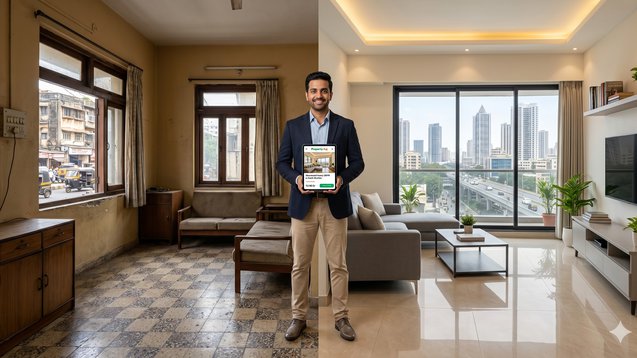
People who flip properties first need to stop developing strong emotional ties towards properties and start evaluating properties based on their potential to generate returns on investment. The term "distressed" in India does not exclusively describe buildings that are on the verge of collapse. The situation could involve an apartment that has just emerged from a legal obstruction or a "tired" property owned by an NRI who has not set foot in his home for ten years. The market value of these assets decreases by 15 to 20% because they lack "curb appeal" and cannot be used as residences without repairs.Your search for a flip should concentrate on finding defects that can be repaired. A property with structural foundation issues is a money pit, but a property with peeling paint, outdated plumbing, and 1990s-style flooring is a goldmine. Investors should search for properties in established neighborhoods because existing neighborhoods create a substantial price difference between an "old" flat and a "renovated" flat according to Property Aaj. The process of building your financial backup plan for renovation costs begins when you acquire a distressed unit at ₹6,000 while the average price in your area stands at ₹8,000 per sq. ft
The Tier 1 vs. Tier 2 Flip: A Study in Margins
Various cities show their flipping strategies according to their city tiers which create significant differences between their flipping strategies. The two entry barriers of Tier 1 cities in Mumbai and Bengaluru and Pune create high difficulties for people but they provide exceptional market access for people who want to enter these markets. The demand for "ready-to-move-in" luxury products creates a situation where a well-renovated 2BHK in a prime locality will sell in days because high-earning professionals always seek this type of property. Property flipping requires the addition of "cosmetic luxury" elements which include smart home technology and premium modular kitchens and contemporary lighting to attract affluent buyers who have short time periods. The flipping opportunities show a complete shift between Tier 2 cities of Coimbatore and Jaipur and Lucknow. The entry costs are lower which produces a better "Return on Equity" for investors. The primary goal of flipping in these cities focuses on creating "Lifestyle Upgradation." Taking an old independent house on a decent plot and modernizing the facade can lead to a 30 to 40% appreciation in value. Current Tier 2 city buyers actually prefer "modern bungalow" design instead of traditional house designs. Understanding the local market distinctions becomes necessary for finding the best location to flip properties.
Renovation Arithmetic: Adding Value Without Over-Capitalizing
The "Renovation Trap" is real. You can spend ₹20 lakhs on Italian marble, but if the neighborhood's ceiling price doesn't support it, you won't get that money back. Your renovation budget for a successful India flip must remain between 10 to15% of the acquisition cost. The kitchen and bathrooms represent critical spaces which need your attention. In 2026, Indian buyers are obsessed with "Hygiene and Aesthetics." The replacement of old stained tiles with large-format vitrified slabs together with the installation of sleek branded faucets creates an instant premium appearance. The factor of "Openness" holds significant importance. Many older Indian homes are compartmentalized with too many walls. A flat's usable area increases from 1,000 square feet to 1,200 square feet when you remove a wall which does not support the structure to create an open-plan living and dining space. The dimension which people perceive to be present in a space determines its market value. Your color palettes should always maintain a neutral tone which includes white and grey and beige shades. The buyer should perceive a blank canvas which enables them to visualize their future life but your personal eccentricities should not create any reflection.
Holding Costs: The Silent Profit Killer
The duration which a property remains in your records will decrease your total earnings. Your holding costs for the property consist of home loan EMIs which you pay through financing property taxes, society maintenance fees and utility bills. In India, where the resale process can sometimes be bogged down by bureaucracy, these costs can accumulate quickly. A seasoned flipper aims for a 6 to 9-month cycle: 2 to 3 months for renovation and 3 to 4 months for marketing and sale. The duration of your property flip process needs to last less than one year because any extension will change your property from a "flip" into a "long-term investment" which causes different tax responsibilities and return on investment calculations. Digital platforms provide you with an exit method which will enable you to complete your exit process faster. Your renovated property will reach verified buyers through Property Aaj (https://www.propertyaaj.com) because the platform displays your property to consumers who search for high-quality homes that are ready for immediate use which will reduce your "Time on Market" period.
Legal Vigilance: Navigating RERA and Clear Titles
The legal "Due Diligence" process determines whether a property flip achieves success or fails The Indian resale market requires proof of property ownership through an unbroken title record. Distressed properties come with hidden problems according to their existing pending litigations and family conflicts. The "Encumbrance Certificate" (EC) must be verified for its complete history which extends from 13 years to 30 years. Your verification of society properties requires you to check for existing debts and any unexpected "transfer fee" costs which can affect your profit margins. The Real Estate Regulatory Authority (RERA) has improved market transparency but its regulations for "renovated resales" differ between states. The RERA registration requirement does not apply to individual sellers who choose to sell one renovated unit. The rules become different when your business operations expand beyond a particular threshold. A property lawyer must review your "sale deed" to make it legally valid according to local laws. The presence of a clean legal report serves as a strong selling point because buyers will pay a 5% premium to receive assurance their documents have no errors.
Taxation and The "Holding Period" Strategy
Flipping is a short-term game, which means you must be wary of "Short-Term Capital Gains" (STCG). As of 2026, if you sell a property held for less than 24 months, the gains are added to your total income and taxed at your applicable slab rate. For someone in the 30% bracket, this is a significant chunk. This is why many professional flippers in India calculate their profit after taxes. However, if you can stretch your holding period to just over 24 months, you move into the "Long-Term Capital Gains" (LTCG) territory. Under the current regime, LTCG on property is taxed at a flat 12.5% without indexation for assets acquired after July 2024. While "flipping" implies speed, sometimes holding a property for 24 months while renting it out for a year can actually yield a higher net profit due to the lower tax rate. It’s a delicate balance between "turnover speed" and "tax efficiency."
Financing Your Flip: Home Loan Trends in 2026
The process of property flipping through bank financing is possible. Indian banks typically refuse to finance "fixer-uppers" when they suspect problems with building safety. Home loans are available for resale apartments which require only cosmetic improvements. The year 2026 will see multiple banks provide "Composite Loans" and "Renovation Top-ups" as financing options.
The solution requires you to maintain an "Loan-to-Value" (LTV) ratio which provides sufficient funds to complete your renovation project. The entire cash amount which you allocate to down payment and registration expenses will prevent you from purchasing tiles and cabinets. Successful flippers combine their personal funds to pay for renovations while using bank loans to buy properties. Your interest costs will increase with every month of property ownership because current interest rates have reached their stable high point. The financial aspect of efficiency extends beyond construction work.
The Buyer Scenario: The "First-Time Professional"
The hypothetical buyer Rohan is a 30-year-old software engineer who lives in Bengaluru. The buyer has enough money to spend on his project yet he lacks time to oversee building workers and plumbing experts and architectural designers. He inspects an outdated flat which contains dust and he identifies it as a construction "project." Your flipped flat displays clean architectural features together with concealed LED lights and a contemporary backsplash and windows which have been newly cleaned. He perceives a "home" rather than a "renovated flat" which he sees as his living space. Rohan is willing to pay ₹10 lakhs more for your flat than the "raw" one next door because you have solved his biggest problem: "Hassle." The Indian flipping market operates on this principle. The business sells real estate properties together with a complete "turnkey solution." In Indian traditions the "muhurat" time for moving into a new house has strict constraints which make fully furnished houses that need no work as valuable assets.
Marketing Your Flip: Visuals and Perception
The marketing process begins after the renovation work reaches completion. The use of professional photography services stands as an essential requirement. People today first "view" content through their smartphone screens because Instagram and fast internet access exist. Buyers will not proceed to examine additional content when your photos present dark and disorganized images. Buyers can better understand room dimensions through home staging which involves bringing in indoor plants and a decorative rug and neutral-colored furniture. At Property Aaj (https://www.propertyaaj.com), we’ve seen that listings with 3D virtual tours and high-resolution videos get 4x more engagement. Features need to be presented through storytelling methods. The phrase "3 BHK for sale" should be replaced with "Modernized 3 BHK with Open-Concept Kitchen and Sunset Views" because it describes the property better. The upgrades should be emphasized through the statements which declare "Brand new Kohler fittings" and "Italian-finish vitrified flooring" as the new features. The buyer needs to perceive the established "old-money" neighborhood as providing them a "brand-new" house experience.
Conclusion: The Future of Flipping in India
The property flipping market in India has reached its current stage of development. The traditional method of generating profits through speculative price increases has become obsolete. The existing market now provides financial rewards to investors who create additional value for their properties. The urban real estate market will shift toward the "Resale and Renovate" segment because cities see increasing population density and land resources become limited. The process creates a sustainable method for revitalizing aging neighborhoods which generates substantial economic benefits. The three main principles for success in business ventures require you to purchase properties through rational decision making while you renovate them according to market demands and you need to obtain your results through exact methods. The Indian real estate market has just begun its journey to success because people who possess the ability to find value in broken things will receive financial rewards. Property Aaj (https://www.propertyaaj.com) provides you with tools to track real estate prices and customer buying patterns throughout India. Your first successful flip isn't just about the money in the bank; it’s about the confidence that you can spot opportunity where others only see a mess.
Frequently Asked Questions (FAQs)
1. Is property flipping legal in India under RERA?
The law permits property flipping because it operates as a completely legal activity. An individual investor who purchases a resale property to renovate and sell the property does not need to RERA register as a developer. All structural modifications need municipal corporation approval because it protects you from legal problems that could arise during the property sale process.
2. What is the average profit margin in a property flip in India?
A successful flip in a Tier 1 or Tier 2 city typically aims for a "Net Profit" of 15% to 25% after all costs (purchase, stamp duty, renovation, and holding costs). The project duration of 6-9 months provides an excellent return with a 20% margin, although some deals can generate higher profits from distressed sales.
3. How do I find undervalued or distressed properties in 2026?
The process requires active networking activities through networking connections. Local brokers who work in resale transactions should be maintained as contacts because they bring information about "urgent" sales which happen when people need to move because they require financial help. You can also monitor bank auction portals for foreclosed properties. The digital platform Property Aaj (https://www.propertyaaj.com) enables users to locate "old" listings which have remained unsold for extended periods, thus providing better chances for aggressive negotiation.
4. What are the biggest risks in the flipping business?
The flipping business faces its highest danger through two main threats which include "Renovation Overrun" and "Market Stagnation." Your margin disappears when your renovation expenses increase beyond your planned budget. Your profit will disappear because you will face costs for holding the property and paying interest if the market stays inactive for 18 months. Always have a "Plan B" which involves renting the property when it does not reach your desired selling price.
5. Do I need to pay GST on a flipped property?
The sale of "Ready-to-Move-In" resale properties which have obtained their "Completion Certificate" status does not require GST payment. This rule provides flippers with a significant advantage. You will incur GST charges at a standard rate of 18% for all materials and services which include labor that you use during your renovation work.
6. Can I flip commercial property in India?
The process of flipping commercial properties such as old shops and office spaces offers profitable opportunities which require investors to master two essential elements of "Business Zoning" and "Rental Yields." Your renovation needs to prioritize "utility" and "compliance" requirements because investors who buy flipped commercial properties focus on achieving high returns.
Read more about property matters with our specialists and browse the latest property listings on Property Aaj. Download the app from the Play Store and App Store now for easy buying, selling, and renting!