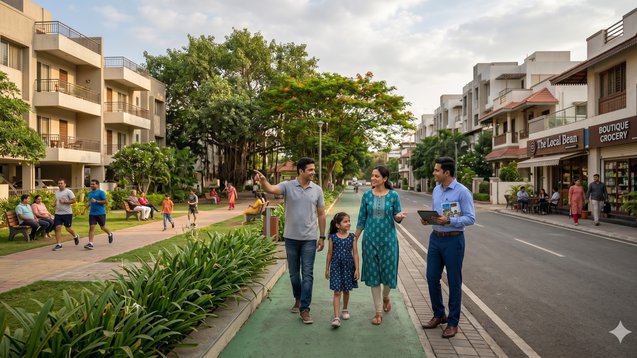
Choosing Property Based on Neighbourhood Lifestyle
Introduction: Your Home Experience Is Defined by the Neighbourhood
When people search for property in India, the focus usually begins with the basics price, square footage, builder reputation, and city location. These factors hold significance for property selection, yet they do not determine your actual enjoyment of the property. Your daily life in the neighbourhood surrounding your residence will have a greater impact on your routine activities than the apartment itself. Two families purchase identical apartments within the same urban area. One family selects a lively neighbourhood that offers parks and cafés and schools and convenient transportation options. The other buys a slightly cheaper property in a quieter but poorly connected neighbourhood. Over time, their daily routines begin to feel very different. One experiences easy access to local resources, but the other needs to travel long distances to obtain essential items. The reason for this trend exists because contemporary homebuyers assess neighbourhood lifestyle before they complete their property acquisition. The social environment, accessibility, safety features, local amenities, and community cultural aspects determine which locations provide a genuine home-like experience. Neighbourhood lifestyle has become a critical selection element throughout India from Tier-1 cities like Bengaluru and Mumbai to Tier-2 cities like Pune and Jaipur to emerging Tier-3 towns. The site Property Aaj (https://www.propertyaaj.com) enables users to investigate multiple local areas while learning about different lifestyle patterns in various locations. The selection of property based on neighbourhood lifestyle will greatly enhance both your living experience and the future worth of your property.
What Neighbourhood Lifestyle Really Means
Neighbourhood lifestyle is about the kind of life you have around your home. It is not about the buildings and roads but also about the people and the way they live.
There are things that make up neighbourhood lifestyle:
Schools, hospitals and grocery stores that you need
Places to eat and have fun like restaurants and cafés
Parks where you can walk and spaces to stay fit
How people in the neighbourhood talk to each other and live together
How safe and clean the neighbourhood is. If the traffic is bad
For example if you live in a neighbourhood near IT hubs in Bengaluru you will see a lot of offices, cafés and new homes that young professionals like.. If you live in a old neighbourhood in Jaipur it will be quieter and have a more family-like feel with people who know each other. Both kinds of neighbourhoods are nice. You just have to pick the one that's right for you. When people look for homes on Property Aaj
(https://www.propertyaaj.com) they do not just think about the price of the home. They also think about if the neighbourhood is a fit for them. A home should be a place that helps you live the way you want to. Neighbourhood lifestyle is what makes a home a place to live.
Different buyers have distinct lifestyle requirements which they need to fulfil.
Homebuyers have different requirements for their preferred neighbourhood environment. People of different ages and work fields and family types and daily activities show different lifestyle choices. Three different buyer profiles exist. The young IT professional who relocates to Hyderabad wants housing near tech parks which offer both nightlife and cafés and modern apartment buildings. The main priority for them exists in social spaces which they can walk to and which provide them with different transportation options. A Pune family with children will choose neighbourhoods which provide them access to high-quality schools and playgrounds and peaceful residential areas. Retirees who live in Indore and Coimbatore value their ability to access medical services while enjoying quiet places and areas with minimal traffic and without commercial development. Your present life situation requires you to match your neighbourhood requirements with your selected property. People will feel unhappy about their property even when it has excellent features because they will ignore this aspect. Smart buyers spend time understanding how the surrounding locality functions during different times of the day morning, evening, and weekends before making a final decision.
The Role of Connectivity in Lifestyle Convenience
The way people live in a neighbourhood depends on its transportation system and the ease of reaching different areas. The best residential area becomes difficult to live in when people face obstacles during their daily commutes. People experience various life changes because of their connection to the outside world which includes multiple factors:
The duration it takes to travel from home to work or business areas
The ability to reach metro stations and bus stop locations
The distance of a location from main roads and essential transportation routes
The existence of ride-sharing services and public transportation options
The availability of metro lines and major roads near residential areas in Mumbai and Bengaluru and other Tier-1 cities gives residents better access to essential services. A property that exists between 2 and 3 kilometres from transport hubs enables residents to reduce their weekly travel time by multiple hours. Roads and metro systems in Tier-2 cities such as Ahmedabad and Pune experience fast development because of their new transportation systems. The outer areas of neighbourhoods have transformed into popular residential locations. People who search for properties on Property Aaj (https://www.propertyaaj.com) use connectivity patterns to evaluate which locations will become more convenient for their needs in the future.
The design of lifestyle amenities determines how people experience their daily activities.
The presence of lifestyle amenities in a community delivers more than basic connectivity because they determine how residents experience their area. Modern residential areas provide their residents with simple access to
Shopping centers and supermarkets
Restaurants and entertainment hubs
Fitness centers and sports facilities
Parks and open green spaces
The facilities enable people to move freely throughout their day while also providing them opportunities to meet others. The presence of walking tracks and community parks establishes a healthier environment in neighbourhoods. Young professionals and entrepreneurs are drawn to areas that feature cafés and co-working spaces. Tier-1 cities use lifestyle amenities as essential components which developers integrate into their large township projects. Tier-2 and Tier-3 cities currently experience rapid development because new residential projects now include malls and multiplexes and recreational areas. People will experience better living conditions when a neighbourhood design enhances their life experience beyond what their apartment provides.
Community Culture and Social Environment
The selection of a property requires consideration of various elements but community culture remains an unattended aspect. Some neighbourhoods provide residents with active social spaces that promote communal activities while other areas maintain silent spaces that deliver more private time. Community culture determines multiple community aspects which include:
Social events and festivals
Interaction among neighbours
Overall sense of belonging
Safety and cooperation within the locality
Active and friendly communities deliver significant benefits to families according to their needs. Safe play areas provide children with opportunities to create neighbourhood friendships while adults develop their social connections. Gated communities in Bengaluru and Pune organize cultural events and sports tournaments and social gatherings which create a shared community experience. The assessment of this aspect needs the evaluator to visit the area and interact with residents while observing neighbourhood social dynamics.
Pricing Differences Across Lifestyle Neighbourhoods
The pricing of properties in different neighbourhoods depends on their particular lifestyle characteristics. Properties in areas that offer premium amenities and enhanced transportation options and maintain high community standing typically sell at higher market prices. For example:
In Mumbai, lifestyle neighbourhoods near business districts or waterfront areas attract premium buyers.
In Bengaluru, areas close to technology corridors often see higher demand from professionals.
In Tier-2 cities like Jaipur or Lucknow, localities near universities or commercial hubs may see rising property values.
Higher prices do not guarantee improved living conditions for every buyer in the market. Emerging neighbourhoods provide residents with excellent lifestyle options because upcoming infrastructure projects will make these areas more accessible at lower price points. Buyers studying such opportunities often rely on data and listings available through Property Aaj (https://www.propertyaaj.com) to evaluate different locality options.
Lifestyle Trends in Tier-1 Cities
Tier-1 cities provide their residents with various lifestyle options through their different neighbourhood communities. The different districts of the city serve dual purposes because some areas serve corporate professionals while other areas appeal to high-end buyers and traditional families. The IT parks of Bengaluru attract modern professionals to their nearby neighbourhoods whereas older residential areas provide families with peaceful living spaces. The city of Mumbai contains three types of residential areas which include high-rise luxury districts, suburban family neighbourhoods and developing transit-based communities. Because property prices in these cities are high, choosing a neighbourhood that fits your lifestyle becomes even more important. The area requires evaluation to determine whether it meets their needs for everyday activities over the long term.
The Lifestyle of Tier-2 and Tier-3 Cities has experienced substantial changes.
Neighbourhoods are undergoing lifestyle changes because infrastructure development and job market expansion are happening simultaneously. Indore Surat Nagpur and Bhubaneswar are developing contemporary residential areas which include shopping malls and business centers and entertainment facilities. The two groups attract young professionals and families who want to live in a suburban area that costs less than metropolitan centers. Small city buyers now place greater value on lifestyle features which include jogging parks and community spaces and gated communities. The investment in initial developing lifestyle neighbourhoods will yield high property value increases for cities that continue to grow.
Balancing Lifestyle and Investment Potential
Buyers must evaluate two factors when making their purchasing decision which include their need for comfortable living spaces and their need for long-term asset protection. Property values in neighbourhoods experience consistent growth when the area provides residents with attractive lifestyle options and the government builds essential infrastructure. Strong investment potential indicators show the following results:
Upcoming metro lines or highways
The existence of nearby employment centers which are expanding
The current rise in business operations
The housing market shows high demand for rental properties
The combination of lifestyle benefits and development possibilities in this location provides residents with advantages that will last indefinitely. Property Aaj (https://www.propertyaaj.com) enables better buyer decision-making through its property platform which allows users to examine different neighbourhoods.
Conclusion: The Right Neighbourhood Makes a House Feel Like Home
Property buyers who base their choices solely on either price or square footage make decisions which result in future dissatisfaction. A home is not just about the apartment itself — it is about the environment in which your daily life unfolds. Neighbourhood lifestyle influences convenience, social interaction, safety, recreation, and overall happiness. The property you purchase depends on your understanding of how a neighbourhood operates whether you choose a vibrant metro city or a developing Tier-2 town. People should observe daily activity in different localities while they assess nearby amenities. The actual living environment should be assessed through direct observation instead of relying on brochures. The real estate platform Property Aaj (https://www.propertyaaj.com) enables buyers to access information about different neighbourhoods throughout India while they compare property options and discover which localities best match various lifestyles. The right neighbourhood provides an address which transforms into a space where people develop comfort and happiness.
FAQs
1. What does neighbourhood lifestyle mean in real estate?
Neighbourhood lifestyle describes the complete environmental experience which exists around a property. The system comprises multiple elements which include amenities and connectivity and community culture and safety and accessibility to essential services which include schools and hospitals and shopping centers.
2. Why is neighbourhood lifestyle important when buying property?
The neighbourhood establishes which amenities a person can access throughout the day while determining how long it takes to travel and how many people a person will meet and how happy they will feel on a daily basis. Basic facilities must exist in the surrounding area of an apartment to create a comfortable living space because even the best-designed apartment becomes inconvenient without them.
3. Do lifestyle neighbourhoods cost more than regular areas?
Yes, it is true that areas which have strong connectivity together with their entertainment options and parks and modern infrastructure, create higher pricing for their properties because there is strong demand for these areas.
4. How can buyers evaluate neighbourhood lifestyle before purchasing property?
The area requires buyers to visit at different times throughout the day and inspect nearby amenities while they speak with local residents and assess the existing transportation system together with upcoming infrastructure projects.
5. Are lifestyle-focused neighbourhoods available in Tier-2 cities?
Yes. Many Tier-2 cities now offer modern residential zones which include shopping malls, public parks, and entertainment centers. Families and professionals are starting to prefer these areas.
6. Can lifestyle neighbourhoods also be good investments?
Absolutely. The combination of lifestyle amenities with developing infrastructure in a location creates an environment where property values will increase and rental properties will attract high demand.