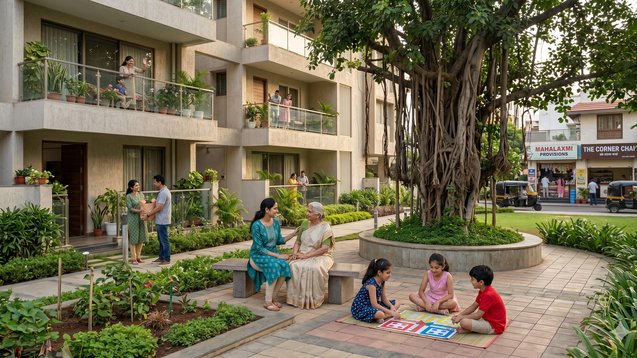
Choosing Homes in Areas With Stable Communities
Introduction
When people search for homes, they evaluate four basic factors which include home price and home location and home features and home builder reputation. These elements hold significant value. The neighbourhood surrounding a property determines its daily operational effects and its future market worth according to an unknown factor which operates silently throughout the day. A stable community means more than just peaceful surroundings. The term describes communities which bind their citizens through permanent connections while their public services develop and their residents create a stable identity. In India’s real estate landscape, this factor is often overlooked, especially by first-time buyers who may prioritize flashy amenities or low introductory prices. Think about it. Would you rather live in a locality where neighbours change every few months, or in a neighbourhood where families, professionals, and local businesses have been part of the area for years? The older residential areas of Tier 1 cities such as Bengaluru and Mumbai and Delhi NCR maintain their stable communities through their development of modern infrastructure. Tier 2 cities such as Pune and Indore and Coimbatore contain neighbourhoods where their community members maintain their existence which leads to higher property values. Even Tier 3 cities benefit from areas where long-term residents create safer and more predictable living environments. Property Aaj (https://www.propertyaaj.com) buyers gain property value knowledge through their understanding of stable communities which show them properties that provide permanent residence and better investment security. The upcoming section will explain the value of stable communities and demonstrate to Indian homebuyers how to select their ideal residential areas.
What Defines a Stable Community in Real Estate
A stable community maintains its structure through permanent residents who own their properties and through public services which citizens use and through residents who take part in community activities. Stable communities develop through time because their residents create social bonds while businesses serve local demands and government services build their operational capacity. Indian cities demonstrate higher stability through their older residential colonies which contain both independent houses and apartment complexes. The areas maintain resident welfare associations (RWAs), which operate organized parking systems and host community events. The newly developed investment-heavy areas experience high tenant turnover because they attract new residents who leave after brief periods. The initial price appeal of these locations disappears because they lack the community bonds which homeowners consider essential. Community stability enables easier security management and better control of cleanliness and infrastructure maintenance activities. Property Aaj website users (https://www.propertyaaj.com) compare property features and costs but they need to examine neighbourhood demographics to understand how long residents tend to stay.
Why Stable Communities Improve Quality of Life
A home is more than just four walls it functions as a component of a social network. People who live in stable communities tend to experience better life quality than people who live in unstable communities. People who live in a neighbourhood for extended time periods develop deep emotional and financial ties to the community. The community works together for street maintenance and their security systems and for solving civic problems. Stable communities give families with children peace of mind because these areas provide secure environments and familiar surroundings. Children can play in parks while neighbours establish connections and local organizations build their support networks. Working professionals experience advantages which include better daily work routines. After work, people who return to their quiet and stable neighbourhoods experience less stress throughout the day. People find daily comfort through small things which include knowing the local grocery shop owner and dependable security guards. Tier 1 cities create an atmosphere where urban residents feel disconnected from others yet stable communities provide a unique opportunity to connect with others. The community culture of Tier 2 and Tier 3 cities functions more effectively than other areas which leads to increased market interest from buyers. Property Aaj (https://www.propertyaaj.com) provides property buyers with valuable tools to assess neighbourhood dynamics which enable them to find homes that improve their living standards.
Community Stability and Property Value Appreciation
Stable communities experience property price increases which follow a steady pattern whereas areas with speculative development experience erratic property price changes. The reason exists because people who stay in one area for extended periods create ongoing needs for their neighbourhood. Buyers and tenants alike prefer neighbourhoods known for safety, cleanliness, and social cohesion. Tier 1 cities designate areas with strong community networks as their most valuable locations. The established residential areas of cities which include Chennai and Delhi maintain constant demand throughout all market conditions. Tier 2 cities are seeing a similar trend. Residents of Ahmedabad, Lucknow and Kochi now prefer neighbourhoods which combine developing infrastructure with expanding community services. Community stability in Tier 3 cities operates stronger because local connections and community bonds decide where people prefer to live. Stable communities provide investors with rental properties which generate income through their stable tenancy rates. Property Aaj (https://www.propertyaaj.com) provides users with tools to assess different neighbourhoods throughout multiple cities. People who study social dynamics in a neighbourhood can discover investment opportunities which remain concealed from others.
The Rental Market in Stable Neighbourhoods
The rental market shows strong performance in stable neighbourhoods because residents of these areas maintain high demand for rental properties. Tenants often prefer neighbourhoods where security is reliable, civic infrastructure is maintained, and the surrounding environment feels welcoming. Property owners face difficulties because unstable communities experience high tenant turnover which leads to management problems. Tier 1 cities provide stable communities near employment centers which attract professionals who intend to work there for multiple years. Tier 2 cities experience strong rental demand because students and young professionals and government employees prefer stable and safe neighbourhoods. Tier 3 cities show that established residential clusters continue to attract tenants who stay long term instead of short term renters. For investors browsing opportunities through Property Aaj (https://www.propertyaaj.com), properties located in stable communities often generate predictable rental income and lower vacancy periods.
Infrastructure and Civic Engagement in Stable Communities
Stable communities achieve better outcomes through enhanced civic participation by residents. Long-term residents demonstrate a higher tendency to work together with others for infrastructure development in their community. Resident welfare associations frequently coordinate efforts such as:
Road repairs
Waste management improvements
Security enhancements
Park maintenance
Traffic regulation inside residential areas
The joint effort between both parties will bring about major advancements in community improvement projects. Active community organizations within Tier 1 cities collaborate directly with municipal authorities to address infrastructure challenges. Organized residential societies in Tier 2 cities are beginning to establish similar community development programs. Informal neighbourhood associations serve as the primary support system for development in Tier 3 cities. These informal associations enable communities to maintain their community ties which facilitate local development activities. Civic participation enables residents to enhance their current living conditions while establishing a positive long-term image for their community.
Buyer Psychology: Why People Prefer Established Communities
Real estate decisions receive their strongest influence from buyer psychology. Buyers show an automatic preference for locations which they observe to have families living there and businesses operating successfully. Homebuyers from the middle-class sector who want to buy a home for permanent residence show this preference at its most powerful. The modern appearance of a neighbourhood which contains vacant investment apartments creates a sense of separation from the rest of the world. People trust established communities because they provide an immediate feeling of confidence which other communities do not offer. When buyers inspect a property they observe children playing in parks and local markets buzzing with activity and residents who engage in casual social interactions which show them that the neighbourhood possesses social stability and long-term value. Buyers use these subtle signals to make their decisions yet they do not understand their impact on their choices. The process of searching for homes on Property Aaj (https://www.propertyaaj.com) requires buyers to check neighbourhood reviews and personally visit neighbourhoods in order to determine the actual stability and friendliness of a community.
Legal and Ownership Patterns in Stable Neighbourhoods
The ownership patterns of a community provide important insights about its stability. The stability of an area increases when most of its homes are occupied by their owners than when most of its homes are occupied by tenants. The difference exists because owners demonstrate greater commitment to their properties through maintenance work and their efforts to make their neighbourhoods better. Stable communities demonstrate their legal status through complete property records and their organized management systems and their adherence to regulations which include RERA project registration requirements for new developments. Property values in established areas receive lower assessments from banks because of their perception of these properties as greater lending risks which leads to smoother loan approval processes. Buyers need to examine land titles and development approvals in Tier 2 and Tier 3 cities because their suburbs experience rapid growth. The communities demonstrate stability because they maintain legal clarity and municipal recognition for extended periods which decreases the chances of future problems
How Buyers Can Identify Stable Communities
To identify a stable community people need to observe the area and conduct research about the community. The first step to observe the neighbourhood requires you to visit the area three times: during the morning hours and evening hours and weekend days. The observer should assess three factors: how residents interact with each other and how clean the area appears and how well local shops and services operate. If possible residents should be consulted about their community. The questions should focus on three main topics which include security measures and maintenance work and community events. The search should include these indicators which show the following characteristics:
Active resident associations
Well-maintained public spaces
Low vacancy in residential buildings
Established local businesses
Organized parking and security systems
Buyers who want to explore properties through Property Aaj (https://www.propertyaaj.com) can first select their preferred locations before they visit the area to observe how the community functions. The best real estate information people need to know about a neighbourhood exists in the area which they should personally explore.
Conclusion
The process of selecting a home in India’s fast changing real estate market requires more than basic price and floor space comparisons. The local community determines both daily activities and the future worth of the property. Stable communities offer something many modern developments struggle to create a sense of belonging. The community spaces supply all residents with protective spaces together with social networks and property upkeep and property value growth. The increasing appreciation of neighbourhood dynamics has spread among buyers throughout Tier 1 Tier 2 and Tier 3 cities. Areas where residents stay longer and participate actively in local development tend to remain desirable for decades. The atmosphere of a community establishes how a person experiences their home space despite the ongoing significance of amenities and infrastructure. Through their research of neighbourhood stability and their examination of official Property Aaj listings at https www. PropertyAaj com buyers can make choices that enable them to live comfortably while their assets appreciate over time. In real estate transactions the highest quality homes exist in communities that offer exceptional value.
FAQs
1. What is a stable community in real estate?
A stable community exists when people in a neighbourhood maintain residence for extended periods and the community facilities undergo proper upkeep and the residents develop social ties that form a safe friendly atmosphere. These areas often have active resident associations and consistent civic services.
2. Why are stable communities better for homeowners
Stable communities provide their residents with two benefits which include safer living conditions and improved neighbourhood relationships and they maintain better upkeep of shared public facilities. The properties in these areas experience consistent value growth because buyer and tenant interest maintains steady demand.
3. Do stable communities affect rental demand?
Yes. Tenants often prefer neighbourhoods which offer safe environments together with clean streets and dependable infrastructure. Stable communities usually attract long-term tenants who stay in residence while they maintain low vacancy rates throughout their entire existence.
4. Are stable communities more expensive?
Not necessarily. Some established neighbourhoods demand expensive rates but most newly developing areas create stable community structures through their development process. Buyers who identify such locations early will experience both affordable prices and future value growth.
5. How can buyers figure out if a neighbourhood is stable?
To do this buyers should take a look at the area at times of the day. They should talk to the people who live there and see what things are like. Buyers should also check some things like if there are groups of residents who work together if the parks and public spaces are well taken care of and if people are living in the buildings for a long time.
6. Are communities more common in Tier 2 and Tier 3 cities?
Tier 2 and Tier 3 cities usually have communities because they are not growing as fast. This means that people in these cities know each other better.. Some Tier 1 cities also have neighbourhoods that are very stable and where people get along well.