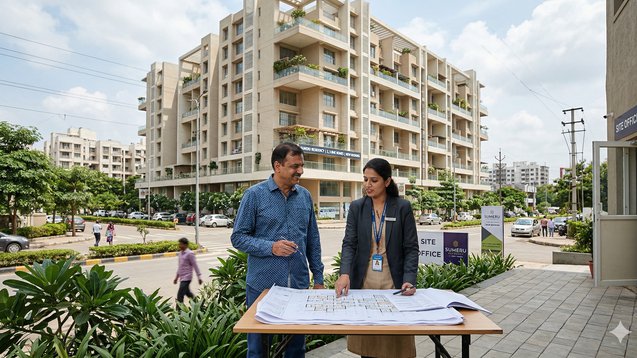
Introduction: Protecting Your Property Value Over Time
People who make real estate investments expect their properties to increase value throughout the investment period. Some properties do not experience continuous value growth because of their specific environmental factors. Certain properties experience value losses or permanent value losses because their locations prove undesirable and their buildings remain outdated and their surrounding area lacks proper infrastructure development. Property depreciation risk refers to this specific situation. Property selection with minimal depreciation risk requires investors to choose assets which will retain or increase their worth during all market fluctuations. Indian buyers need this information because the real estate market shows significant differences across various metropolitan areas and their specific neighborhoods and different property categories. A well-selected property maintains its value throughout multiple decades while a bad choice results in property value decline which makes it hard to sell or lease to future tenants. The value of a property depends on multiple factors which determine its long-term value. Location quality and infrastructure development and building maintenance and local market demand and construction standards all determine property value. Buyers who understand these factors can make better decisions and protect their investment from long-term depreciation. Property Aaj (https://www.propertyaaj.com) modern property platforms enable buyers to evaluate their property options through listing analysis and location comparison and development trend assessment before making their buying decision. Investors need to assess particular aspects of a property to determine its future market value and to evaluate its changing worth during upcoming market changes. Long-term real estate investments require investors to develop property identification skills from which they can learn to recognize valuable assets.
Understanding Property Depreciation in Real Estate
Property depreciation occurs when the value of a property decreases over time instead of increasing. Certain factors can cause properties to lose value although real estate generally appreciates in growing cities. Buildings deteriorate because of physical wear and tear which is the main factor that leads to their decline. Building materials deteriorate with time and building designs become less appealing to current consumers because buildings have reached their design lifespan. The property value declines when these problems remain unsolved because property management fails to address them. Shifts in neighborhood status bring about another reason for property value changes. Property demand decreases when an area experiences infrastructure deterioration and traffic problems and its economical activities decline. Property demand decreases when a particular area has too many identical properties available for sale. Buyers and tenants receive increased options when too many residential units exist which results in price reductions. Market conditions impact property values but properties in strong growth corridors and well-planned neighborhoods maintain their worth. Buyers who assess these hazards in detail will decrease their risk of acquiring properties that lose value throughout time.
Choosing Locations With Strong Infrastructure Development
The most essential aspect which determines property value consists of its geographical location. The presence of strong infrastructure development in an area creates ongoing demand which helps to maintain property values without loss. The construction of metro lines and highways and airports and business parks and educational institutions creates better neighborhood appeal. The projects create employment opportunities while they enhance transportation links which results in additional people moving into the area. The demand for properties in areas close to metro stations and business districts according to real estate experts enables these locations to sustain their property values. The expansion of industrial corridors and transportation systems has reached Tier 2 cities which include Pune and Jaipur and Indore. Properties in such areas often experience stable appreciation. New highways and industrial zones have the power to change real estate markets in even the smallest Tier 3 towns. Through Property Aaj (https://www.propertyaaj.com) buyers can analyze location information and real estate trends to discover regions where infrastructure development will enhance property values over time.
Prioritizing Quality Construction and Building Design
The value of a property depends on the construction quality which establishes its worth. Durable construction materials and contemporary engineering methods enable buildings to experience extended lifespan advantages. Poor construction leads to structural damage which results in water leaks and electrical problems and fast deterioration of building materials. The issues present in the property decrease buyer trust which results in a decrease of its market value. Properties developed by reputable developers show better quality maintenance throughout their entire existence. The combination of proper construction methods with high-quality materials and strong architectural design prevents rapid building deterioration. Modern building designs which prioritize ventilation and natural light and efficient space utilization create higher value for future buyers and tenants. The selection of properties which exhibit superior construction standards serves as a defense against value loss which results from physical property damage.
Evaluating Demand and Market Liquidity
The primary factor which helps decrease depreciation risk for assets requires assessment of market demand. Properties situated in regions which experience continuous buyer and tenant interest maintain their market value. Areas which contain employment centers and educational institutions and business districts usually see ongoing housing demand. The demand contributes to increasing both property values and rental income potential for landlords. Market liquidity also matters. The term liquidity describes the speed at which people can sell their property when necessary. The popularity of residential areas makes it simple to sell homes because multiple buyers are currently searching for properties in those locations. Properties located in distant locations with limited transportation options face difficulties in obtaining interested buyers. The purchase price might be affordable, but the resale value will not increase. The use of Property Aaj (https://www.propertyaaj.com) enables buyers to study property demand and discover areas which show active market movements.
Considering Neighborhood Reputation and Lifestyle Amenities
The reputation of a neighborhood has a strong effect on property values which continues to develop throughout the years. Buyers usually choose to purchase homes in locations that provide them with safe streets and excellent educational institutions and medical centers and areas for outdoor activities. Residential areas which contain both parks and shopping centers and community facilities sustain their appeal because they offer families multiple recreational options. The neighborhoods experience consistent housing demand which results in maintaining property values. Access to quality education is another important factor. Families looking for stable housing options tend to move to areas that border well-known educational institutions. Healthcare infrastructure also plays a role. The presence of hospitals and medical facilities in a neighborhood makes it more attractive to families who have senior citizens living with them. Properties that exist within well-designed communities which provide essential lifestyle features will not lose value because these properties keep receiving new residents.
Choosing Property Types With Long-Term Appeal
Different types of real estate properties experience different levels of depreciation risk according to their specific characteristics. The market for very small apartments and exceptionally large luxury homes operates with restricted buyer interest according to market research. Properties with practical layouts and moderate sizes attract a wider range of potential buyers. Two-bedroom and three-bedroom apartments maintain high market demand because they meet the needs of families and investors. The value of independent houses located in desirable areas maintains stability because land ownership increases in value while buildings experience depreciation. The long-term attractiveness of properties with flexible layouts exists because these spaces adapt to various lifestyle changes that occur throughout different periods. When evaluating listings on Property Aaj (https://www.propertyaaj.com) buyers should select property types which attract a broad range of potential customers.
Monitoring Future Development Plans
Urban development plans create major effects which they bring to property values throughout their execution. The real estate market undergoes transformations through three major factors which include government infrastructure development and commercial development zones and urban expansion initiatives. Property demand increases in areas which are expected to receive new metro lines and highways and industrial investments. Negative events create new risks which can decrease property value. The presence of large industrial facilities near residential areas decreases housing demand in the surrounding area. Buyers who understand local development plans gain knowledge about how neighborhoods will develop through time. Researching these trends before purchasing property helps reduce the risk of depreciation caused by unfavorable development changes.
Avoiding Oversupply in Real Estate Markets
Developers create housing oversupply when they construct excessive identical buildings during a brief construction period. The property market experiences price stagnation or price decline when available properties exceed buyer demand. The situation emerges in fast-growing suburban areas when multiple housing projects commence development at the same time. The presence of unsold units in the market enables buyers to drive down prices through competition among sellers. The market provides buyers with temporary opportunities through oversupply but this situation prevents future price growth. Buyers can prevent themselves from entering oversupplied markets by assessing the current and future development activities in a specific area. The property value contains better stability prospects when investors select markets that maintain equal levels of supply and demand.
The Role of Property Maintenance
The value of properties which have good locations can decrease when their owners fail to maintain them properly. The ongoing maintenance work protects building aesthetics while keeping operational capabilities intact. Apartment societies that manage their maintenance funds through active spending of their resources for building repairs and infrastructure upgrades achieve better property value retention compared to their less organized counterparts. The combination of exterior painting work, elevator servicing, security system enhancements, and landscaping renovations helps maintain the visual appeal of the property. Buyers should review maintenance practices before purchasing property, particularly in older apartment complexes. Properties that receive proper maintenance become more attractive to buyers and tenants, which helps maintain their long-term value.
Conclusion
The selection of property which has a low chance of depreciation requires investors to examine multiple critical elements. The preservation of property value depends on four factors which include location quality, infrastructure development, construction standards, and market demand. The value of properties increases when they exist in neighborhoods that provide strong transportation links and experience active economic development. The combination of high-quality building materials and efficient design methods results in reduced chances of physical damage to the structure. The stability of properties throughout time depends on three factors which include neighborhood amenities, market supply distribution, and proper property management. Buyers who research development trends and compare property listings through Property Aaj (https://www.propertyaaj.com) can identify locations and property types that offer stronger protection against depreciation. Property buyers who make informed decisions about their purchases and prioritize long-term value instead of immediate price benefits will develop an enduring real estate portfolio which maintains financial stability throughout their lifetime.
FAQs
1. What causes property depreciation in real estate?
Property depreciation occurs when buildings become older, their construction quality declines, their neighborhood conditions deteriorate, there is an excess of available housing, and the local infrastructure development remains insufficient.
2. Does location affect property depreciation risk?
Yes. Properties located in well-connected areas with strong infrastructure and employment opportunities are less likely to lose value over time.
3. Are newer buildings less likely to depreciate?
Newer buildings maintain their value for extended periods because they adhere to contemporary construction standards and need minimal maintenance.
4. Can oversupply reduce property value?
Yes. The availability of excessive identical properties in one area leads to price stagnation or decline because sellers compete with each other.
5. How does property maintenance affect depreciation?
Regular maintenance helps preserve building quality and attractiveness, which supports stable property values.
6. Where can buyers find properties with strong long-term value?
Buyers can explore verified listings and compare market trends on Property Aaj (https://www.propertyaaj.com) to identify properties located in strong growth areas.
Read more about property matters with our specialists and browse the latest property listings on Property Aaj. Download the app from the Play Store and App Store now for easy buying, selling, and renting!