Introduction
The real estate market in India has become more strategic for Indian property buyers because they now use their properties as investment assets which generate future value. Buyers now assess their properties because they want to understand how their investments will develop over time. The best investment strategy involves acquiring property which allows future conversion into commercial space. The decision will enhance property value because residential areas develop into commercial districts which create demand for new business establishments. The process of transitioning through Indian cities represents an ordinary occurrence. Infrastructure development and population growth enable Bengaluru and Gurgaon and Pune and Ahmedabad to transform their residential streets into commercial corridors. Properties that front main streets or exist close to commercial areas will eventually attract use as office space and medical facilities and retail establishments and co-working environments. The process of changing residential property into commercial property requires specific procedures to follow. The process requires approval from zoning authorities and municipal bodies and incurs extra fees for property conversion. Property owners who conduct business activities from their residential spaces without proper permits will face penalties which can result in their properties being sealed. The right property choice from the beginning is essential for investors and homeowners who want to maintain their flexibility. Property Aaj (https://www.propertyaaj.com) enables buyers to access property listings which exist in developing areas that will generate future worth through their mixed-use potential and upcoming commercial development. The process of identifying these properties enables buyers to achieve their desired lifestyle while gaining access to valuable investment options.
Understanding Mixed-Use Potential in Real Estate
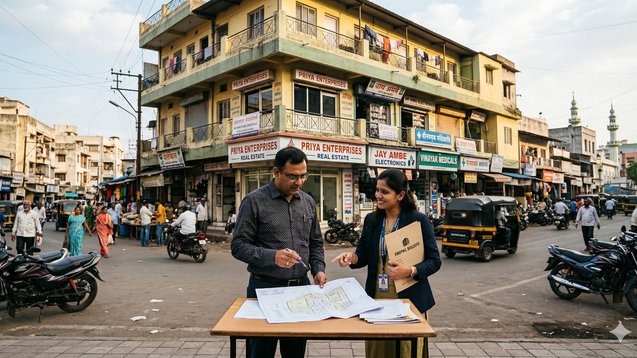
Mixed-use development has gained popularity as an essential element of Indian urban planning. The mixed-use zones enable residential and commercial operations to function together in one area which creates active neighborhoods that provide residents with work and shopping options at short distances. The commercial centers of Mumbai and Delhi and Bengaluru have taken over various historical residential neighborhoods in these Tier 1 cities. The former residential areas have changed into commercial spaces which include dining establishments and medical offices and retail shops. The process of neighborhood development usually starts after residents gain shortcuts through new metro lines and highway systems and commercial expansion. The same transformations are occurring in Jaipur and Indore and Chandigarh which function as Tier 2 cities. The growth of economic activities makes residential properties near major roads more valuable for businesses which want to use them as commercial spaces. The pattern develops more gradually in Tier 3 towns although it continues to progress. Town centers develop into mixed-use markets which contain residential spaces on upper floors and retail stores on the street level. The Property Aaj website (https://www.propertyaaj.com) allows buyers to find neighborhoods which urban development plans show will experience future commercial expansion. Early investment in these locations provides investors with solid opportunities for property value growth throughout the upcoming years.
Location Factors That Influence Commercial Conversion Potential
The process of turning residential properties into commercial spaces has limitations that must be acknowledged because not every property meets conversion requirements. The primary element that determines conversion success and business success for such transformations is the property location. Commercial developers show interest in properties that have street access through multiple roadways and corner intersections and locations that connect to bustling traffic areas. Businesses choose to establish their operations in locations that provide excellent visibility and simple customer access points. Residential areas close to metro stations and major highways in metropolitan areas experience commercial development due to increasing foot traffic. Many residential buildings in Hyderabad and Pune which exist near IT corridors now serve as office spaces and clinics and coaching centers. Areas around universities and hospitals and industrial zones in Tier 2 cities serve as main commercial centers. Nearby residential properties become hostels and offices and retail spaces through entrepreneurial activities that transform them into commercial establishments. The market shift creates major advantages for buyers who can identify these changes before they happen. The property listings available at Property Aaj (https://www.propertyaaj.com) enable users to discover upcoming commercial areas which will experience price increases before they happen.
Legal Requirements for Converting Residential Property to Commercial Use
The process of transforming residential properties into commercial spaces requires complete compliance with established legal regulations. Zoning laws serve as the primary tool for urban planning authorities to control both land and building usage in their respective areas. Most Indian cities require property owners to obtain either a Change of Land Use (CLU) certificate or equivalent municipal approval before they can establish commercial operations on their residential properties. The procedure requires applicants to submit building plans together with their business activities and payment of conversion fees. Property owners need to meet safety standards together with fire protection requirements and building codes to receive their approvals. Business owners who use residential properties for commercial activities without obtaining required approvals face penalties which include legal notices and business shutdowns. The municipal authorities hold the power to shut down businesses that continue to break the law after multiple violations. Property buyers who want to convert their property should check both zoning regulations and municipal requirements before buying their property.
Types of Businesses That May Operate From Residential Properties
The current regulations allow certain business operations to take place at residential properties without needing complete property transformation. These are usually small-scale professional or home-based businesses that do not disturb the neighborhood. People commonly operate medical clinics and law offices and consulting services and tuition centers and freelance businesses. The authorities permit these activities because they create minimal foot traffic which does not alter the residential character of the property. The larger commercial operations which include retail stores and dining establishments and production facilities and sizable office spaces need official land-use changes to operate. The buyers who want to use their property for commercial purposes should choose a property which allows them to start with professional activities and then move to complete commercial operations.
Infrastructure Development and Commercial Transformation
Infrastructure projects serve as essential components which transform residential areas into commercial districts. The development of new highways and metro corridors and business parks and airports results in immediate alterations of land usage patterns. The commercial development along expressway routes in Noida and Gurgaon has reached its peak during the last ten years. The original residential areas now operate as business spaces which include offices and showrooms and restaurants. Infrastructure expansion brings advantages to Tier 2 cities. The cities of Surat and Nagpur and Coimbatore experience increased commercial activity in their vicinity of newly built industrial corridors and logistics centers. The same patterns which exist in larger cities also emerge in smaller towns when highways and railway stations enhance their transportation links. Investors need to monitor infrastructure development because it enables them to discover upcoming profitable properties which will generate commercial value later on.
Financial Benefits of Flexible Property Use
The purchase of property which will later become suitable for commercial development will bring multiple financial benefits. First, commercial properties offer greater rental income potential than residential properties do. The rent that retail shops and office spaces and clinics pay exceeds what residential tenants typically provide. The difference between these two factors will lead to better returns on investment during an extended period. Second, commercial properties experience greater capital growth when located in active business districts. Property values increase at fast rates when business demand reaches its peak. Third, property owners can modify their investment plans through flexible property usage rights. A residential property acquired today has the potential to transform into a commercial office space or rental property in upcoming years. Investors who want to evaluate these opportunities should use Property Aaj (https://www.propertyaaj.com) to study location patterns which will show them areas where commercial demand will increase.
Risks and Challenges to Consider
The process of transforming residential land into commercial territory carries inherent dangers despite its potential advantages. The procedure becomes difficult because of three different factors which include zoning laws and societal customs and official permissions from local governments. Resident welfare associations and housing societies restrict commercial activities in residential areas because they want to protect their members' privacy and maintain peaceful surroundings. The society rules create extra restrictions which go beyond the municipal regulations that permit some businesses to operate within their boundaries. The system faces an additional problem because it needs to pay higher taxes. The property tax rates for commercial properties decrease only after their owners conduct an official business operation. The type of lease agreement determines whether commercial rentals become subject to additional taxes which include GST. The business needs to spend money on parking facilities and fire safety systems and building changes before it can obtain commercial business approval. The investor needs to understand these factors before making a property purchase because they determine which investments will succeed and which will fail and which options comply with legal requirements.
Conclusion
The practice of purchasing property which offers commercial conversion rights serves as an effective long-term investment method in Indian cities that experience rapid development. The development of urban areas results in residential neighborhoods becoming commercial districts which create substantial revenue opportunities for property owners. Successful conversion requires planners to establish their objectives first. The property investors need to evaluate four specific factors which include zoning regulations and infrastructure progress and site accessibility and local government policies before making their purchasing decision. The operation of residential properties as commercial spaces without necessary permits results in both legal issues and financial consequences. The complete range of property investment options exists throughout India which includes major metropolitan areas and developing Tier 2 and Tier 3 cities. The essential step involves pinpointing areas which will experience rising commercial interest in the upcoming period. Neighborhood research combined with local regulation knowledge and verified Property Aaj listings (https://www.propertyaaj.com) enables buyers to discover properties which offer present residential comfort and future commercial development potential. The selection of an appropriate property which enables future commercial development will establish itself as one of the most valuable real estate assets throughout the years.
FAQs
1. Can residential property legally be converted to commercial use in India?
Local municipal authorities must approve the process which enables property owners to convert their land from residential use to commercial purposes. Property owners must apply for land-use conversion, pay applicable fees, and comply with zoning regulations before operating commercial activities.
2. What is a Change of Land Use (CLU) certificate?
A CLU certificate is an official approval issued by planning authorities that allows a property’s use to change from residential to commercial or mixed-use. Without this certificate, commercial activity may be considered illegal.
3. Are any businesses allowed in residential properties without conversion?
Yes. Residential properties can host clinics, law offices, consultancy services, and tutoring centers as long as these businesses maintain low traffic levels and produce minimal noise.
4. Does converting property to commercial use increase taxes?
Yes. Commercial properties usually attract higher property tax rates and rental income from commercial leasing may also be subject to additional taxes depending on the agreement structure.
5. What types of properties are easiest to convert into commercial spaces?
Successful conversion of street-facing properties and corner plots and buildings on wide streets or near commercial hubs succeeds because these locations provide both visibility and accessibility.
6. How can buyers identify properties with future commercial potential?
Buyers should look for areas with strong infrastructure growth which happens together with increasing population density and business activity. Platforms like Property Aaj (https://www.propertyaaj.com) help compare locations and identify neighborhoods likely to see commercial development.
Read more about property matters with our specialists and browse the latest property listings on Property Aaj. Download the app from the Play Store and App Store now for easy buying, selling, and renting!