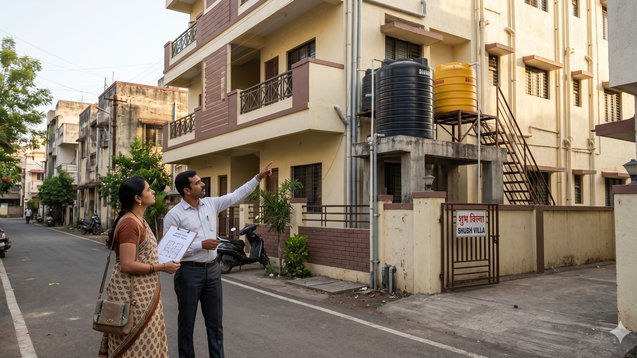
Introduction: The Overlooked Detail That Affects Daily Comfort
The evaluation process of a flat requires your assessment of four elements which include its design and air circulation and visible scenery and provided facilities. The water supply system needs to operate without problems because it serves as a fundamental requirement for all construction projects. Most buyers fail to understand that water tank installation which includes both overhead and underground tanks impacts water pressure and hygiene
and maintenance problems which affect the structural comfort of their homes. Overhead tanks and pumping systems establish the foundation for high-rise living in Indian cities which include Mumbai and Bangalore and Gurgaon. The infrastructure of Tier 2 cities which include Pune and Indore and Lucknow has progressed but it continues to differ from one project to another. In Tier 3 towns, the daily water supply system faces challenges because of tank location and distribution system design despite the less organized water access system. A water tank that receives improper installation results in two separate problems which include insufficient water pressure at upper levels
and distribution problems between different flats. The process of selecting an apartment requires you to evaluate two aspects which include the apartment itself and the effectiveness of its water supply system.
Understanding How Water Tank Systems Work in Apartments
Most residential projects in India use a combination of underground tanks and overhead tanks. Water is first stored underground and then pumped to overhead tanks, from where it is distributed to flats using gravity. The system maintains constant water pressure, which operates best during times of maximum demand. The system's performance relies on the specific locations where tanks are installed. Overhead tanks need to be installed at sufficient heights because their function requires maintaining pressure, whereas underground tanks need to be positioned for operational purposes of both storage and pumping. Some flats will receive high water pressure while other flats will experience low water pressure when the system lacks proper balance. According to actual examples, flats that are located further away from the main distribution line experience reduced water pressure because their piping system follows an uneven design. The process of choosing a flat requires tank installation and pipeline system design to be made a top priority.
Why Overhead Tank Position Matters for Your Flat
People typically install overhead tanks on building rooftops, yet their selected location affects the way residents experience their home environment. The heavy tanks need special positioning because their weight determines how the building supports itself and how water flows throughout the space. The tanks should be installed in building areas that provide stability through their southwest and westside locations to support proper building balance and structural integrity. The building design needs proper tank placement because incorrect positioning creates problems with load distribution and requires ongoing building upkeep. For residents, this translates into: Higher or lower water pressure results from their distance from water sourcesIf the water system above certain flats develops a leak, residents will experience dampness throughout their living space. People will hear sounds that come from the water system and the operation of pumps. People who live in the flats beneath tanks will face water leakage and maintenance problems that happen more frequently in older buildings and facilities that lack proper upkeep.
Avoiding Flats Directly Below Water Tanks
The most useful advice which experienced buyers follow advises them to stay away from apartments which exist beneath water tanks. The modern building methods which developers use today provide better safety than previous methods yet their construction projects still face potential problems which need to be handled. The residents of these apartments face two main problems which include: The residents of these apartments face two main problems which include: The heat from the constant water storage above the building causes the entire structure to experience continuous heat buildup. The maintenance work disrupts operations at the facility on an irregular basis. Vastu guidelines prohibit the installation of tanks above kitchens and bedrooms because this practice creates both structural and cleanliness problems. The presence of high-rise towers in Tier 1 cities makes this situation more important. The construction quality in Tier 2 and Tier 3 cities shows various levels of quality which makes it essential to check this aspect.
Impact on Water Pressure Across Floors
The most obvious effect of tank placement shows itself through water pressure. Flats situated closer to the tank or on lower floors receive stronger pressure since overhead tanks use gravity, but higher flats and distant flats receive less pressure flow because of system design flaws.
In high-rise buildings:
Top floors depend heavily on pump efficiency
Mid-level floors usually get balanced pressure
Lower floors usually experience extremely high water pressure
Pressure imbalance occurs when the tank location does not meet optimal standards or when multiple towers operate from one shared system. The Property Aaj website (https://www.propertyaaj.com) listings require users to inquire about water pressure consistency across different building levels when checking water pressure for larger projects.
Tank Placement and Its Effect on Hygiene and Maintenance
The water tanks need their cleaning and maintenance work because this process protects their water supply. The process becomes difficult because poor placement creates hygiene problems. The tank cleaning procedure becomes difficult when the tanks are situated in areas which cannot be reached.The tank operation becomes unsafe when the tank lacks proper covering. The adjacent flats and structures will experience problems because of the leakage. Experts recommend that tanks should always be properly covered and regularly inspected to prevent seepage and contamination .The project needs accessible tank placement because maintenance systems in Tier 2 and Tier 3 cities do not function at their maximum efficiency.
Underground Tank Location and Its Hidden Role
People focus more on overhead tanks because they attract more attention, but underground tanks operate as essential components. The main water supply system connects to these tanks, which serve as water reservoirs for the overhead system. The best location for underground tanks requires placement in sites that provide simple access for refilling and cleaning and pumping operations. The improper placement of tanks creates contamination risks because drains and septic systems are situated too close to the tanks. The underground tank problems in most projects remain hidden during site assessments, yet they impact ongoing water quality and system performance throughout time.
Tower Layout and Water Distribution Efficiency
The water distribution system in large residential societies depends on the design which connects their water tanks to the building towers. Some projects use centralized systems, while others have separate tanks for each tower. The high-density projects face supply challenges because their shared systems create unequal distribution problems. The system design permits certain towers to receive priority water flow. The development design provides each tower with either a dedicated supply or equal distribution system. The system design provides more even pressure distribution across the system. When exploring projects on Property Aaj (https://www.propertyaaj.com), comparing layouts and understanding whether water systems are centralized or tower-specific can give you better clarity.
Tier 1 vs Tier 2 vs Tier 3: How the Impact Changes
High-rise buildings in Tier 1 cities require precise water tank positioning because their water supply system depends on proper tank placement. The system requires constant pressure maintenance because any pressure disturbance or system maintenance work will result in service disruption for multiple customers. The execution of new infrastructure projects in Tier 2 cities shows improvement through new developments although project
execution differs between different construction companies. In Tier 3 towns, actual water consumption remains below average, yet poor planning together with inadequate maintenance practices will result in permanent water service disruptions. The implementation of effective planning methods across all service tiers produces enhanced results during everyday operations.
How to Evaluate Water Tank Placement Before Buying
The process of assessing water tank locations needs both studying the site and asking practical questions about tank operations. The team needs to find out the locations of overhead water tanks and the methods used to distribute water throughout the building during their site inspection. The following checks need to be conducted to assess the situation: The first check requires verification of your flat's location in relation to the tank. The second check needs to determine the total number of tanks that supply water to the building. The third check requires identification of tanks that supply water to each individual building. The fourth check needs to establish whether residents experience water pressure problems. The assessment requires more than visual examination because an ideal project contains concealed operational problems which must be identified through thorough investigation.
Conclusion: Water Flow Defines Daily Comfort More Than You Think
Water exists as the fundamental requirement for human survival which people fail to consider when they evaluate residential properties. The installation positions of water tanks establish direct impacts on system pressure and sanitary conditions and service upkeep and user satisfaction. The system functions properly when it achieves consistent output and maintains appropriate operational pressure while experiencing few technical difficulties. The system design creates a situation that results in daily problems which remain unsolvable through any available facilities. Water system design requires you to study its fundamental principles and then proceed to ask appropriate questions while assessing the system design throughout your evaluation process. The website Property Aaj (httpswww.propertyaaj.com) provides users with project comparison tools which assist them in making better project selection choices. Home comfort depends on two essential elements which include spatial dimensions and design aesthetics but requires operational efficiency for all daily activities.
FAQs
1. Why is water tank placement important in flats?
The water tank position affects various aspects of your home including water pressure and maintenance requirements and hygiene standards and structural comfort.
2. Is it bad to buy a flat below a water tank?
The situation leads to three problems which include seepage issues and heat problems and maintenance difficulties so people should avoid this situation.
3. Does tank placement affect water pressure?
The overhead tank system utilizes gravity which makes tank position determine how pressure moves throughout different building levels.
4. What should I check during a site visit?
You need to inquire about the location of tanks plus the quantity of tanks and the status of pressure and their maintenance routines.
5. Are underground tanks important?
The main supply needs to be stored in this way because it directly impacts both water quality and water availability.
6. Do all flats get equal water supply?
Distribution systems for water supply face difficulties because planning mistakes create problems in large construction projects.
Read more about property matters with our specialists and browse the latest property listings on Property Aaj. Download the app from the Play Store and App Store now for easy buying, selling, and renting!