Introduction: Why Shared Walls Can Quietly Affect Your Living Experience
People who purchase apartments mainly evaluate visible elements which include layout and location and amenities and price. The quantity of shared walls between your flat and its adjoining units is an essential element which determines your daily comfort but people usually fail to recognize it. The short site visit gives you an impression of the space which appears minimal but after you move in it becomes an essential aspect of your daily life. Shared walls exist because they connect your flat to your neighbouring unit through their shared wall structure. Shared walls which people commonly find in apartment buildings create multiple ways to experience sound and see other people which many buyers discover only after they purchase a unit. The shared walls which connect adjacent apartments in high-rise buildings operate as a necessary structural element in Mumbai and Bangalore and Delhi NCR because these cities follow high-rise building standards. The new projects in Pune and Indore and Jaipur's Tier 2 cities now use improved spatial designs to enhance their current work. The planning process in Tier 3 towns creates additional shared walls because the area offers more space to build. Your home will experience continuous disturbances when your flat lacks proper sound isolation from outside sources. Understanding this before you buy can help you make a far more comfortable long-term decision.
Understanding What Shared Walls Actually Mean in Apartments
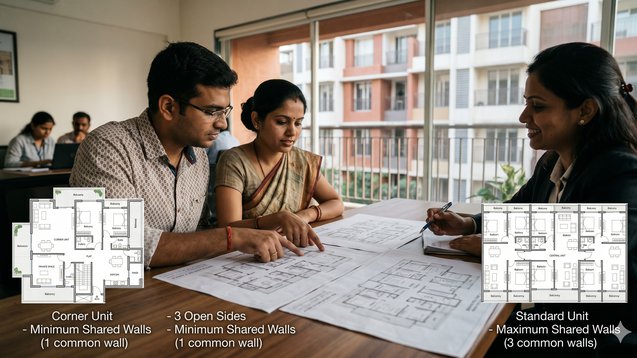
Most apartment buildings establish their design by requiring each unit to have at least one wall in common with another flat. The compact layout of a flat allows it to share two or three walls with its adjacent units. This particular architectural style occurs most frequently in double-loaded corridor designs that position flats across both ends of the building.Your flat establishes greater structural ties with adjacent residences through its increased number of shared walls with them. The connection enables sound and vibrations and even minor disturbances to move between different units in the building. Builders in many cases choose to build their structures at maximum efficiency because they value acoustic comfort less than structural efficiency which results in insufficient sound insulation that fails to stop typical daily noise. You need to examine the floor plan of every property listed on Property Aaj (https://www.propertyaaj.com) before making your decision. The number of unit boundaries that your flat shares with other units will show you how much noise and privacy you can expect.
Why Fewer Shared Walls Mean Better Privacy and Peace
Flats with fewer shared walls naturally provide residents with greater protection from outside disturbances. The reason is simple less physical connection means fewer pathways for sound and disturbance. In apartments with multiple shared walls, you may hear: Television noise, Conversations, Furniture movement, Daily activities from neighbours. Sound moves through wall connections because building materials create pathways for sound to travel which becomes more pronounced when insulation capacity decreases . Sound from vibrations travels through interconnected building elements until it reaches your house interior. The first provides residents with complete sound protection through walls while the second maintains quietness when residents speak inside their homes. The design of current "no shared wall" apartments enables sound reduction while maintaining resident privacy, which creates an environment similar to their own independent residences.
Corner Flats: A Practical Way to Reduce Shared Walls
A corner flat provides the easiest solution to decrease shared wall spaces between two living spaces. These units are located at the edges of a building and typically share fewer walls compared to centrally located flats. A typical corner flat: exists with one wall connection or no wall connections. Two or more sides of the building provide exterior visibility to the structure. The building design enables inhabitants to receive increased airflow and natural sunlight. In Tier 1 cities, corner flats are often priced slightly higher because of these advantages. In Tier 2 and Tier 3 cities, they are still considered premium but may be more accessible. People who need privacy and fresh air flow will find corner units offer them better results. The design of the space helps people avoid neighbor sounds which makes this option suitable for extended residential use.
No Common Wall Apartments: The Premium Option
The developers who work across Tier 1 cities have begun their development of apartments which provide residents with their own private space through "no common wall" design. The design features two separate units which maintain complete wall boundaries to their adjacent spaces. The spaces between these apartments become accessible through:
Building spaces which serve operational needs
Extra space which exists between structural elements
The architectural design achieves two objectives: it prevents sound from passing through while it creates private spaces for the residents. The residents experience their apartment space as a separate home which exists within their apartment building environment. The design provides its occupants with excellent airflow through multiple windows which create natural daylight. The premium and luxury apartment projects which include these units usually require tenants to pay higher rental fees. The apartment housing option provides exceptional living conditions which become available to residents whose financial resources permit them to pursue this choice.
Impact of Shared Walls on Noise and Daily Comfort
The main problem for apartment residents arises from noise disturbances which stem from their shared wall system. Walls transmit sound because:
Walls show physical connection
Sound cannot be stopped by material which treats sound from walls
Sound passes through the space created by building elements and through gap areas. The presence of multiple shared walls in apartments which have been built to high standards still results in ongoing noise disturbances. Studies about housing show that shared walls in apartments create disturbances which decrease privacy for residents. Home-based workers who care for children or need quiet time will find this situation to be a daily problem. The need for quiet space becomes urgent when residents experience continuous noise disturbances throughout their daily activities. The most effective method to decrease this problem exists in choosing an apartment which has fewer shared walls because this approach does not need expensive soundproofing methods.
How Layout and Tower Design Influence Shared Walls
The overall building layout determines the number of shared walls which exist in your flat. The residential space of high-density towers has three major effects which include increased unit capacity which leads to higher levels of shared walls and decreased privacy. The low-density and premium tower design provides better building performance through its design which decreases building footprint and shared wall infrastructure. The development of high-density urban areas occurs in Tier 1 cities which experience high land costs. Higher quality building designs with lower shared wall sections have become standard in Tier 2 cities. The available space in Tier 3 towns exists alongside varying standards of design excellence. The Property Aaj website (https://www.propertyaaj.com) provides unit-per-floor comparison tools which help users estimate their potential shared wall space.
Ventilation and Natural Light Benefits of Fewer Shared Walls
The reduction of shared walls between two apartments leads to improved airflow through the building and increased daylighting through the windows. The benefits of multiple exterior walls in flats include extended exterior views and double-sided window access and improved air circulation. The system creates more comfortable indoor conditions while reducing the need for electric lights and air conditioning systems. This benefit holds greater importance
in India because the country experiences severe heat and humid weather conditions. The combination of good ventilation and home design creates year-round comfort while enhancing the healthiness of indoor spaces.
Resale Value and Buyer Preference in the Indian Market
The rising awareness of buyers in India now leads to increased importance of privacy and noise control as factors that impact their purchasing choices. The resale market shows higher demand for flats that have corner positions and better isolation and fewer shared walls. The three cities of Mumbai and Bangalore and Gurgaon show that these features have an impact on market prices. The trend shows upward movement in Tier 2 cities because buyers now have better access to information. People who select a flat with fewer shared walls make a choice that brings them both comfort and financial advantage.
Practical Tips to Identify Flats With Minimum Shared Walls
The process of identifying these flats during your property search requires you to follow specific methods. The floor plan requires you to examine it closely while counting the number of flat sides that connect to neighboring units. The search should focus on finding corner units or designs which have minimal contact with neighboring apartments. Developers should provide you with information about shared walls and structural elements which separate different spaces. Your visit to the site should include an examination of how units are arranged on your specific floor. The use of Property Aaj (https://www.propertyaaj.com) enables you to compare project layouts which helps you to create a shorter list of choices.
Conclusion: Choose Privacy Before You Compromise on It
The purpose of a home is to provide individuals with a private area which allows them to unwind without being interrupted by others. Your decision about which apartment to select determines how much shared walls will impact your living environment. Flats with fewer shared walls provide residents with enhanced privacy protection which results in decreased noise disturbances and better air circulation and an overall more tranquil residential environment. The advantages of the property become apparent during your time as a resident although they might not be immediately noticeable during your site visit. Carefully assess all layouts while you evaluate their effects on your comfort which will develop over time. Use reliable websites such as Property Aaj (https://www.propertyaaj.com) to find homes that have superior architectural designs. Your home achieves true comfort through its spatial arrangement which creates a peaceful environment that protects your personal space.
FAQs
1. What are shared walls in apartments?
Shared walls are walls that your flat shares with neighbouring units. They are common in apartment buildings and they control the amount of sound that enters residential spaces.
2. Are flats with fewer shared walls better?
Yes, they offer better privacy, less noise disturbance , and they provide better ventilation than flats which have multiple shared walls.
3. What is a common wall apartment?
The flat design creates two separate living spaces which allow residents to experience greater privacy and reduced noise through their building structure.
4. Do corner flats have fewer shared walls?
Yes, corner flats usually share fewer walls which results in better natural light and ventilation and improved privacy.
5. Can shared wall noise be reduced?
The soundproofing method will decrease noise but complete sound elimination remains impossible. The best solution for flat selection exists in choosing the appropriate flat.
6. Does having fewer shared walls increase property value?
Yes, such flats are often more desirable because they lead to better resale value for most buyers in the market.
Read more about property matters with our specialists and browse the latest property listings on Property Aaj. Download the app from the Play Store and App Store now for easy buying, selling, and renting!