Introduction
The increasing number of Indian citizens who seek employment and educational opportunities and business ventures in foreign countries raises an ongoing inquiry about the application of asylum outside Indian borders. People who live in Dubai apartments and London townhouses and American suburban houses want to know if ancient Indian principles maintain their value beyond their original geographic boundaries. The practical application of Vastu Shastra requires implementation in Western countries however its fundamental principles require authentication through actual execution. Vastu Shastra developed its principles according to Indian weather patterns and solar radiation distribution and Indian traditional ways of living. The dedicated implementation of Vastu Shastra requires its direct applications to Indians, creating difficulties for its application in international locations. The core concepts of the system which include natural light and ventilation and spatial balance and functionality exist as worldwide principles. Vastu exists as a flexible system which people have customized to suit their particular situations which they encounter in their daily life through their different living environments. The international application of Vastu exists as an extension of its existing flexible worldwide implementation. The blog will examine Vastu implementation in international locations while revealing which elements require modification and explaining how NRIs and international homeowners can implement practical Vastu solutions which minimize space requirements in their homes.
Understanding the Core Principles of Vastu
The Vastu practice requires researchers to study its essential components before they start their work outside India. Vastu examines three main aspects which include directional alignment and sunlight and airflow and space organization and element balance. The principles exist in all locations because they depend on natural forces which occur throughout the world. The east-west sunlight path remains constant from Delhi to New York because it always rises in the east and sets in the west. The three factors which humans experience as airflow and temperature and spatial comfort operate according to universal patterns. Indian purchasers who use Property Aaj (https://www.propertyaaj.com) tend to prefer certain elements which they choose to follow even if they don't adhere to Vastu rules. The underlying principles demonstrate practical use which extends beyond their traditional cultural function.
Geographical Differences: Why Adaptation Is Necessary
The situation becomes more engaging at this particular moment. Countries exhibit distinct climatic conditions which affect their daylight patterns and architectural styles. Northern countries experience their winter season with restricted sunlight availability. Western homes typically utilize heating systems that distribute warmth to all areas of the building. Indian architects create entirely different apartment designs which differ from standard apartment layouts used in other countries. The exact implementation of Vastu practices can generate problems because they do not match actual living requirements. In India especially at Tier 2 and Tier 3 home sites Vastu principles get incorporated into residential designs from their initial planning stages. Most international properties come with fixed designs that restrict any potential construction modifications. The process of adaptation requires organizations to base their operations on fundamental principles instead of following specific established regulations.
Directional Alignment in Foreign Homes
Direction is one of the most discussed aspects of Vastu. But here’s the thing, directional energy is not India-specific. The Earth’s magnetic field exists throughout the planet. iThe four cardinal directions which include north and south and east and west maintain their importance. The two elements which determine their actual value are climate conditions and architectural building techniques. For example: In colder countries, people need to maximize their ability to receive sunlight because they want more light than they need to correctly face their buildings.In hot climates, buildings need to focus on their exterior design to minimize heat absorption.The same constraints which apply to buyers in Tier 1 Indian apartments also exist for them. People who want an east-facing home must settle for homes with different layouts because they cannot find one that faces east. The same logic applies internationally.
Applying Vastu in Apartments and Rented Spaces
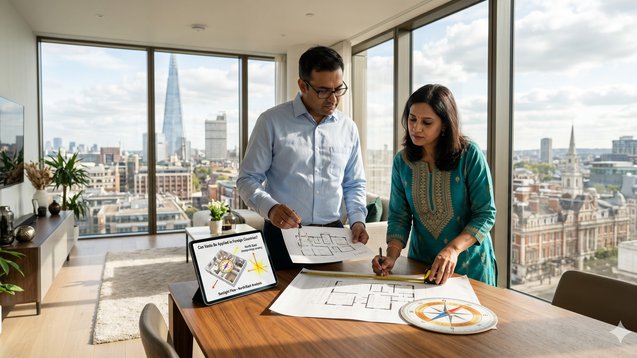
Most NRIs and expats live in apartments or rented homes, where structural changes are not possible. The most flexible aspect of Vastu exists in this particular location. You should avoid constructing building alignments and instead concentrate on these tasks: Furniture placement Decluttering Lighting Usage of space The work desk should face a direction that enhances focus according to the following example. The entrances need to be maintained with cleanliness and brightness at all times. The design requires natural light to be used whenever it is available. The method has become standard practice in Tier 1 Indian cities because of their limited available space. Vastu implementation in foreign countries requires only minor adjustments according to smart adjustments that do not need major structural modifications.
Climate and Environmental Considerations
The climatic conditions of India create a fundamental distinction between India and foreign nations. Vastu originated in tropical regions which needed methods to control heat and sunlight and airflow patterns. In colder regions: The importance of heat retention exceeds that of ventilation The arrangement of windows will differ The way people use rooms will different In certain situations choosing a bedroom location in a warm section of the insulated house proves more suitable than following directional guidelines. The Vastu system exists in multiple forms throughout different regions of India. The architectural design of Rajasthani homes differs from that of Himachali houses. The situation requires adaptability as the primary requirement.
Psychological and Cultural Relevance
People retain their cultural practices even when they move to different countries. The practice of Vastu brings Indians a sense of comfort because it connects them to their cultural traditions. The practice establishes a bond to their residence which makes it easier for people to adapt in non-native surroundings. Vastu functions in Tier 3 Indian towns as an emotional and cultural practice which holds deep significance for residents. People in Tier 1 cities choose homes which provide them with a balanced and organized atmosphere despite their lack of open Vastu practice. The same principle operates beyond the boundaries of national borders. The space becomes more comfortable and properly balanced through even minor changes which apply Vastu principles.
Comparison with Global Design Concepts
The system of Vastu is one among various systems that exist for this purpose. The Chinese system of Feng Shui and Vastu and other systems of architecture share a common goal of establishing energy pathways which create spatial equilibrium and design spaces that achieve architectural balance. European and American architectural design in present times emphasizes three design elements which include: Natural light Open layouts Minimal clutter. The three concepts established above show a strong connection to Vastu principles. The website Property Aaj (https://www.propertyaaj.com) in India shows how modern platforms present Vastu principles through efficient ventilation and layout design which they display as modern building features. The research demonstrates that universal design principles exist because different design terms describe the same principles.
Common Challenges NRIs Face
The implementation of Vastu Shastra outside its native country faces various operational difficulties which arise from specific factors. The design of apartments contains permanent layouts which restrict all possible building design options. The building design process requires architectural elements but the actual construction process uses different materials. The design process of different cultures produces distinctive design elements. The same problems which exist in high-rise buildings affect buyers who purchase properties in Tier 1 Indian cities. The solution in both cases is the same focus on what you can control. The situation requires you to stop worrying about aspects which remain outside your ability to modify.
Practical Tips for Applying Vastu Abroad
The approach begins with basic elements which the user must follow. Homeowners must first maintain their home in a neat and tidy condition. Homeowners need to provide their home with proper illumination and fresh air flow. Homeowners must use their rooms according to their designated purposes. The next step requires minor changes to be made. The user must position essential furniture pieces in strategic locations. The user must keep essential spaces free from unnecessary items. The user needs to create a peaceful atmosphere which maintains a stable state. The world provides multiple locations where these steps can be easily executed.
Does Vastu Affect Property Value Abroad?
Vastu does not have a significant impact on foreign markets as it does in India. The buyers in the US and UK and Australia search for these property aspects. Indian buyers who live outside their country still consider Vastu when making personal choices. The Property Aaj website in India shows Vastu as an important factor that influences property demand. The international market gives this aspect far less importance.
Conclusion
The application of Vastu exists in foreign countries according to Yes but it requires flexible implementation instead of strict methods. The actual worth of Vastu exists in its basic elements which include light and airflow and space arrangement and equilibrium. The concepts function throughout all regions of the planet. The methods you choose to implement these standards become your only option. In India people living in Tier 2 and Tier 3 homes can achieve complete Vastu compliance. The situation requires adaptive solutions in both Tier 1 cities and international locations. Your living space benefits from Vastu when you use it as a guiding principle instead of following its rules exactly. Your home functions as your ultimate support for your daily activities and your need for peace and comfort. The process of selecting a property in India through Property Aaj (https://www.propertyaaj.com) or your international relocation should end with you choosing the most suitable space.
FAQs
1. Can Vastu be followed outside India?
Vastu principles exist as global standards that require local climate and architectural elements to create their specific application methods.
2. Does direction matter in foreign countries?
The answer is yes but the effect varies according to the amount of sunlight present and the current meteorological conditions.
3. Is Vastu important for NRIs buying homes abroad?
Personal belief determines the answer to this question. NRIs follow basic principles because they want to feel comfortable between complete rule adherence and total free choice.
4. Can Vastu be applied in rented apartments abroad?
Yes, people can achieve Vastu implementation through basic modifications that include furniture arrangement and light control and space cleaning.
5. Does Vastu affect property prices internationally?
The practice has no significant effect on international real estate valuation according to its establishment in foreign markets.
6. Should I prioritize Vastu over practical factors abroad?
Start with Vastu implementation after you establish base requirements for your location and budget and building needs.
Read more about property matters with our specialists and browse the latest property listings on Property Aaj. Download the app from the Play Store and App Store now for easy buying, selling, and renting!