Introduction
The Indian real estate market currently uses the term "Vastu-compliant project" so frequently that its original meaning has become unclear. Builders in Mumbai offer premium apartments while developers in Pune sell mid-range flats and builders in Tier 2 cities like Indore and Lucknow sell plotted developments and all of them claim their projects follow Vastu principles. But the reality on the ground is often very different. Many buyers realize only after booking or worse, after possession that the layout doesn’t truly align with what they expected. The challenge is simple: Vastu is not something you can fix later. After construction ends for a building project it becomes impossible to modify the entrance direction or kitchen area or entire building layout. You must establish Vastu compliance before making any decisions because it matters to you and your family members. The guide helps you develop buyer thinking skills. The guide teaches you to assess a project through basic inspections and actual project knowledge instead of trusting sales materials and promotional presentations. The goal is not perfection, it's clarity and confidence before you invest your hard-earned money.
Start With the Master Layout, Not Just the Flat
Most buyers jump straight into evaluating the flat they like, but Vastu begins much earlier at the project level itself. The overall layout of the project establishes the basic pattern which determines how energy and light and movement will travel through the complete development. If the project planning becomes inadequate from its initial stage, then even a well-designed individual flat will fail to meet Vastu standards. When you visit a site or explore listings on platforms like Property Aaj (httpswww.propertyaaj.com), always ask for the master plan. You need to take your time to learn about the main entrance location and the connecting road system and the distribution of open spaces. The main entrance should open to the north or east according to Vastu standards which state that this direction creates positive energy when combined with gardens and open spaces. In Tier 1 cities developers need to maximize space because land availability has become limited which leads to frequent project compromises. The ability to implement Vastu principles is easier in Tier 2 and Tier 3 cities because their projects operate on larger land areas. Buyers need to understand this distinction between two products because it will help them create a better understanding of how to buy.
Verify the Direction of Your Flat Entrance
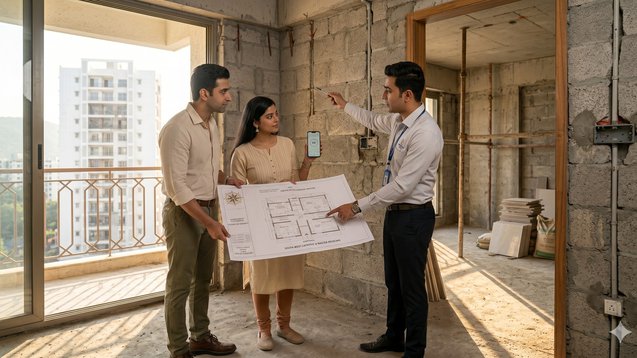
The entrance of your flat is one of the most critical elements in Vastu because it serves as the primary pathway through which energy enters your home. Builders use the terms "east-facing" and "north-facing" to describe units although these terms fail to reflect actual directional orientation. The system becomes problematic when you need to depend on spoken confirmation for handling situations that involve slight angle changes or incorrect orientation results. The most effective method requires you to determine the building's orientation through direct observation of the location. The person needs to stand at the flat's entrance and point to the outside while using a basic compass on their smartphone. This path shows you the exact direction of the main entrance. The action requires minimal effort yet it stops major errors from happening in future situations. The orientation of high-rise buildings in Bangalore and Pune changes throughout their multiple unit areas which contain different room arrangements for each level. The flat, described as east-facing, actually faces toward southeast, which may or may not meet your expectations. You need to spend several minutes for your own verification which will help you establish your decision through actual evidence instead of guesswork.
Check Kitchen Placement With Practical Understanding
The kitchen serves as the primary energy hub according to Vastu Shastra. The south-east direction provides the best location for fire activities according to traditional practices. The north-west direction serves as an acceptable secondary placement option. The design of modern apartment buildings in metro cities creates challenges which prevent buildings from achieving complete alignment with traditional design standards. The evaluation process requires you to assess a kitchen's actual features instead of its documented location. The cooking platform position determines your cooking orientation which you need to observe. Cooking while facing east brings advantages but a kitchen must have good ventilation and natural light access to meet requirements. Builders in Tier 2 and Tier 3 cities can create more spacious layouts which enable better kitchen alignment with Vastu principles. The design of compact apartments in Mumbai and Gurgaon cities focuses on maximizing space instead of maintaining architectural authenticity. The focus should shift towards major issue prevention instead of achieving exact design layout.
Evaluate Bedroom Positions Thoughtfully
The design of bedrooms establishes equilibrium between comfort needs within residential spaces. The Vastu system designates the south-west direction as the optimal position for master bedrooms because it symbolizes stability and authority. The design of children's bedrooms needs to follow the west or north-west direction whereas guest bedrooms should be situated in the north-west area. People should avoid using rigid methods to handle this situation. The layout of rooms in modern apartments becomes challenging because people in urban areas do not need to achieve complete room alignment. The assessment of the layout should be based on its capability to deliver both logical and usable design. The value of a bedroom increases when it provides proper ventilation together with necessary privacy and comfort instead of requiring specific directional alignment. Traditional placement methods hold more value for buyers in Tier 2 and Tier 3 cities compared to urban buyers, who prioritize functional aspects. The process of understanding your personal priorities together with your family members' needs will assist you in reaching an unbiased choice.
Pay Attention to Natural Light and Ventilation
The evaluation of Vastu compliance requires home inspection to determine how residents experience light and airflow. Better Vastu design principles create better building designs which result in homes that receive natural light and fresh air following many Vastu requirements. The flat layout allows you to observe how sunlight enters different rooms throughout the daytime. The home receives soft morning light through its east-facing windows while proper cross-ventilation systems provide continuous fresh air throughout the space. The flat space becomes unappealing because it lacks natural light and has restricted airflow which results in a closed off environment that feels unwelcoming. The close proximity of buildings in Tier 1 cities makes it difficult for their residents to obtain sufficient natural light and fresh air. The need for onsite observation becomes essential because brochures cannot provide complete information about the project. The combination of a slightly flawed Vastu layout and excellent ventilation creates a superior living environment compared to a space that achieves theoretical perfection yet suffers from design flaws.
Check Bathroom and Toilet Placement Carefully
The Vastu assessment process requires building entry bathrooms to assess Vastu compliance. The optimal bathroom location for homes requires placement in west and north-west areas. Traditional Vastu principles recommend people to avoid placing objects in both north-east and central spaces. The design of high-rise buildings mandates their bathroom locations according to plumbing stacks, which restricts architectural design options. This is why you may find similar layouts repeated across floors. The center of the house shows actual critical zones which need critical examination and studies of deviations which show actual common practices. The buyer needs to find an optimal solution which considers both perfect placement and existing practical limitations. The bathroom position of the flat presents a minor issue, which does not affect its overall value, because all other aspects, including location, price, and builder reputation, meet requirements.
Understand Marketing Terms vs Reality
The biggest challenge for buyers exists because they need to learn how to distinguish between the two terms which builders use to refer to Vastu-compliant and Vastu-friendly systems. Builders use these two terms as if they are the same when in fact they describe different concepts. The first requirement for Vastu-compliant projects requires developers to follow traditional architectural standards because this architectural style exists as the only way to create independent houses and low-density developments. The developers of Vastu-friendly projects create buildings which use modern construction methods to produce usable space without creating significant design defects. The second category of apartments represents the majority of urban residential buildings throughout India. The Property Aaj website (https://www.propertyaaj.com) displays multiple projects which show Vastu as a selling point, but customers should understand this aspect through practical thinking. The layout needs to demonstrate which elements create important conflicts while it should provide spaces for comfortable living.
Always Ask for Detailed Floor Plans
Brochures and sample layouts present the danger of creating false impressions because their actual function exists to deliver presentation materials instead of displaying authentic measurements. The process of making an informed choice requires you to have access to detailed floor plans which show precise directional indicators. The plans provide information about your unit's building orientation together with the ability to assess different layouts and discover possible issues. Serious developers show their commitment to transparency by providing full access to their operational information. The practice of builders providing only limited construction details because they refuse to share complete plans creates a situation which requires you to question their willingness to disclose information. The process becomes simpler when you use Property Aaj (https://www.propertyaaj.com) because the platform offers verified listings which display layout and design details in clear ways.
Compare Multiple Projects Before Finalizing
The best decision-making approach maintains proper evaluation time until its final execution. You need to assess multiple projects which you should examine at various sites using different development teams. This process enables you to determine the maximum results which you can achieve through your financial resources and municipal limits. When you compare projects through your analysis process, you will start to recognize existing correlations. Some developers require detailed planning because it forms their main operational procedures, but others depend mainly on promotional content. Through this evaluation, you gain understanding which enables you to determine the project that maintains optimal Vastu compliance together with practical requirements and monetary worth. Your options in Tier 1 cities become restricted because of existing space limitations, but Tier 2 and Tier 3 cities provide residents with greater space availability. Your exploration of different options through open-mindedness will lead you to select the best solution without needing to make unnecessary sacrifices.
Conclusion
Checking Vastu compliance of a project requires people to show practical skills because they need to develop observation skills and maintain awareness of their surroundings. Your decision-making process will benefit from major design elements which include layout planning and entrance direction and room placement and design quality assessment. Modern real estate shows that high-rise apartments face challenges with Vastu compliance because complete Vastu compliance remains uncommon. But that doesn’t mean you have to settle for poor design. A house which follows basic Vastu principles together with proper design elements which enhance natural light and airflow and functional space will create an excellent living environment. Your house needs to feel right for you in both practical situations and theoretical assessments. Vastu should function as your main guidance tool while you should avoid treating it as an unchanging set of regulations. Your research process becomes more effective when you combine that method with your research efforts on Property Aaj (https://www.propertyaaj.com) because it enables you to find a home that matches your requirements.
FAQs
1. Can a project be fully Vastu-compliant in modern cities?
The architectural design of high-rise buildings prevents developers from achieving Vastu compliance because their existing structural systems and available space do not meet Vastu requirements. The design of many projects includes Vastu-friendly elements which enable them to operate effectively while preventing critical problems.
2. How can I verify flat direction without relying on the builder?
You can use a smartphone compass app during your site visit. The true direction can be determined by standing at the entrance and looking toward the outside. This simple step ensures accuracy and avoids confusion.
3. Are minor Vastu defects a serious concern?
The property owners can handle minor issues which require resolution because they do not warrant complete property rejection. The main focus of your work should target major defects which include incorrect entrance direction and poor layout planning.
4. Is Vastu more important in smaller cities?
Yes, buyer preference for Vastu is generally stronger in Tier 2 and Tier 3 cities. Buyers in metro cities consider Vastu to be significant during their purchasing process.
5. Do all builders provide accurate Vastu information?
The answer is no. Certain developers maintain open business practices whereas other developers utilize Vastu as a promotional strategy. The verification process requires independent assessment through examination of floor plans and actual site evaluation.
6. Should Vastu be the main factor when buying a home?
Vastu should be one of several factors you consider. The decision-making process requires you to consider location, budget connectivity and construction quality as equal factors.
Read more about property matters with our specialists and browse the latest property listings on Property Aaj. Download the app from the Play Store and App Store now for easy buying, selling, and renting!