Introduction: A Practical, Real Estate Perspective for Indian Buyers
The orientation of residential properties in India functions as a major obstacle which hinders potential homebuyers from making their purchasing decisions. South-facing properties between all available options face the most unfavorable treatment by people who view them. The buyers who see these properties will not enter the property because they reject everything about it. The actual question investigates whether south-facing houses bring bad luck or if this belief exists because people pass it down through generations without understanding its origin. The current real estate market needs a better solution to this problem which requires practical assessment at this time. The decision process needs to be based on data analysis while emotional factors decrease their importance for all types of properties from Tier 3 towns to Tier 1 city apartments and Tier 2 market mid-size homes. Buyers today conduct better research about their options. They evaluate various aspects of their business through Property Aaj (https://www.propertyaaj.com) which provides them with layout and location information along with details about connectivity and future worth. The common belief about south-facing homes requires investigation to reach an objective conclusion which examines their actual value for property investment.
Understanding the Origin of the South-Facing Myth
The belief that south-facing homes are inauspicious has historical roots but it is commonly misunderstood in modern times. Indian homes traditionally used natural materials for construction because they lacked modern cooling and insulation technologies. The south and west directions experienced their maximum sunlight exposure between noon and sunset. The residential spaces became excessively hot which created conditions that made it difficult to stay inside during hot weather in areas that experienced extreme heat. The actual problem evolved into a cultural practice over an extended period of time. The narrative changed from explaining that "south-facing homes can get hotter" to stating that "south-facing homes are bad." The misunderstanding originated from this point. The construction restrictions from earlier periods formed the basis of this belief which most buyers do not understand. The development of modern building materials and architectural techniques and ventilation systems has progressed through time. The original problem of excessive heat has become manageable because people can now completely prevent it from occurring in most instances.
What a South-Facing House Actually Means in Modern Terms
The belief that south-facing homes are inauspicious has historical roots but it is commonly misunderstood in modern times. Indian homes traditionally used natural materials for construction because they lacked modern cooling and insulation technologies. The south and west directions experienced their maximum sunlight exposure between noon and sunset. The residential spaces became excessively hot which created conditions that made it difficult to stay inside during hot weather in areas that experienced extreme heat. The actual problem evolved into a cultural practice over an extended period of time. The narrative changed from explaining that "south-facing homes can get hotter" to stating that "south-facing homes are bad." The misunderstanding originated from this point. The construction restrictions from earlier periods formed the basis of this belief which most buyers do not understand. The development of modern building materials and architectural techniques and ventilation systems has progressed through time. The original problem of excessive heat has become manageable because people can now completely prevent it from occurring in most instances.
How Modern Construction Has Changed the Reality
The present-day construction industry employs better methods than past building practices to achieve control over temperature, air movement, and natural light. Insulated walls and reflective glass and appropriate shading systems and cross-ventilation systems have become standard features in modern residential construction. The components establish temperature control systems which operate throughout all seasons based on variable weather patterns. Builders in Tier 1 cities establish their design processes to create buildings which achieve maximum spatial utility and operational effectiveness in high-rise environments. They prioritize creating spaces which enhance life quality although they do not follow traditional directional design practices. Homeowners in Tier 2 and Tier 3 cities have greater design options because these areas feature independent homes and low-rise buildings as their primary architectural style. Homeowners gain design freedom through balcony additions and tree plantings and sunshade installations which allow them to manage sun exposure. The belief that a south-facing house will create discomfort for its occupants has lost its validity in present times.
The Hidden Advantages of South-Facing Homes
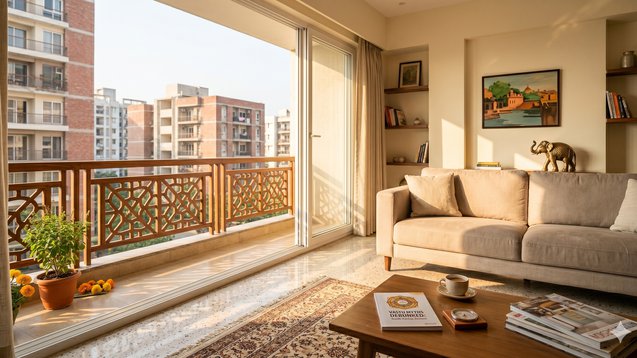
The advantages of south-facing houses become evident when architects create their designs effectively. The most important advantage of this system is that it provides natural daylighting which lasts throughout the entire day. South-facing homes receive extended periods of brightness because they face the sun throughout the day while other directions experience restricted illumination. The overall home atmosphere improves through this process. A space that receives sufficient light creates an effect which makes the area feel larger while producing a cheerful and welcoming atmosphere. The system decreases the need for electrical lights which results in decreasing electricity expenses throughout the years. During cooler months, south-facing houses provide residents with higher comfort levels because these homes receive more sunlight throughout the day. Many homebuyers tend to miss this particular detail. The presence of open space in front of a south-facing apartment allows it to receive more sunlight than a north-facing apartment which suffers from building shadows.
How Different Markets View South-Facing Homes
South-facing homes face different buyer perceptions throughout India which results in different demand levels and pricing outcomes. Buyers show greater interest in practical elements like site selection and transportation options and building standards in Tier 1 cities which include Mumbai and Delhi and Bengaluru. Buyers consider direction as a factor in their decisions yet they do not use it as a basis for making final judgments. South-facing homes become the preferred choice for many professionals and investors because of their superior accessibility and future worth. People in Tier 2 cities hold different views about life. Buyers here often balance tradition with practicality. Homebuyers show a preference for east or north-facing homes yet they consider south-facing properties when the layout and pricing meet their requirements. Traditional beliefs exert stronger control over decision-making in Tier 3 towns. Homebuyers show less interest in south-facing properties than they do in others which leads to lower home prices and extended periods before properties sell. The differences require comprehension because they affect property investment decisions.
Does Direction Really Affect Property Value?
The answer to this common buyer question requires a complex explanation. Buyer perception of a property depends on its direction but this factor holds less importance than actual property value. The most important elements for property assessment include location infrastructure and builder reputation while future development potential has even more significant impact. A property in Tier 1 cities which faces south from a central location will achieve better performance than a north-facing property which exists in a less desirable area. The demand for properties in Tier 2 and Tier 3 markets shows a slight increase based on direction but this effect remains less important than fundamental property characteristics. Property Aaj (https://www.propertyaaj.com) shows that properties with strong fundamentals which include good connectivity and modern amenities and efficient layouts receive higher interest from visitors who disregard their directional orientation. So while direction matters, it should never be the sole deciding factor.
What You Should Actually Focus On as a Buyer
The assessment of home orientation needs to be replaced by a better method which examines actual elements which impact your everyday existence. The assessment of a house's atmosphere requires you to enter the space and evaluate its overall condition. The space needs enough illumination to achieve its objectives. The space needs enough ventilation to achieve its objectives. The space needs enough ventilation to achieve its objectives. The space needs enough ventilation to achieve its objectives. The space needs enough ventilation to achieve its objectives. The space needs enough ventilation to achieve its objectives. The space needs enough ventilation to achieve its objectives. The design of the home should enable your daily activities. The home design should allow easy access to both functional areas and sleeping spaces. The elements which create comfort conditions in a space need to be identified. The design of a house needs effective airflow systems to achieve a proper indoor atmosphere while protecting against outdoor conditions. The experienced buyers who know what they want to buy choose to assess product usefulness instead of assessing traditional product features.
Clearing Common Misconceptions Around South-Facing Homes
There are several myths that continue to influence buyer decisions, often unnecessarily. People believe that all south-facing homes bring bad luck which results in financial problems. There is no practical or scientific evidence to support this claim. People believe that these homes become hotter during all periods of the day. Modern construction methods enable practitioners to control heat through insulation and shading, which results in buildings that receive more sunlight. People believe that south-facing homes become impossible to sell. The demand for properties in certain markets will change but a property that has both correct pricing and prime location will attract buyers. The misconceptions which people hold lead to buyers missing out on chances to find their ideal home.
Conclusion: It’s Not About Direction, It’s About Design
The question about whether south-facing houses bring bad luck has a definite answer which states that this belief is untrue. The situation does not have negative aspects because people interpret it incorrectly. Construction problems from the past create negative perceptions which have ceased to exist in present-day conditions. Current residential structures function effectively with their sunlight and heat and airflow systems, which makes their orientation less important than it used to be. The main aspects that homebuyers should concentrate on include location and layout and comfort and future market value of the property. People should choose their preferred direction but this choice should not restrict their options. Your property assessment process will show you through Property Aaj (https://www.propertyaaj.com) that a good home exists because it enables your life to function better than its orientation shows.
FAQs
1. Do Indians see south-facing houses as unlucky or do they see them as regular buildings?
The older building methods made them less usable because of their south-facing design. The modern construction methods have solved this problem because they enable comfortable living in south-facing homes that exist today.
2. Do south-facing homes receive direct sunlight during the entire day?
The buildings reach maximum sunlight contact through their design which allows sun exposure during all daylight hours. The system creates heat gain through its operation yet designers can use shading and ventilation to maintain indoor comfort.
3. Do south-facing properties have lower costs compared to other types of properties?
The buyer approach leads to lower prices for southern-facing properties in Tier 2 and Tier 3 cities while they remain at market prices. The pricing system in Tier 1 cities depends on both location and available facilities.
4. Does the south-facing position of a property impact its resale value?
The direction of a property affects buyer interest in some areas while location and building features and property state have a greater influence on resale value.
5. Should I avoid buying a south-facing home completely?
The entire property needs assessment before making your decision. The direction of the building becomes unimportant when the structure has suitable layout and ventilation options and good positioning.
6. What process should I follow to find the best property for my needs?
You can use Property Aaj (https://www.propertyaaj.com) to compare different properties by their layout and pricing and location which helps you make better decisions.
Read more about property matters with our specialists and browse the latest property listings on Property Aaj. Download the app from the Play Store and App Store now for easy buying, selling, and renting!