Why Bigger Homes Are Not Always Better
Introduction
For decades, the idea of owning a large home has been deeply associated with success in India. People think that they reach their highest possible living standard when they add extra space to their homes through bigger living rooms and more bedrooms and larger balconies and all their future space needs. When buyers start exploring properties, one of the first thoughts that comes to mind is simple: If the budget allows it, why not buy a bigger home?
People who think that way appear to have sound reasoning. The more space you have should give you more comfortable living space. The statement about space and comfort does not hold true in all situations. Homeowners who purchase large houses discover unexpected costs because their spending exceeds their initial budget and their daily travel times increase and their house upkeep needs expand and they have home areas that remain unused. The definition of ideal home size in India now changes according to different real estate markets across the country. In Tier 1 cities like Mumbai, Delhi, and Bengaluru, buyers often prioritize location and connectivity over sheer square footage. In Indore and Jaipur and Coimbatore, people can buy larger homes because they cost less, but home buyers need to take time to create design plans for their new houses. Towns in Tier 3 provide buyers with access to large homes, but people decide which houses to buy based on their daily needs and the available infrastructure. The shift in buyer behaviour shows through property platforms such as Property Aaj (https://www.propertyaaj.com). Many people now prefer homes that are efficient, well-located, and aligned with their lifestyle rather than simply choosing the biggest property they can afford. The truth is simple: bigger homes are not automatically better homes. The home size that best fits your life requirements serves as your ideal home size.
The Psychological Appeal of Larger Homes
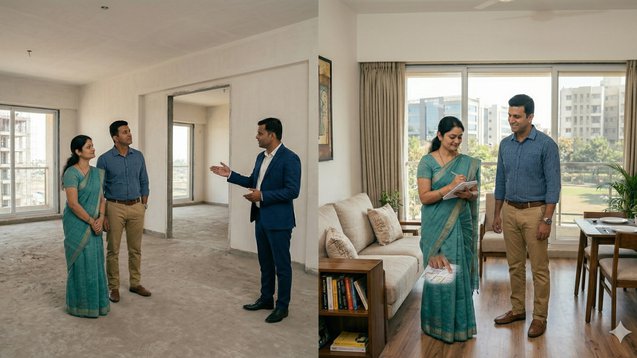
People develop attraction to larger homes because they first experience a certain perception about these properties. A larger home represents financial stability and social progress for many buyers. Families plan to host social events while providing space for both their relatives and their future requirements. Property developers use property tours to display their homes' spacious designs because bigger houses create greater visual effects. People tend to let their feelings control their decisions because they find it difficult to think clearly about their practical problems. The young professional couple who live in Bengaluru selects a 3BHK apartment which they find on the city outskirts instead of choosing a 2BHK unit which stands near their job site. The initial period brings excitement because they now have an additional area. After three months their excitement disappears because they spend too much time commuting while their extra space remains unused. This scenario happens frequently in real life. Many buyers who search through listings on Property Aaj (https://www.propertyaaj.com) discover that their first selected properties do not match with their actual daily activities. People need to use space for better living purposes instead of creating additional difficulties.
Location vs Size: The Real Estate Trade-Off
The most crucial choice for buyers is determining which factor they should select between location and property dimension. The trade-off between two elements emerges most strongly in Tier 1 cities. Central markets with efficient transportation systems and employment centers demand higher property costs from buyers. Buyers usually need to select between purchasing a smaller home in a prime location or a bigger home which is located in a more distant area. More urban shoppers now prefer purchasing materials that provide them better accessibility than purchasing products which need larger spaces. A small apartment which exists next to public transit routes and business areas and vital public facilities shows better life quality than a big house which needs multiple hours of travel each day. Tier 2 cities offer more flexible options. Buyers in cities like Nagpur, Surat, or Lucknow may find reasonably spacious homes without sacrificing connectivity. Residents of Tier 3 towns can obtain maximum housing space at affordable rates but they will encounter limited job options and lack of city facilities. Property Aaj provides buyers with multiple locations to examine which trade-offs will impact their daily activities and the worth of their investments.
Homeowners experience increased maintenance expenses when their homes become larger.
First-time buyers tend to underestimate the ongoing expenses which come with owning larger houses. Homeowners need to budget for increased upkeep costs which accompany larger properties, beyond their initial buying price.
The expenses include:
The costs of electricity consumption have increased
Gated communities impose extra expenses for residents to handle their property maintenance needs
Residents must spend more money to purchase their required furniture items
Residents need to invest additional time and resources to complete their cleaning and maintenance duties
The cost of monthly utilities escalates when a large apartment contains several balconies and bathrooms and rooms.
Premium residential complexes in Tier 1 cities impose high maintenance fees which become especially burdensome for residents of large apartments with luxurious facilities. Service prices decrease in Tier 2 and Tier 3 cities, yet homeowners must spend more for their basic needs and property maintenance in larger homes. Recurring expenses transform what seems like an affordable home into a financial burden for the homeowner. Smart buyers often calculate the total cost of ownership—not just the property price—before making decisions.
Unused Space: The Hidden Inefficiency
People find extra space attractive when they visit properties but actual home usage shows that homeowners in larger homes need all their rooms except for their primary space. The three types of spaces which include unused guest rooms and extra living areas and oversized balconies stay unoccupied for almost the entire year. Unused space functions as an inefficient waste of money for practical purposes. A family buys a four-bedroom house which they expect to use for hosting guests who visit their home. The actual frequency of those visits will be only two times each year. The remaining rooms stay closed most of the time. People use extra space to handle maintenance work instead of using it to enhance their living conditions. Homebuyers who search through Property Aaj (https://www.propertyaaj.com) establish that home design efficiency takes precedence over home size. People who use well-designed smaller homes experience better functionality and comfort than people who occupy larger badly designed spaces.
Modern Lifestyle Changes Are Redefining Space Needs
Lifestyle trends in India are changing fast. People are working from home watching movies on their devices and having families. This is changing how people use their living spaces. Young. Nuclear families like small homes. These homes are easy to take care of and close to city amenities. In cities, small 2BHK apartments are very popular. They are affordable and functional. In cities people want medium-sized homes. These homes are comfortable. Do not need a lot of maintenance. In towns, buyers are thinking carefully about what they need. They want homes that're just right for their families, not too big. These changing lifestyle patterns are changing what buyers want in India’s real estate market. People are looking for homes that fit their lifestyles. The way people live is. So is the way they want to live in their homes. Modern lifestyle changes are redefining space needs.
Investment Perspective: Bigger Properties Typically Show Lower Return On Investment Than Smaller Properties
Property size does not guarantee better investment returns because bigger properties do not automatically provide higher property value increases. The location and infrastructure development and demand for a property determine its worth more than any other factor. The resale market for smaller apartments in metro cities shows higher demand because more people can afford these units. Tenants in rental markets show a preference for compact homes because they value both affordable options and convenient living spaces. The resale market in Tier 2 cities demonstrates better liquidity for mid-sized homes than for extremely large properties. The resale process for oversized houses in Tier 3 towns experiences delays because there are not enough potential buyers. Property Aaj (https://www.propertyaaj.com) enables investors to analyze market trends that show which property types succeed in various locations. A compact apartment located in a prime area offers greater investment potential than a large home situated in a less attractive location.
Legal and Financial Considerations
Property size brings legal and financial effects which buyers must assess as another practical factor. The calculation of stamp duty and registration charges depends on property value assessment. The increased costs for larger homes result from their higher market value which leads to greater transaction expenses. Home loan eligibility also influences purchasing decisions. Banks evaluate income levels and repayment capacity before approving loans. The financial requirements for larger properties demand greater loan amounts and extended payment periods. RERA regulations across different states have improved transparency, but buyers should still review project approvals, building plans, and ownership documentation carefully. The financial situation leads buyers to choose homes which provide both affordable costs and practical value instead of selecting the biggest space available.
Choosing the Right Size for Your Lifestyle
So how do you decide the right home size?
Understanding your daily routines and future plans will provide you with the answer.
You should ask yourself these two practical questions:
What is the total number of rooms that your family members use on a daily basis?
Do you have a habit of entertaining visitors who require extra space?
How important is commuting convenience to you compared to having additional space?
Will your family size undergo major changes during the upcoming five to ten years?
Buyers can determine which homes meet their actual lifestyle requirements by assessing these factors. Property Aaj (https://www.propertyaaj.com) enables users to evaluate properties through different city and size and budget options which helps buyers make informed decisions.
Conclusion
Bigger homes may look impressive during property visits but size alone does not determine whether a home is truly suitable. The best homes are not defined by how large they are, they are defined by how well they support everyday living. Indian real estate markets show a gradual shift in buyer preferences which includes increased importance of location and connectivity and lifestyle compatibility and financial sustainability compared to maximum property ownership. In Tier 1 cities smaller homes located in well-connected areas provide better lifestyle balance than larger homes. In Tier 2 cities moderate-sized homes offer space and affordability. Tier 3 towns may offer large houses but buyers still evaluate infrastructure and employment opportunities carefully. Buyers can use Property Aaj (https://www.propertyaaj.com) to examine different property types while discovering size and location and cost relationships. The right home is not the biggest one available. The right home for your life needs to fit your life in a way that provides you comfort and efficiency and sustainable use throughout the years.
FAQs
1. Do larger houses always have greater worth in the real estate market?
Property value depends more on location and infrastructure development and market demand. Smaller homes in prime areas often appreciate faster than larger homes in less desirable locations.
2. Why do many buyers prefer smaller homes in metro cities?
In Tier 1 cities property prices reach extremely high levels. Buyers often choose to connect with their workplaces through public transportation instead of buying larger homes located in remote suburban areas.
3. Do larger homes have higher maintenance costs?
The research shows that larger homes require higher expenses for electricity maintenance and furnishing costs and cleaning duties when compared to smaller apartments.
4. Are smaller homes better investments for rental income?
The research shows that compact homes in various cities attract higher rental demand because they provide affordable housing options for tenants who are young professionals and small families.
5. How can buyers decide the right home size?
Buyers must assess their current family members, their daily activities, their professional schedules, and their upcoming life changes. Home selection based on current requirements proves to be more effective than choosing a property with maximum capacity.
6. Is it easier to resell smaller homes in India?
Yes. Smaller and mid-sized homes attract more buyers which makes their resale process easier than selling large properties.