How to Avoid Buying a Home You’ll Outgrow in 3 Years
Introduction
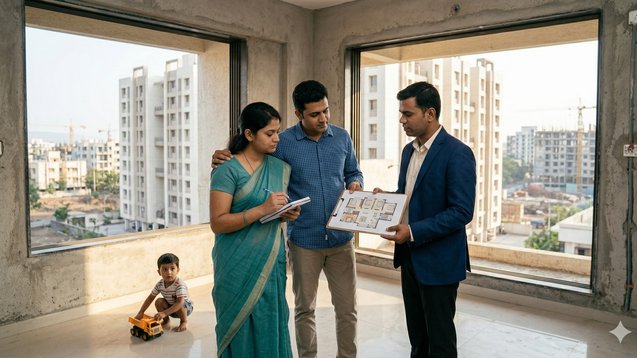
The buying of a home serves as an essential emotional achievement for most Indians because it brings them permanent residential security. The home brings people permanent stability while they make their largest financial investment which lasts throughout their entire life. Homeowners discover after two years that their residence fails to meet their current requirements more often than people expect. The house which was ideal for me at first has now become unsuitable because its dimensions and location do not meet my daily requirements. The situation occurs more frequently than people realize. Young couples buy compact apartments assuming they’ll “upgrade later.” Families move to faraway suburbs for affordability, only to struggle with daily commuting. Investors purchase properties without considering future lifestyle changes. The period of three years passes by in a fast manner. Buyers throughout India experience identical problems which occur in all locations, from busy Tier 1 cities such as Mumbai and Bengaluru and Delhi NCR, to growing Tier 2 cities like Pune and Ahmedabad and Jaipur, and emerging Tier 3 towns. The rapid expansion of cities and changing work patterns and family requirements force people to make housing decisions which require long-term planning. Homebuyers who search for properties on Property Aaj (https://www.propertyaaj.com) need to understand that they need to evaluate properties through more than just price and building design. The process needs to include forecasting life changes which will take place over the next five to ten years. The objective of the process involves buying a home which meets current requirements, but the actual intent requires selecting a property which remains functional through the coming years.
The primary reason people leave their houses
This is because they base their decisions on immediate requirements. Buyers often focus on immediate affordability instead of long-term practicality. A couple who just got married wants to buy a 1BHK apartment in an urban area. The apartment meets their current financial limits and their present way of life. Their family expands and remote work becomes necessary and they need to host guests during their upcoming years together. The apartment becomes too small for their needs. Homebuyers in distant suburbs create custom homes to reduce their housing expenses. The house provides ample living space yet extended travel times diminish users' overall well-being. People in Tier 1 cities who want to buy property must make size reductions because real estate prices are too high. People in Tier 2 cities fail to recognize that urban development progresses at an accelerated pace which impacts their local infrastructure development. Tier 3 buyers sometimes purchase properties based purely on price. They fail to consider future rental demand or resale potential. The patterns provide buyers with knowledge which helps them make better purchasing decisions.
Thinking Beyond Your Current Lifestyle
People should consider future life developments as the best method to prevent home expansion from their current residence. You should assess your situation by answering three practical questions. Will your family expand? Will your parents eventually reside with you? Will your job permit you to work from home indefinitely? Do you plan to stay in the same city long-term?
A couple residing in a Tier 1 city will initially choose to live in a small apartment close to their workplace. However, if remote work continues, the need for an additional room dedicated to home office space will increase. Families in Tier 2 cities may anticipate children starting school in the next few years. Therefore, families should prioritize their search for schools that are located near their home at the beginning of their school enrolment process. People who search for properties on Property Aaj (https://www.propertyaaj.com) discover that larger homes with adaptable designs provide them better long-term satisfaction. A home that accommodates future lifestyle changes prevents costly relocations later
Selecting an appropriate size requires budget assessment, which prevents any budget limit from being exceeded.
People need more space because their existing homes become insufficient for their needs. People should not purchase the biggest property available because that choice leads to impractical results. Future needs require financial planning, which needs to balance between two competing goals of affordability and necessary expenses. Property prices in Tier 1 cities, including Mumbai and Bengaluru, create financial barriers that prevent people from purchasing larger homes. Buyers choose to purchase small apartments because they want to spend money only within their financial limits. The home becomes more useful when people choose a unit that has two bedrooms instead of one bedroom. People who buy homes in Tier 2 cities can get larger homes because both larger spaces and lower costs are available to them. Tier 3 markets allow buyers to purchase either independent houses or bigger apartments, which they can do without paying extra expenses. People want to purchase more than just larger spaces; they need to select building designs that allow them to change their uses in the future.
The importance of location grows throughout time.
A property’s location provides advantages for daily use which extend to provide benefits during the entire period of ownership. Homeowners need to move to different properties because their current homes become unworkable. A young professional needs to choose between two living options. He needs to select between a remote suburb that provides. He needs to select between a remote suburb which provides. He needs to select between a remote suburb which provides. People in Tier 1 cities want to live in locations which provide easy access to business districts and metro lines and major highways because those areas help them complete their daily activities. The cities in Tier 2 are constructing their upcoming infrastructure routes at a rapid pace. Buyers who choose well-connected neighbourhoods often benefit from improved accessibility over time. Tier 3 towns focus on building their communities near essential services which include markets and schools and healthcare centers. Established buyers use Property Aaj (https://www.propertyaaj.com) to assess properties based on their connectivity and neighbourhood infrastructure. People today make location choices which determine how easily they will move around their area during upcoming years.
Flexible Home Layouts Make a Big Difference
Home layout flexibility serves as an essential element which people tend to ignore when they evaluate their property satisfaction during extended time frames. The design of two identical-sized apartments results in distinct spatial experiences for two different spaces. The design of adaptable residential spaces enables homes to transform through multiple changing requirements, which includes using a guest bedroom space as a study area or nursery or workspace. The design of open living spaces allows people to arrange their furniture while adapting to different needs throughout their daily activities. The compact apartment spaces of Tier 1 cities create a situation where efficient design practices become essential for residential spaces. The layout design of Tier 2 and Tier 3 cities creates better and more efficient spaces, but the actual space design still needs to maintain its effectiveness. Buyers should evaluate floor plans through direct examination instead of depending on total square footage measurements. The design of a house allows people to experience life changes without needing to find a new residence.
Future Infrastructure and Neighbourhood Growth
Urban development activities create lasting effects which determine future property accessibility. Street improvements will create new residential areas which will develop into busy neighbourhoods. The expansion of metro rail networks along with highway construction and IT park development and commercial area establishment creates new patterns for property demand. Hyderabad and Pune and Noida show how infrastructure improvements lead to quick changes in their housing markets. The same changes that six Tier 2 cities experience in India as Lucknow and Surat and Coimbatore enter their transformation process. Future infrastructure developments bring buyers two advantages which improve their daily life and increase the value of their properties. Property Aaj (https://www.propertyaaj.com) enables buyers to explore new growth areas which will lead to future neighbourhood demand. The future growth of a community creates a solution which prevents properties from becoming obsolete and unconnected to their surroundings.
Long-Term Ownership Financial Planning
Homeowners financial security determines their level of contentment with their residence. People need to move from their current home because of financial difficulties which show their need for better living conditions. Home loan EMIs together with maintenance charges and property taxes and renovation costs create the complete expenses required to own a property. Different states in India also have different stamp duty rates and registration charges which affect how much buyers need to spend for their initial purchase. Homebuyers from Tier 1 cities depend on home loans while Tier 2 and Tier 3 buyers have different financial requirements based on property costs. Homeowners need to keep financial reserves because these funds allow them to deal with life changes without having to sell their home.
Considering Rental and Resale Flexibility
Even if buyers plan to live in a home for a time things can change. They might have to move for a job or their family situation might change. They might find a good investment opportunity and want to rent or sell the property. Homes near where people work universities or major transport networks are usually in demand for rent. This is because lots of people want to live to their jobs or schools.
In cities like Tier 1 cities lots of people want to rent homes because there are many jobs available.
This means that rental demand stays strong.
Smaller cities, like Tier 2 cities are becoming popular with professionals and students.
This is creating opportunities for people who want to rent out their homes.
In towns like Tier 3 towns the rental market might be slower.
These towns often have a strong local market where people want to buy homes. A home that can be easily rented or sold is an investment. This is because it remains valuable even if the owner's plans change. Rental and resale flexibility is important for a home's value. It gives the owner options if their lifestyle changes. They can. Sell the home and get a good return on their investment.
How Smart Buyers Plan for the Next 10 Years
Experienced homebuyers process their current requirements through their upcoming future needs. The future career plans of people who want to live their life for five or ten years drive them to make decisions about their life path. They consider their professional development needs, their family growth requirements, their financial security needs, and their lifestyle choices. Homebuyers search for homes that offer middle ground between two extreme options which include inexpensive properties and high-end luxurious homes. Balanced properties combine reasonable pricing, practical location, adaptable layouts, and long-term neighbourhood potential. Property Aaj (https://www.propertyaaj.com) buyers who research their options find that the most satisfying purchases occur when they choose homes which maintain their value through changing life circumstances. People who plan their property purchase according to future needs will create permanent investments instead of temporary property solutions.
Conclusion
Homeowners face both financial and emotional difficulties when they need to leave their home after only a few years of living there. The process of selling property requires sellers to pay various costs while they deal with the need to move to a new location. The current situation requires careful planning to prevent its occurrence. The buyers who plan financial stability and evaluate different home design options and select suitable locations and anticipate their lifestyle changes will experience more successful outcomes than home buyers who do not follow these steps. The same rule applies to all areas of India which include busy metropolitan areas and developing Tier 2 cities and emerging Tier 3 towns. A property decision needs to find an equal balance between current requirements and future development. The platforms of Property Aaj (https://www.propertyaaj.com) enable users to find properties more efficiently while their complete contentment results from asking suitable questions before they make a buying decision. The ideal residence should match your current requirements while it should adapt to your future development. The best real estate investment shows this quality.
FAQs
1. What causes homeowners to outgrow their houses at such fast rates?
Many buyers focus just on their present requirements without considering their upcoming life changes. Families who expand their household through new members and people who work from home and those who develop new daily habits will find small homes in bad locations to be insufficient about three years later.
2. First-time buyers should always purchase bigger homes according to expert advice.
Not necessarily. Buyers should balance affordability with future needs. The selection of a larger space together with a flexible design system enables users to stay in their current home while maintaining financial stability.
3. How does location affect long-term property satisfaction?
The location of a property determines how easily people can commute to their destinations and how well they can access essential services and how much property values will increase. People continue to value well-connected neighbourhoods because their attractiveness remains intact during urban expansion.
4. Is buying property in developing areas a good idea?
The investment becomes advantageous when infrastructure development shows strong prospects for upcoming projects. The buyers need to check government plans together with connectivity projects and commercial development before they make their purchasing choices.
5. Can rental potential help prevent financial pressure?
Yes. The property can generate rental income which decreases financial stress when circumstances develop. Properties situated close to employment centers experience higher demand from tenants.
6. How can buyers research long-term property potential?
The study of infrastructure designs along with neighbourhood development patterns and real estate market demand patterns enables buyers to make educated choices. Online platforms also provide useful comparisons across different cities.