Introduction
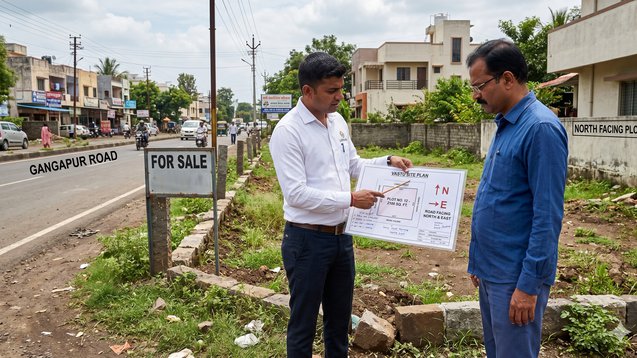
The first thing people notice when they visit a site for residential plot purchase in India is the road which runs adjacent to the property. Which side is it on? How wide is it? Does it face north, east, or west? Basic questions exist which help determine both Vastu compliance and practical living requirements. The majority of buyers consider road-facing direction to be more important than plot shape when making their buying decision. Your home entrance and sunlight access and home value and movement through your property all depend on road facing direction. The right road position will simplify construction work and make daily activities easier while the wrong road position will create problems which last throughout time. The Indian property market shows increased buyer recognition of road placement impact on property selection from major metropolitan areas like Bangalore and Mumbai to secondary cities such as Nashik and Indore. Some people select Vastu as their main requirement while other people evaluate infrastructure and practical use. You must select between two different options. Which road-facing direction is best, and how much should you compromise if everything else looks perfect? Let’s explain the information in an organized manner which will help you reach a definite conclusion.
Why Road Facing Direction Matters So Much
The street which leads to your property establishes both your access route and your main building entrance location. The entrance serves as a fundamental element which Vastu considers essential for all residential buildings. The road impacts daily activities because it establishes the following factors. The following impacts all day-to-day activities through using the street. A plot which has a properly placed road together with broad access points presents better open space than a plot which requires access through narrow streets although both plots have matching costs. Traffic patterns determine road accessibility in urban areas of India. The first-class cities of India measure road width and street access as more important than street direction. The second and third tier cities of India consider Vastu direction and street layout as equally significant. Your decision-making process requires Vastu to deliver guidance while practical usability must remain in existence.
North-Facing Road Plots: A Popular and Balanced Choice
The most preferred Vastu option for road plots exists in north-facing road plots. The main entrance of these plots needs to face north because their road section extends to the north. The north direction according to Vastu belief brings financial growth and new business opportunities to people. The properties enable people to experience benefits because they receive continuous daylight while their homes remain cool throughout all times of the year in Indian weather conditions. North-facing plots in Pune and Hyderabad and Nashik experience high demand because they sell at a faster rate than other properties. The designs create an effective combination of traditional elements and practical features which appeal to both users and investors. The assessment of these options needs to occur through simultaneous examination of all available options. A north-facing plot which has poor positioning still maintains lower worth than a well-connected plot which has different directional positioning.
East-Facing Road Plots: Highly Preferred for Homes
East-facing plots are considered highly beneficial according to Vastu because they permit morning sunlight to enter residential spaces. The phenomenon generates energy which promotes positive health impacts and overall human wellness. The east-facing design of homes provides inhabitants with gentle morning illumination throughout the day while protecting them from intense midday sunlight which creates comfortable living conditions across most Indian regions. East-facing plots remain the most popular choice among buyers in plotted developments of Tier 2 and Tier 3 cities. The demand for this direction has increased because many families specifically search for it which results in higher prices. At Property Aaj (https://www.propertyaaj.com) you will see that east-facing plots receive greater interest particularly in projects designed for families. This option presents the highest safety record and widest popularity among home construction options for personal use.
West-Facing Road Plots: Not as Bad as People Think
West-facing plots receive negative feedback because people do not understand their actual value. In Vastu, west-facing plots are considered neutral. People show more preference for north and east directions yet west directions do not bring negative impacts. West-facing homes receive stronger sunlight during the afternoon which results in warmer indoor temperatures. Modern design techniques now enable effective management of this problem through proper shading and ventilation and insulation solutions. Customers in Tier 1 cities because of limited options prefer west-facing plots which offer better location and accessibility. The slightly lower prices of west-facing plots create budget-friendly options which attract price-sensitive customers.
South-Facing Road Plots: Should You Avoid Them?
Many buyers show reluctance because Vastu considers south-facing plots as negative. People need to realize that south-facing installations require good construction planning to achieve their desired results. Proper design, which includes correct entrance placement and boundary wall construction and internal layout design, enables south-facing plots to achieve Vastu compatibility. The most common usage of these plots occurs in metropolitan areas which experience restricted land availability. South-facing plots serve as essential building sites for many well-designed urban homes throughout India. Buyer perception receives the strongest effect from this situation. These plots may take slightly longer to sell in traditional markets, but they are not unsuitable by default.
Corner Plots: Double Road Advantage
The two roads that border corner plots make these plots distinct from all other types of land. The system provides practical benefits because it delivers. The system enables better airflow and provides designers with multiple options and creates safe entry points for users. Vastu studies evaluate corner plots based on the directions that their roads face. The north-east corner plot holds great value because it brings good luck to its owner. The higher market value of corner plots results from their various beneficial features. Designers must create smart solutions which handle visibility needs and private space requirements. The plots attract buyers who want to construct standalone houses or villas in Tier 2 cities.
Road Width and Infrastructure: The Hidden Factor
The main focus of the research examines direction while both road width and adjacent infrastructure remain equally significant elements. A plot facing a wide, well-developed road is far more valuable than one facing a narrow or poorly maintained street-even if the latter has a better Vastu direction. Road width affects three factors which include accessibility for vehicles and future development potential and overall property value. This factor usually becomes more important than Vastu requirements in Tier 1 cities. In Tier 2 and Tier 3 cities, buyers look for a combination of both. The complete picture of a listing on Property Aaj (https://www.propertyaaj.com) requires users to check both road details and direction.
Pricing and Market Trends Across Cities
The street direction of a property site affects its value assessment yet operates together with market demand and geographical position. The following statement shows the pricing system for different land orientations: East and north-facing plots may carry a slight premium West-facing plots may be priced competitively South-facing plots may offer better negotiation opportunities The Vastu preferences of people in Tier 2 and Tier 3 cities make these differences between cities more evident. The pricing system in Tier 1 cities depends primarily on property location and transportation access. Resale demand serves as the primary factor that investors consider. Properties with ideal orientation design are better for selling purposes because they help create a market to which multiple buyers show interest.
Finding the Right Balance
The process of selecting an ideal direction becomes problematic because people believe they must find the most suitable choice yet they need to understand that flawless storylines exist as exceptionally uncommon elements. The smart approach requires people to establish priority for three elements which include Location and connectivity and Legal clarity and Infrastructure and Vastu alignment which follows after these three elements. The west-facing plot located in a prime area offers better investment potential than the east-facing plot situated in a less developed location. The platform Property Aaj (https://www.propertyaaj.com) enables users to compare various options which helps them reach a fair decision that considers both Vastu requirements and practical needs.
Conclusion
The process of selecting a suitable street-accessible parcel requires evaluation of which direction faces the street because this choice must match with your complete strategy. The north and east plot orientations receive higher preference since they provide better operational advantages. The west and south plot orientations become acceptable when all other conditions maintain their strength. The current best decision-making method for Indian real estate markets requires Vastu principles and practical applications to achieve balance between Tier 1 and Tier 2 and Tier 3 city spaces. The vital elements to consider include location and usability and long-term value. You should use Vastu as an advisory tool to help you select your final option. The optimal land parcel requires multiple evaluation criteria which include directional orientation but should primarily assess how well the plot fits your personal requirements and financial constraints and upcoming objectives.
FAQs
1. Which road-facing plot is best as per Vastu?
North and east-facing plots are the most suitable option because they provide optimal sunlight and create positive energy flow.
2. Are west-facing plots bad?
West-facing plots maintain a neutral status because they provide functional spaces which require proper architectural solutions.
3.Should I avoid south-facing plots completely?
Not necessarily. South-facing plots require careful planning but can work well if designed properly.
4. Do corner plots have better value?
Yes, corner plots provide superior air movement and entrance points which increase their market worth and customer demand.
5. Does road width matter more than direction?
In many cases, yes. The worth of a well-connected wide road exceeds that of a better road which offers less access.
6. Are Vastu-compliant plots more expensive?
They can be slightly more expensive because Vastu-compliant plots in Tier 2 and Tier 3 cities have increased customer demand.
Read more about property matters with our specialists and browse the latest property listings on Property Aaj. Download the app from the Play Store and App Store now for easy buying, selling, and renting!