Introduction
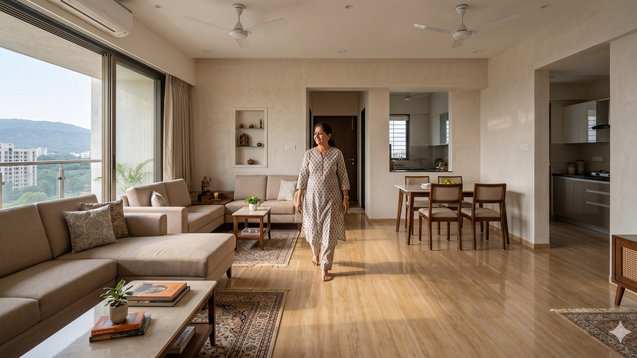
The primary considerations for homebuyers revolve around three main aspects which include home dimensions and market value and residential area. The primary aspect which affects your daily life in your home arises from your ability to move throughout your residence. A well-designed property should feel effortless. The space between your bedroom and kitchen needs to allow you to carry groceries and move furniture and relax without any obstacles. The concept of circulation which establishes movement patterns through a space needs to be understood because it determines how people experience comfort in their homes. The layout of Indian homes in urban areas creates daily challenges for residents because of its defective design. The combination of narrow corridors and blocked walkways and awkward furniture placement and cramped kitchens leads to exhaustion during basic activities. The space design of a home creates a natural and open atmosphere which allows people to move around without feeling anxious. In Mumbai and Bengaluru which are classified as Tier 1 cities, spatial limitations require people to use intelligent designs for their spaces. Tier 2 cities such as Pune and Lucknow offer better room proportions while Tier 3 cities often provide the freedom of spacious well-connected layouts. Homebuyers can discover properties that combine appealing aesthetics with efficient daily movement patterns by searching through Property Aaj (https://www.propertyaaj.com).
Why Movement Flow Matters More Than You Think
The way people move through space between rooms requires proper design because it becomes essential for their everyday activities.Your daily activities begin when you wake up and continue through bathroom visits and kitchen time and between room travels until you repeat those activities throughout your waking hours. The home layout will create flow interruptions which will result in increased difficulties for you because the smallest problems will become more challenging to handle. Poor layouts often create:
Congested pathways
Awkward turns between rooms
Furniture blocking movement
Well-designed homes enable people to move about their spaces without needing to think about their paths. The design enables spaces to connect while people can move freely throughout without needing to think about how to proceed. According to design experts, homes become easier to navigate when they contain clear pathways and uncluttered areas because these features create a better living experience. A home should function as your assistant instead of working against you.
Look for Clear and Unobstructed Pathways
You need to create paths which people can use to walk comfortably between different locations. The area needs to remain clear because people will walk through hallways and entryways and paths which connect the kitchen and living room and bedrooms. When furniture blocks these pathways people face difficulties because their movement becomes restricted. The experts recommend creating spaces which enable people to walk freely without experiencing contact with objects or needing to navigate through narrow areas. You should be able to walk around the dining table without disturbing others Entryways should not open directly into crowded spaces. Corridors should feel open, not narrow. Even in smaller homes smart furniture placement can maintain clear walking routes.
Prioritize Proper Space Between Furniture
The arrangement of furniture in a room creates a significant impact on the overall atmosphere of a house. People frequently make the error of filling their rooms with oversized furniture and unnecessary decorative items which results in less available space and obstructs natural pathways through the room. The interior design guidelines require designers to keep a minimum walking space of 2.5 to 3 feet which enables people to move through their living spaces without difficulty. Here’s what to look for:
Sofa table distance needs to meet required standards
people should have space to move freely throughout the area which includes bed arrangements
Dining chairs that don’t block pathways
When you visit a property, you should examine more than the vacant areas. Visualize the space as if it contains all its furniture. Will movement still feel easy?
Open Layouts Improve Everyday Movement
Open or semi-open layouts are ideal for smooth daily movement. The open layout design connects living dining and kitchen spaces which results in the removal of all walls and barriers. The design creates a natural spatial connection between rooms while it makes homes appear more spacious. Open floor plans decrease crowding problems because they provide better space management during peak hours when many people are present. Open spaces require proper space organization according to their function. Zoning through furniture and design elements enables spatial definition which maintains structural integrity while allowing natural movement throughout the space. A sofa can define the living area A dining table can anchor the dining space A kitchen island can separate cooking zones The design requires a balance between open space and structured elements.
Ensure Comfortable Room-to-Room Transitions
The movement between different rooms needs to happen without any interruptions. The design needs to provide sufficient doorway and corridor space together with appropriate doorway placement. The design requires experts to create doorways which enable users to walk through them without hindrance together with doorways that connect to main areas and doorways which create seamless access between spaces. The kitchen needs to have direct access to the dining space while the bedrooms should maintain a connection to all other areas of the home. A well-connected layout saves time and effort every single day.
Avoid Clutter and Over-Design
Clutter stands as the major obstacle which prevents people from moving comfortably throughout space. The excessive presence of decorative objects together with unnecessary furniture items and badly designed storage areas creates obstacles which restrict movement and results in confined spaces. Design experts demonstrate how clutter disrupts movement through their research which shows that it creates visual stress that makes homes appear chaotic. Movement-friendly homes function better when their design uses minimal essential furniture and smart storage solutions which conceal active clutter. The presence of a tidy uncluttered area creates a space which people can navigate with greater ease.
Pay Attention to High-Traffic Areas
People in a house spend more time in some areas than they spend in other areas of the house. The spaces that receive constant use include The spaces that receive constant use include entryways, kitchens, living rooms and bathrooms. The areas need additional space and improved design because they experience constant foot traffic. The design requirements for kitchens need to provide adequate space for two people to move about. The design requirements for entry areas need to provide space that prevents crowding. The design requirements for living rooms need to create spaces that allow people to move freely. The design of these areas will create a daily experience that feels smooth for users instead of creating stressful situations.
Consider Ventilation and Natural Movement Flow
Your assessment of ventilation systems needs assessment through two essential elements which include window systems and natural light illumination. The design of Indian houses during ancient times used courtyards to enhance indoor circulation while creating outdoor spaces that connected different rooms. The building design of contemporary houses achieves this impact through three specific architectural elements which include. The home becomes more comfortable when air and light can flow through its entire space without restrictions.
Think About Long-Term Usability
The design of a home needs to enable people to move comfortably through their space at present and in all future times. The need for space becomes important when families require different types of space because their family members reach different life stages. Elderly parents need homes which provide them with open spaces that contain no dangers and which have secure passageways. The design of homes which children can safely explore requires open spaces which have no barriers to movement. The home maintains its usefulness throughout time because its design allows for various changes which can be made to create different room arrangements. Property Aaj (https://www.propertyaaj.com) requires you to assess whether a property maintains its comfort level after five to ten years of usage.
Balance Space Efficiency With Comfort
Indian cities show space limitations especially at their Tier 1 locations. The goal is not just to maximize square footage but to use it efficiently. A well-designed 2BHK with good movement flow can feel more comfortable than a poorly planned 3BHK. Smart layouts focus on Efficient use of space Clear movement paths Logical room connections. Tier 2 and Tier 3 cities provide better chances to achieve spacious layouts which enable comfortable movement without restrictions.
Conclusion
The most practical homebuyer choice requires selection of a property which enables easy daily movement throughout the entire house. Your residential environment determines your daily activities and movement patterns and your internal emotional state for every single day of the week. The combination of clear pathways together with proper furniture spacing and open layouts and clutter-free design elements creates a home environment which enables people to move around easily while experiencing a natural ambiance. The space provides optimal support for your lifestyle needs through its combination of effective ventilation systems and designed room connections and adaptable space arrangements. Your home must function as a smooth flowing environment which requires no effort from you to make it operate because modern society moves at such fast speeds. The Property Aaj website (https://www.propertyaaj.com) provides access to properties which offer superior design yet deliver enhanced comfort for daily living through their architectural design. The design of a home needs to create an attractive appearance which allows you to move throughout the space.
FAQs
1. What is movement flow in a home?
Movement flow describes the process which enables people to traverse through different areas of a house without facing any obstacles or experiencing discomfort. The system depends on three factors which include the arrangement of spaces and the location of furniture and the connections between different rooms.
2. Why is circulation space important?
Circulation space provides essential space which allows people to move freely throughout a building. The absence of these spaces creates a restricted atmosphere which interferes with normal home activities.
3. How much space should be left for movement?
The required walking area between essential spaces should reach a minimum distance of
2.5 to 3 feet according to common standards for living rooms and dining areas.
4. Are open layouts better for movement?
The open layout system decreases physical barriers which lead to more efficient movement pathways through small residential spaces.
5. Can small homes have good movement flow?
Small residential spaces can achieve efficient movement patterns through intelligent furniture arrangements and reduced indoor clutter.
6. Where can I find homes with better layouts in India?
You can explore well-planned properties with efficient layouts on Property Aaj (https://www.propertyaaj.com).
Read more about property matters with our specialists and browse the latest property listings on Property Aaj. Download the app from the Play Store and App Store now for easy buying, selling, and renting!