Introduction
The process of purchasing a house requires you to both evaluate your current residential needs and assess which house will best serve your upcoming requirements.Your lifestyle will evolve.Your income will increase.Your family size will expand.Your work habits, personal preferences and daily routines will change.Yet, many buyers make a critical mistake: they choose homes based only on current needs, without considering future interior customization potential. A house that looks perfect today may feel restrictive tomorrow if it cannot adapt. You might wish to build a home office space, renovate your kitchen area, install additional storage space, or alter your home layout to achieve improved comfort. The required property alterations become costly when the property lacks essential adaptable features. Across Indian cities, which range from Mumbai's small apartments to Bengaluru's expanding residential neighborhoods, buyers show a clear preference for homes that enable them to customize their living spaces and implement future enhancements. The Property Aaj website (https://www.propertyaaj.com) provides users with an efficient layout comparison tool, but users need to invest additional effort to discover all possible ways to customize their space. Because the best property is not just one that fits your life today it’s one that grows with you.
What Does Future Interior Customization Potential Mean?
The ability of home interiors to undergo complete transformation through permanent structural changes shows their future customization potential. Home design requires three essential elements for successful implementation. Modern interior design requires spaces to adapt according to various changing requirements which arise throughout different times of day. The increasing demand for modular furniture together with movable partitions and flexible space design solutions enables homeowners to change their home environments through simple space alterations. A current living room space needs to operate as a professional workspace on the following day. A guest room might later become a nursery or a study. You cannot evaluate properties on Property Aaj (https://www.propertyaaj.com) through visual inspection alone. The assessment requires examination of structural components together with design elements and space arrangement possibilities.
Why Customization Potential Matters More Than Ever
People's current living patterns differ from their past living patterns. People now use their homes for multiple purposes because these spaces function as their sleeping quarters which include their work areas and relaxation spaces and fitness facilities and social gathering areas. The demand for flexible interior spaces has increased because of this transformation. Home design experts of today create living spaces which can be customized according to user needs for their actual home experience. People now need to customize their products because personalization has become an essential requirement. The solution provides financial advantages to users. The ability to customize interior spaces of a house results in higher resale and rental value according to market standards. Homeowners who create unique home designs through customization can expect to achieve higher property value and increased rental income while their properties spend less time on the rental market. Your property choice determines your future ability to modify your living space according to your needs.
Key Features That Enable Interior Customization
The assessment of home flexibility evaluates two types of residential buildings People who live in a house need to design their home to meet their specific requirements. The layout of a building space stands as the primary element that determines its functional capacity. Architectural designs that use fewer walls between rooms create better possibilities for home decoration. Through open-plan design homes provide their users with a space that permits them to change their layout through minor alterations. The design of products through modular systems stands as another essential element of the system. The design of modern spaces uses modular systems which include adjustable storage solutions and expandable wardrobes and furniture that can be arranged in multiple ways to match your evolving requirements. People who inhabit their homes should think about using their vertical space for storage needs. Homes with taller ceilings and empty wall areas enable homeowners to create extra storage space and decorative features. The design of electrical systems and plumbing networks and air circulation systems needs to include features that enable their future enhancement. When you use the Property Aaj website (https://www.propertyaaj.com) to search for properties you should explore more than the surface details. The assessment should concentrate on structural aspects of the building and its capacity to adapt. The main reason for this statement is that people need to understand which elements of their design work with their existing building system.
Tier 1 Cities: High Demand for Flexible Living Spaces
The confined and costly environment of Delhi and Mumbai limits available space. Customization options hold great value because they determine what users can achieve through their work. The design of apartments in these cities requires every square foot to serve multiple functions because of their limited space. The need for flexible design solutions becomes essential at this point because of its importance. Homeowners can make better use of their small areas through the combination of multi-functional furniture and sliding partitions and modular layouts. Buyers in premium market segments now prefer to buy "bare shell" properties because these homes lack extensive pre-installed interiors which enable them to create their desired space. The shift shows that buyers put more value on design control than they do on pre-existing interior designs. In Tier 1 cities, the ability to customize products serves as a fundamental element that customers use to make their purchasing decisions.
Tier 2 Cities: The Perfect Balance Between Structure and Flexibility
The real estate market in Pune and Ahmedabad maintains its equilibrium through its balanced property system. The residential properties in this area provide larger living spaces than metropolitan apartments which enables residents to design their homes according to their preferences. Developers in these cities are increasingly incorporating flexible layouts, modular kitchens, and adaptable storage solutions to meet changing buyer expectations. Buyers also tend to think long-term. They prefer homes that can evolve with their lifestyle rather than ones that look perfect only at the time of purchase. The Tier 2 cities provide an ideal solution for buyers who seek affordable housing with designs that meet future requirements.
Tier 3 Cities: Space Advantage but Planning Opportunity
The area between Tier 3 towns has no restrictions on its available space which allows residents to build their homes on larger grounds. The possibility to create custom designs exists only after the initial design work has been completed. Many homes have enough space but lack structured planning for future upgrades. This creates an opportunity for buyers. The right approach enables homeowners to convert their properties into versatile residential spaces. Homeowners can build new sections and change existing home layouts through modular construction methods and expandable design systems which create minimal interruption during the process. Buyers of Tier 3 properties need to plan their properties through flexible design systems because the properties provide them with spacious land.
The Role of Technology in Future Customization
Home design and customization processes undergo transformation through advancements in technology. The interior design process becomes simpler through the use of smart home systems and modular lighting and AI-driven design tools. Homeowners today have the ability to see design modifications through digital platforms that use 3D visualization technology before they actually make those changes. Spaces can be transformed through the use of smart partitions and IoT-enabled lighting which create different operational environments for various requirements. Future customization requires both physical alterations and system changes that enable digital transformations. When selecting a property, you should evaluate its capacity to accommodate your planned enhancements.
Common Mistakes Buyers Make
The primary error occurs when people select houses that possess extensive permanent fixtures which they cannot easily change. The second error occurs when people overlook the existing building restrictions. Future modifications become impossible because load-bearing walls and fixed plumbing lines and inadequate layout design restrict space usage. The first problem arises because buyers devote excessive attention to current market trends. People will consider today's fashionable items as outdated within the next few years. Your assessment should prioritize flexible design options. Your design upgrades will become more affordable through neutral design spaces which enable you to change interior spaces. Your assessment process should extend beyond immediate property features to long-term property evaluation. A house without future development options will create boundary restrictions for its inhabitants.
How to Evaluate Customization Potential During a Property Visit
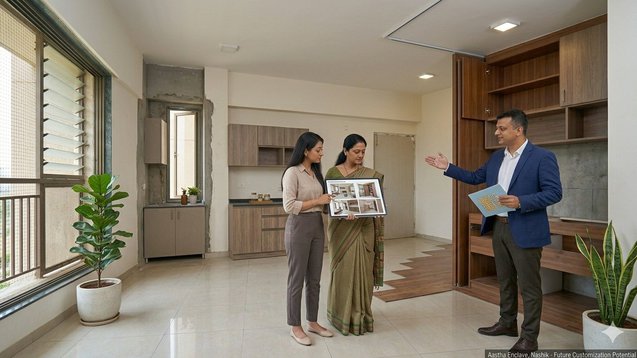
The first task of the project requires you to analyze the building's structural setup. The task requires you to identify which walls remain permanent and which walls you can alter. The next step requires you to evaluate how flexible the layout of the space. The question asks whether rooms can function as multiple different spaces. The next step requires you to assess the building systems. The question asks whether electrical and plumbing systems have been installed in a way that enables future system modifications. The next step requires you to assess two factors about the space. The two elements control the design process because they determine which parts of the space can be transformed. The final step demands you to make predictions about future developments. The question assesses whether this residential space will meet your needs during the upcoming five to ten years. The answer confirms that your decision proves to be beneficial for you.
Conclusion
The decision of selecting a property extends beyond current comfort because it determines how your space will function in later times. The interior design of a house which provides extensive customization options enables you to transform your environment according to your evolving requirements. The system empowers you with control while providing flexible options and delivering value which lasts throughout time. Indian consumers have begun to adopt this new way of thinking which now defines their purchasing behavior. The property market now requires people to assess their need for flexible space which exists between small metro apartments and large houses in developing towns. The comparison service of Property Aaj (https://www.propertyaaj.com) enables you to evaluate different options while understanding the long-term performance of a house provides actual value. The ideal home for you goes beyond its current flawless appearance because it has the potential to reach perfection in the future.
FAQs
1. What is the capacity of a home to undergo interior design modifications?
The term describes the degree to which inhabitants of a home can modify its interior spaces through incremental improvements during its operational period without needing to conduct serious building work.
2. Why is customization important when buying property?
Your home needs to adapt to your evolving lifestyle requirements which leads to better comfort and extended usage.
3. Are modular homes better for customization?
Modular designs provide design freedom which enables users to create changes through simple upgrade processes that require no extensive building work.
4. Do customizable homes have better resale value?
The answer to this question is yes because flexible homes which permit multiple design options attract more potential buyers which leads to faster home sales.
5. What should I check for customization potential?
The assessment requires examination of four elements which include layout flexibility and structural design and infrastructure placement and open space usability.
6. Where can I find properties with flexible layouts?
You can explore and compare such homes on Property Aaj (https://www.propertyaaj.com).
Read more about property matters with our specialists and browse the latest property listings on Property Aaj. Download the app from the Play Store and App Store now for easy buying, selling, and renting!