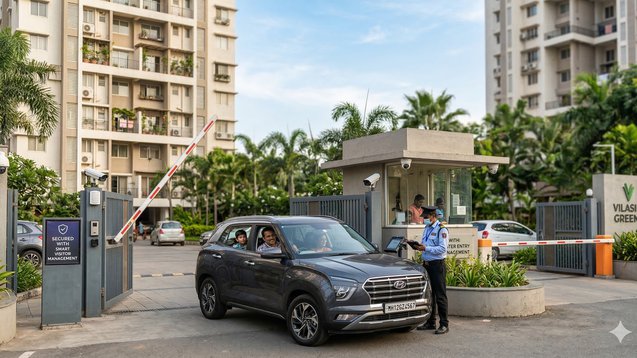
Choosing a Property with Smart Security Features
Introduction: Safety Is No Longer Optional — It’s a Buying Priority
A decade ago, homebuyers in India primarily focused on location, price, and carpet area. Security was important, yes — but mostly limited to gated entry and a watchman at the gate. The current situation shows various changes between today and past times. Homebuyers in Mumbai Pune Lucknow Coimbatore and emerging Tier 3 cities now consider intelligent security systems to be essential when selecting real estate properties. What caused this new development? The rise of urban population together with more people moving between homes and remote work trends and increased understanding of personal safety has caused buyers to search for security solutions outside conventional methods. Families need to have continuous surveillance. Working professionals need to access systems from any location. Investors seek properties which will draw high-value tenants. The problem exists because not all "smart" features bring actual benefits. Some amenities serve as promotional material while other features provide actual security benefits which help the property value increase over time. The complete guide for India explains how smart security systems should influence your real estate selection process. The guide shows essential factors for Tier 1 Tier 2 and Tier 3 cities together with a method to achieve an effective financial decision. If you’re shortlisting homes on Property Aja this will help you evaluate projects with sharper clarity.
What Are Smart Security Features in Modern Indian Homes?
Smart security from today requires more than a single CCTV camera which operates at the entrance. The current residential designs incorporate a complete system which uses technological safety features to stop unauthorized entry and track movements while delivering instant security notifications.
Common smart security features include:
Video door phones
Biometric or RFID access control
App-based visitor management
AI-enabled CCTV surveillance
Smart locks and digital door systems
Motion sensors in common areas
Panic buttons and emergency alerts
Premium and mid-segment projects in Bengaluru, Mumbai, and Gurgaon, which represent Tier 1 cities, already include these features as standard components. The adoption rate in Indore and Kochi, which are Tier 2 cities, continues to grow but remains dependent on individual developers. Established gated communities witness an increase of adoption from Tier 3 markets. The key point: don’t assume all “smart homes” are equally secure. The user must examine three aspects which include system depth, maintenance tasks, and user practicality. Buyers on Property Aja now filter projects by security features because they consider it important.
Security features impact property value through direct financial effects which create emotional security for property owners.
Properties with advanced smart security systems achieve the following results:
Higher rental demand
Better tenant quality
Lower vacancy periods
Slight resale premium (especially in urban markets)
Tenants in Tier 1 cities show a strong preference for residential societies which offer app-based entry systems and monitored CCTV systems and digital access control. Gated communities in Pune and Hyderabad provide better security which enables landlords to charge 5–10% higher rent compared to standalone buildings. The market in Tier 2 cities shows increasing growth although the current distance between buyers and sellers remains less than during previous times. Buyers in cities like Nagpur or Jaipur increasingly view smart security as a "future-proof" feature that supports long-term appreciation. New plotted townships and mini-townships in Tier 3 markets maintain their budget constraints while using digital security features as their main selling point. Security features bring only minor price increases for properties which develop better marketability through their existence.
Tier 1 vs Tier 2 vs Tier 3: How Security Expectations Differ
The safety needs of buyers change according to the city tier which they are currently in.
Tier 1 Cities
The people here expect smart security systems to become standard after they have experienced it as a special feature. The combination of high-rise buildings and crowded areas and active urban life makes people value automated systems. App-based visitor entry and video door phones have become essential for working couples because they need to manage their home security during their time away from home. The developers in Mumbai and NCR and Bengaluru now display their security systems through command centers and facial recognition access and integrated security dashboards.
Tier 2 Cities
The buyers in Nashik and Vadodara and Bhubaneswar now show increasing interest in smart features while they still require human security through guards and gated entry. Video door phones and society management apps are becoming common in mid-range projects. A significant number of Tier 2 buyers consider smart security to be a status upgrade instead of viewing it as a security measure.
Tier 3 Cities
The organization adopts selected elements from the program. The buyers who face budget limitations choose to purchase products that require less maintenance instead of products which offer advanced automated features. The new townships which focus on serving migrant workers and returning NRIs now implement basic smart surveillance systems. When you use the site Property Aja to explore options you need to compare the security features with the city tier because different city tiers create different security standards.
Which Smart Security Features Actually Matter, and Which Don’t
This is where many buyers get misled by glossy brochures. The high-impact features of the system include 24/7 monitored CCTV with recording backup. The system includes a video door phone that connects to each flat. The system allows visitors to be approved through an application. The system uses access-controlled entry gates for security purposes. The fire and emergency alert systems operate as operational fire safety systems. The system provides illumination for common areas which operates through sensor technology. The system includes smart locks which secure every individual flat. The system includes motion detectors which operate throughout the hallway. The system uses digital parcel tracking for effective parcel delivery management. The majority of projects use marketing-driven approaches which include The system includes advanced home automation features which remain unused. The system provides AI surveillance capabilities without actual monitoring staff which leads to delivery of excessive security. The system uses basic biometric technology which residents can easily bypass. The ability to perform basic operations effectively shows greater importance than advanced technology for Indian environments. The basic system becomes more valuable than a complex system which suffers from poor management. Pro tip: Always ask the builder or society about maintenance responsibility and AMC costs.
Cost versus benefit: does smart security increase your budget?
Yes,. The real question is by how much and whether it is justified.
In Indian projects the cost of smart security is a big deal.
Basic smart security adds ₹50 to ₹150 per square foot to the project cost.
You also have to think about maintenance, which may increase by ₹2 to ₹4 per square foot.
Premium artificial intelligence enabled systems can make costs even higher in luxury projects.
In cities like Tier 1 cities this cost is usually part of the overall pricing and rarely feels too much. Buyers already expect to pay more for maintenance in societies.
In Tier 2 markets buyers who are sensitive about prices sometimes hesitate, especially when it comes to housing. However many developers now offer smart security packages.
In towns like Tier 3 towns too much automation can hurt resale if the buyers are looking for budget friendly options. The smart way to do it is to evaluate whether the smart security level matches the project category. A mid income apartment does not need luxury grade security but basic digital safety is increasingly essential for smart security. You need to think about what kind of security you need for your project and whether it is worth the cost of smart security.
Rental Market Advantage: What Tenants Look For Today
This section requires your complete focus if you operate as an investor. The expectations of tenants have undergone rapid changes since the year 2020. Security infrastructure now serves as the primary criteria which corporate tenants and students living in premium PG-style apartments and young families use to evaluate properties.
Video door phones are a common requirement.
App-based visitor entry is the preferred method of entry for visitors.
Premium rentals require tenants to have access to well-monitored CCTV systems without any exceptions.
Tenants in Tier 2 cities show a strong preference for gated communities which offer digital security monitoring even when they do not specifically request smart home technology. The security features which properties display on Property Aja during their listing process help properties in IT-driven markets to generate rental inquiries at a faster rate. Smart security systems have become essential for landlords because they serve as a crucial element which attracts tenants to their properties.
Legal and RERA Considerations Buyers Often Miss
Many buyers fail to understand that security features which brochures promise become project specifications. Under RERA regulations across Indian states:
Developers must deliver promised amenities.
Security infrastructure mentioned in agreements becomes binding.
Major deviations can be challenged by buyers.
However, enforcement quality varies by state. Tier 1 states like Maharashtra, Karnataka, and Gujarat typically have stronger compliance tracking. In certain Tier 2 and Tier 3 areas, buyers must stay more alert.
Always check:
If the security system exists in the RERA documentation.
If the maintenance transfer requirements have been established.
If there is a plan to allow future system enhancements.
Before finalizing any project on Property Aja, download the RERA details and cross-check the promised features. This small step can save major headaches later.
Your security needs must match your specific requirements for security protection.
Strongly recommended for:
Working couples living alone
Families with elderly parents
Frequent travellers
NRI investors
High-rise apartment buyers
Rental-focused investors
Moderately important for:
End-users in small gated communities
Independent floor buyers in safe neighbourhoods
Lower priority (but still useful) for:
Standalone homes in low-density Tier 3 towns
Budget plotted developments
The young IT couple will experience significant benefits from app-based monitoring while they purchase their home in Pune's outskirts. The retired couple needs to choose their safety measures between neighbourhood security and advanced home automation technology according to their particular safety requirements. The main goal for organizations should be achieving proper alignment instead of pursuing features without purpose.
Future-Proofing: How Security Tech Will Shape Indian Housing
Smart security systems will achieve equal status with elevators and electrical power backup systems in all urban areas of India if present security market trends maintain their current trajectory. The following technologies are already operational:
AI-based threat detection pilots
Integrated society management apps
Cloud-based surveillance storage
Smart parking access
Community-level emergency response systems
Tier 1 cities will lead adoption. Tier 2 cities will follow rapidly over the next 5–7 years. Basic versions of the technology will enter Tier 3 towns through the establishment of new townships. Future resale value for buyers who select well-equipped projects today will strengthen their market position.
Conclusion: Choose Security That Matches Your Lifestyle — Not Just the Brochure
Indian real estate markets no longer treat intelligent security systems as optional features. These security systems assist tenants with their comfort needs while maintaining property value throughout time. The most advanced buyers understand this fact because they realize that increased technology implementation does not guarantee enhanced security protection. You need to establish trustworthiness for your project. You should review your maintenance agreements. You should establish your security requirements based on your city classification and your financial capacity and your actual daily activities. Daily users should evaluate how the system will provide them with quick access to their needs and create a secure environment. Investors need to evaluate how their properties will meet customer requirements while maintaining market value during resale. You must assess projects using practical evaluation methods. The website Property Aja enables users to assess city amenities through its comparative evaluation system, yet final assessments must rely on experts who conduct thorough local evaluations. Make your choice today and your property will remain important and protected for multiple years.
FAQs
1. Do smart security features significantly increase property prices in India?
The security features incur additional expenses yet their costs stay within acceptable limits for mid-range and premium projects. In Tier 1 cities the price difference exists because higher rental demand and resale value lead to justifiable pricing. In budget housing, however, buyers should carefully weigh the cost-benefit ratio before paying extra.
2. Is CCTV alone enough when evaluating a property’s security?
Not really. CCTV systems provide only one protective measure. Effective security requires the combination of access control systems, visitor tracking systems, adequate lighting systems, and staff monitoring systems. The majority of projects install cameras without conducting live monitoring, which decreases their effectiveness in actual situations.
3. Are smart security features more beneficial for investors or end-users?
The two groups experience benefits but their advantages differ from each other. End-users achieve peace of mind together with ease of use while investors benefit from increased tenant interest which might result in reduced empty rental periods. In metropolitan areas security features become essential factors that people use to choose their rental properties.
4. How can I verify if a developer will actually deliver promised security features?
The RERA filings together with the builder-buyer agreement require you to examine them. The listed amenities on that document create official legal obligations. The actual implementation standards can be evaluated by visiting sample flats and talking to current residents who live in completed building phases.
5. Do Tier 2 and Tier 3 cities really need advanced smart security?
The requirements of security solutions show different patterns according to different needs which exist between the two security tiers of Tier 2 and Tier 3 cities. The gated communities of Tier 2 cities find it necessary to establish basic digital security systems which now function as a fundamental requirement. The new townships of Tier 3 towns bring smart security technologies into their communities, which makes security systems necessary for residents who first focus on budget-friendly options.
6. Will smart security systems increase monthly maintenance charges?
The answer is yes because the expenses will rise only by a small amount. The operational expenses of an organization will increase because the organization requires both software subscriptions and the monitoring staff and equipment servicing costs. The managed societies experience small growth in expenses which the residents consider acceptable because it enhances both security measures and property values.