Choosing Between Low-Density and High-Density Societies
Introduction
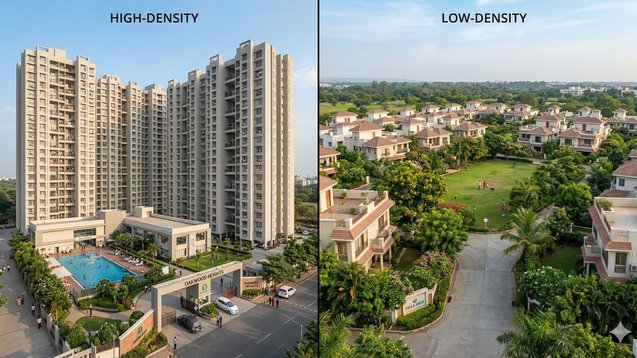
The current housing market in India presents two distinct types of residential neighbourhoods which house-seekers can find. The first type of residential community consists of extensive gated townships which feature multiple towers that contain hundreds to thousands of apartments and provide all available amenities. The second type of residential community consists of boutique projects which contain fewer families and restrict their units to single-floor occupancy yet provide a more peaceful residential atmosphere.
Which option offers greater advantages?
The selection process between low-density and high-density communities extends beyond personal taste. The decision impacts your everyday comfort together with your right to privacy and the expenses for upkeep and the future value of your property and both rental activities and long-term financial growth. In Mumbai Bengaluru and Gurgaon which represent Tier 1 cities density results from limited land availability. Tier 2 cities like Jaipur and Coimbatore allow their residents to choose between different density levels. Tier 3 towns still maintain low-density residential areas but they currently experience rapid development.
The increasing number of buyers who use Property Aja (https://www.propertyaaj.com) to check listings brings about this recurring question:
Should I choose exclusivity or scale?
Community buzz or peaceful privacy?
The following explanation presents a practical framework for making a decision which helps you choose between two options that align with your personal preference and your investment objectives.
Understanding Low-Density vs High-Density Societies
The first step requires us to establish clear definitions for the terms used.
A low-density society typically has:
Fewer towers
Limited units per floor (2–4 units)
Larger open spaces per resident
Lower total population within the complex
A high-density society usually includes:
Multiple high-rise towers
6–12 units per floor
Large clubhouse and shared amenities
Hundreds or even thousands of residents
Developers in Tier 1 cities use high-density developments to achieve their Floor Space Index requirements. The development pattern shows a combination of both urban and rural designs in Tier 2 cities. The development pattern shows that Tier 3 markets continue to use low-rise and low-density layouts while their vertical growth shows a gradual rise. Property Aja (https://www.propertyaaj.com) displays density information in a way that requires users to make indirect inferences about it. The master plan and total number of units must be examined to find the density information which you need to find. Density affects all aspects of your experience starting from the sensation of overcrowding in your lift system through to the duration of your weekend clubhouse access wait time.
Privacy and Daily Comfort
Let’s talk about everyday living.
In low-density societies, you usually experience:
Fewer neighbours on your floor
Less noise from common areas
Easier lift access
More personal space in amenities
It feels calmer. More intimate. You often recognize most residents.
In contrast, high-density societies bring energy and vibrancy. There’s always something happening — community events, children playing, clubhouse activity. For some families, this is a major advantage.
In Tier 1 cities, professionals working from home increasingly value quieter, low-density environments. In Tier 2 cities, larger families often prefer high-density projects because children get a bigger peer group.
Ask yourself honestly: do you prefer peace or participation?
For long-term comfort, especially in compact metro apartments, density can strongly influence how “lovable” your home feels.
Amenities: Better High-Density Areas Provide More Facilities Than Low-Density Areas
High-density societies usually offer:
Large clubhouses
Swimming pools
Gyms
Co-working spaces
Retail zones
Sports courts
The construction expenses for these facilities become shared among multiple residents, which creates an economical solution. The marketing of mega townships in Tier 1 markets, which include Noida Extension and Whitefield, uses lifestyle amenities as their primary promotional strategy. The residential projects at low-density areas provide shared spaces but residents receive access to green areas which exceed their actual space needs. The landscaping gardens which replace the huge clubhouse provide lower traffic areas for people to visit. The open spaces of Tier 2 and Tier 3 cities enable developers to create low-density projects which provide sufficient amenities without creating overcrowding. The actual usage of the facilities determines their value. Will you actually use the mini theatre or squash court? A walking path which provides you with peace is all you need. The brochure presents attractive amenities which become irrelevant when people encounter their actual use in daily activities.
Maintenance Costs and Financial Implications.
Most customers experience unexpected results at this point. High-density societies have two characteristics which include: Lower per-square-foot maintenance charges, Shared infrastructure costs spread across many units. The total expenses for the month remain substantial because of the bigger more intricate amenities which we provide.
Low-density societies may have:
Higher per-unit maintenance
Fewer facilities
Simpler management
High-density premium townships in Tier 1 cities require maintenance costs between ₹4 and ₹8 per square foot every month. The same costs apply to boutique low-density projects which provide fewer amenities.
Tier 2 cities show decreased overall expenses yet their expense pattern remains unchanged. The maintenance expenses for properties discovered through Property Aja (https://www.propertyaaj.com) directly impact investors' rental yield calculations. The monthly charges for amenities in complex buildings increase which offsets the benefits from a decreased EMI payment. Assess your total financial situation which includes more than just your buying expenses.
Rental Demand: What Tenants Prefer Across India
Cities with different tiers show different rental preferences for their residents. Young professionals prefer high-density gated communities which provide both security and gym facilities and co-working spaces. Social interaction occurs through the creation of large societies which serve as social environments.
In Tier 2 cities:
Families prioritize location, school proximity, and unit size
The two density types show equal performance when their locations are optimal.
In Tier 3 towns:
People in this area prefer to live in independent houses and low-density areas.
The development of high-density projects remains in progress. Post-pandemic India shows that some tenants choose low-density societies because they value both privacy and their perception of health safety. The high-density townships in metropolitan areas provide better liquidity and quicker tenant changes which makes them the best choice for your steady rental income goal. The premium low-density projects in prime areas attract tenants who stay for extended periods of time because they are high-quality residential properties. The success of rental properties depends on micro-market demand, which exists as the main factor, while property density determines which tenants will occupy the space.
Appreciation Potential and Market Perception
The density of an area increases its value through its minor effects on property worth. In Tier 1 cities high-density projects will experience faster price increases because of upcoming infrastructure developments. The presence of excessive inventory in large townships creates a situation that prevents substantial price increases from occurring. Established areas experience continuous property value growth because of their restricted housing supply which results in permanent low-density development. Their lack of available resources establishes an advantage for them.
In Tier 2 cities property value growth occurs through location factors instead of density factors. Premium low-density projects will create better resale value than regular projects according to buyers.
In Tier 3 towns land value appreciates more than the value of apartment density.
The behaviour of buyers is important because it affects their purchasing decisions. Buyers who prefer low-density areas believe that they will find exclusive access to those spaces. People instead regard high-density townships as secure spaces that provide a communal atmosphere. When you use Property Aja (https://www.propertyaaj.com) to assess your choices, please use the resale information from properties that share the same density level within that particular area for your comparison.
Security and Community Experience
Security systems in densely populated areas function better because of three reasons. The professional agencies can operate at their best when they receive higher budget allocations. The establishment provides extensive CCTV surveillance throughout the entire facility. The organization maintains complete security operations with personnel who work around the clock. The smaller security teams perform their duties in low-density environments which need security protection. There are different ways for people to bond with each other in their community. High-density areas of cities provide residents with multiple cultural events which include festivals and community organizations. The environment creates a dynamic atmosphere which provides social opportunities to experience. The residents of low-density communities develop more intimate relationships because their social circles become limited. High-density projects in Tier 1 and Tier 2 cities provide shared social spaces which enable families with children to meet other parents. The senior citizens feel more at home in peaceful low-density neighbourhoods. The most important factor for this situation is which lifestyle stage a person currently occupies.
Legal and Regulatory Considerations
RERA regulations require all density formats to provide complete project information through their disclosure requirements. Buyers in large high-density townships must conduct thorough evaluations of three specific elements:
Phased development plans
Future tower construction timelines
Shared amenity rights
The confirmation of amenity availability remains uncertain until future project stages. In Tier 1 states with stricter RERA enforcement, compliance is usually stronger. The approved layouts and occupancy certificates require buyers in Tier 2 and Tier 3 markets to conduct double-checking. Stamp duty and registration charges do not typically vary by density — but total ticket size may. Home loan approvals become easier for both formats when the project maintains RERA registration and receives approval from major banks. The legal system requires more legal clarity than density issues because density creates more complex problems.
Who Should Choose What? A Practical Buyer Framework
Choose low-density societies if you:
Value privacy
Work from home
Prefer quieter surroundings
Plan long-term self-use
Are buying in prime urban areas
Choose high-density societies if you:
Want lifestyle amenities
Have school-going children
Seek active community life
Are investing in rental property
Prefer lower per-unit maintenance spread
High-density townships serve as appealing investment opportunities for Tier 1 cities. The people in Tier 2 cities make decisions according to their lifestyle preferences. The residents of Tier 3 towns continue to prefer low-density living although gated communities are becoming more popular. Your life phase together with your financial plan determines which option represents the best choice for you.
Conclusion
The decision between choosing low-density or high-density societies presents an evaluation which requires assessment of which option proves to be correct. People should select their preferred option according to their personal values. Residents of low-density areas enjoy three benefits: peacefulness, private space, and exclusive access to their surroundings. The social fabric of high-density neighbourhoods creates a lively atmosphere which provides residents with various community resources. Land economics determines building density for Tier 1 cities. Buyers in Tier 2 and Tier 3 cities possess greater purchasing power than their competitors from other markets. The Indian real estate market will maintain its dual format because both formats support distinct customer needs and investment purposes. When using the Property Aja website to find homes (https://www.propertyaaj.com) you should research more than what the visual materials show. The master plan should be examined. The number of towers should be determined. You need to determine your own restfulness level. Your home value extends beyond its measurement in square feet. The way you relate to your neighbours determines your home space.
FAQs
1. Are low-density societies more expensive in India?
In prime Tier 1 locations, yes — because exclusivity and limited units create premium pricing. The price difference between Tier 2 and Tier 3 cities becomes noticeable only when the project exists as a luxury development.
2. Do high-density societies feel overcrowded?
The spaces become crowded during peak times when people use elevators and shared areas. The design of projects with sufficient open space and multiple entrances enables effective density control.
3. Which type is better for income?
In big cities apartments in areas with lots of people often rent out easily because they have nice amenities and lots of young professionals want to live there. On the other hand houses in less crowded areas that are really nice might attract people who want to stay longer.
4. Is maintenance always lower in high-density projects?
When you live in a place with residents you split the maintenance costs with them so your share might be lower.. If the building has a lot of fancy features and staff your total bill might still seem high.
5. Do low-density communities provide better protection than other communities?
The protection of an area depends on its security management system more than its population density. More extensive projects typically implement organized security systems, yet smaller communities can achieve effective safety measures.
6. Which option has better resale value?
Resale depends primarily on location and market demand. The resale value of low-density projects in established urban areas will increase because of their limited availability, whereas high-density projects in growth corridors will experience higher resale value because of increased market demand.