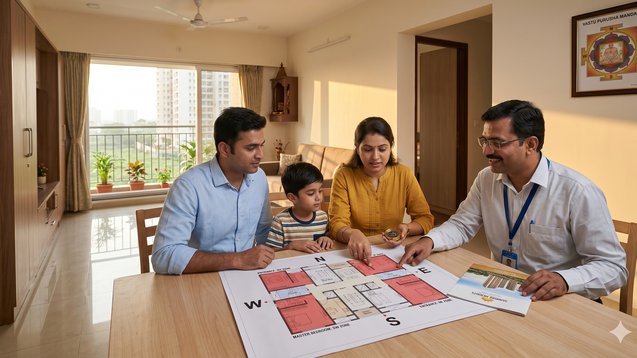
Why Buyers Prefer Vastu Homes
Introduction:
Spend even a few minutes talking to property buyers in India, and one theme keeps coming up Vastu. Some people follow it strictly, some treat it as a soft preference, and others don’t actively believe in it but still feel more comfortable choosing a Vastu-aligned home. That alone tells you something important: Vastu isn’t just a tradition anymore it’s a behavioural factor in real estate decisions. In 2026, the Indian property market has become more data-driven, more digital, and more transparent. Buyers compare prices, check legal approvals, evaluate infrastructure, and analyse appreciation potential. Yet, alongside all this logic, Vastu continues to quietly influence choices. Why? Because buying a home is not just a transaction it’s emotional. It’s about stability, family well-being, and long-term comfort. Whether someone is booking a premium apartment in Mumbai, a mid-range flat in Pune, or an independent house in a Tier 3 town, they want the space to “feel right.” This blog explores why buyers across India still prefer Vastu homes, how this preference varies across city tiers, and what it means for both end-users and investors. If you’re exploring properties on Property Aaj, understanding this mindset will help you make smarter decisions.
Emotional Comfort: The Hidden Driver
At its core, Vastu is about emotional comfort. Even buyers who don’t fully believe in it often say the same thing Why take a chance?” Think about it. When you’re making one of the biggest financial decisions of your life, even small doubts can feel heavy. A Vastu-aligned home reduces that uncertainty. It creates a sense of reassurance. In Tier 1 cities like Bangalore or Mumbai, this shows up subtly. Buyers may not reject properties outright, but they prefer layouts that avoid major Vastu issues. In Tier 2 cities, the emotional factor is stronger. Families often discuss Vastu collectively before making a decision. In Tier 3 towns, it can be a deciding factor. This emotional layer doesn’t always show up in numbers but it strongly influences final choices.
Cultural Influence and Family Decision-Making
Real estate decisions in India are rarely individual. They involve families, elders, and sometimes even extended relatives. And this is where Vastu becomes more than just a personal preference it becomes a shared expectation. In many households, especially in Tier 2 and Tier 3 cities, elders strongly believe in Vastu principles. Even younger buyers who are more practical often respect these views. Imagine a young couple in Pune finalizing a flat. Everything checks out location, budget, builder reputation. But the parents raise concerns about the entrance direction. That conversation can influence the final decision. In Tier 1 cities, the influence is softer but still present. So when buyers prefer Vastu homes, it’s not always about belief it’s often about alignment within the family.
Perception of Positive Energy and Well-Being
One of the most common reasons buyers cite for choosing Vastu homes is the idea of “positive energy.” Now, whether you interpret this spiritually or psychologically, the effect is real. A home with good light, ventilation, and thoughtful layout naturally feels better. Interestingly, many Vastu principles align with these design fundamentals.
For example:
North and east-facing homes often receive better natural light
Open spaces improve airflow
Clutter-free layouts enhance usability
So when buyers say a home “feels good,” they’re often responding to these factors even if they label it as Vastu. In Tier 1 cities, modern architecture already incorporates many of these elements. In Tier 2 and Tier 3 markets, Vastu becomes a more explicit framework for achieving them. Either way, the end goal is the same a comfortable living environment.
Resale Value and Market Demand
Let’s shift to a more practical angle resale. Buyers don’t just think about living in a property. They also think about future exit. And here’s where Vastu plays a strategic role. In Tier 1 cities, its impact on resale value is limited but not negligible. A reasonably aligned property may attract slightly more interest. In Tier 2 cities, the effect is stronger. Buyers actively compare Vastu aspects before purchasing. In Tier 3 towns, it can directly impact demand and pricing. For example, two similar properties in a Tier 2 city one Vastu-aligned and one not may see different buyer responses. This is why even investors who don’t personally value Vastu still consider it. Because the next buyer might.
Builder Marketing and Buyer Perception
Builders understand this preference and they use it. Walk into any project launch, and you’ll hear terms like “Vastu-friendly layouts” or “Vastu-compliant homes.” These claims attract attention and build trust. But here’s the catch. Not all claims mean full compliance. In many cases, builders highlight partial alignment with key principles. In Tier 1 cities, where design constraints are tighter, this is especially common. In Tier 2 and Tier 3 cities, builders may offer better alignment but marketing still plays a role. So when buyers prefer Vastu homes, they’re also responding to how properties are presented. This is why it’s important to verify claims rather than relying solely on brochures.
Risk Avoidance: A Practical Mindset
Interestingly, many buyers don’t choose Vastu homes because they strongly believe in it. They choose them because they want to avoid risk. It’s a subtle but important distinction. The thought process goes like this: “I may not fully believe in Vastu but what if it matters?” This mindset is common across all city tiers. In Tier 1 cities, it shows up as preference. In Tier 2 cities, it becomes a filtering factor. In Tier 3 towns, it can become a requirement. This risk-avoidance behaviour is one of the biggest reasons Vastu continues to influence the market. And it’s unlikely to disappear anytime soon.
Rental Market: Do Tenants Care?
Here’s where things get interesting. Tenants, especially in Tier 1 cities, usually don’t prioritize Vastu. They focus on:
Budget
Location
Connectivity
Amenities
Working professionals in cities like Hyderabad or Gurgaon rarely reject a rental property based on Vastu. In Tier 2 and Tier 3 cities, families may consider it but it’s still secondary. So if you’re buying purely for rental income, Vastu may not significantly impact returns. However, it can still affect vacancy periods in certain markets. Smart investors balance this by focusing on demand drivers first, and Vastu second.
Tier-Wise Buyer Behaviour Differences
Understanding how Vastu preference varies across India is key.
In Tier 1 cities:
Buyers are practical
Location and price dominate
Vastu is secondary but considered
In Tier 2 cities:
Balanced approach
Buyers evaluate both Vastu and practicality
Moderate impact on pricing and demand
In Tier 3 towns:
Strong Vastu influence
High impact on buyer decisions
Direct effect on resale
This variation explains why developers adapt their offerings based on location. And why buyers need to adjust their expectations accordingly.
Legal Safety vs Vastu: What Buyers Prioritize
Despite its importance, Vastu should never override legal checks. Before evaluating direction or layout, buyers must verify:
RERA registration
Clear title
Approvals and permissions
For example, in Maharashtra, projects are regulated by Maharajah. A legally sound property with minor Vastu deviations is always a better choice than a risky one with perfect alignment. Platforms like Property Aaj help buyers shortlist verified properties, reducing this risk. The smartest buyers prioritize safety first and then refine their choice based on Vastu.
How Buyers Can Make a Balanced Decision
So how should you approach Vastu when buying a home? Start with the basics location, budget, and legal clarity. Then evaluate key Vastu elements like entrance, layout, and light. Avoid extreme deviations but don’t chase perfection. For example, a buyer in Bangalore may choose a west-facing flat in a prime tech hub over a perfectly aligned property in a weaker location. At the same time, a buyer in Jaipur may prioritize Vastu more strongly. Both decisions are valid. The goal is not to follow rules blindly but to make informed choices. Using platforms like Property Aaj can help you compare options and find the right balance.
Conclusion
The preference for Vastu homes in India is not just about tradition—it’s about comfort, psychology, and market dynamics. In 2026, buyers are more informed than ever. They understand pricing trends, legal frameworks, and investment potential. Yet, Vastu continues to play a role not as a strict rulebook, but as a guiding factor. In Tier 1 cities, it’s a preference. In Tier 2 cities, it’s a balancing factor. In Tier 3 towns, it remains a strong influence. The key is perspective. Don’t ignore Vastu completely but don’t let it limit your options either. Focus on what truly matters location, liveability, legal safety, and long-term value. Use Vastu as a supportive filter, not a deciding force. Because in the end, the best home is not just Vastu-aligned it’s one that fits your life, your goals, and your future.
FAQs
1. Why do buyers still prefer Vastu homes in 2026?
Buyers associate Vastu with peace of mind and positive energy. Even those who don’t strongly believe in it prefer avoiding major issues to reduce uncertainty.
2. Does Vastu affect property prices in India?
Yes, especially in Tier 2 and Tier 3 cities where buyer sentiment is stronger. In Tier 1 cities, its impact is relatively smaller compared to location.
3. Do tenants care about Vastu when renting?
Generally, no especially in Tier 1 cities. Tenants prioritize budget, location, and convenience over Vastu compliance.
4. Should I reject a property due to Vastu issues?
Only if the issues are significant and affect comfort or resale. Minor deviations can usually be ignored.
5. Is Vastu more important in smaller cities?
Yes, Vastu plays a stronger role in Tier 2 and Tier 3 cities, where it can directly influence buying decisions and resale value.
6. How can I check if a property is Vastu-friendly?
Review the floor plan, check entrance direction, layout, and light. You can also consult an expert if needed.