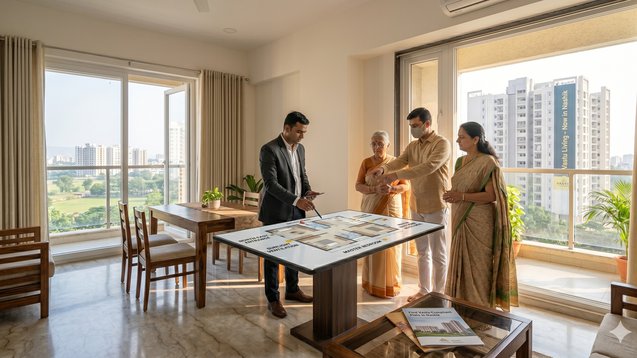
Introduction:
Nashik’s real estate scene has changed, like a lot in just a few years. Earlier it was mostly known as a calm pilgrimage stop and an agricultural city, but now Nashik is turning into one of Maharashtra’s fastest-growing Tier 2 real estate hubs. Newer roads, industrial activity, better connectivity toward Mumbai and Pune, more educational places opening up, and higher day-to-day lifestyle expectations are pulling in both end users homebuyers and investors to the city. With all this momentum, people’s preferences are also getting different. Modern homebuyers in Nashik aren’t only searching for cheap flats or maybe “premium” type amenities. They increasingly want a home that feels balanced, cosy, naturally ventilated and yes, sort of emotionally steady as well. That’s why Vastu-compliant apartments keep getting solid attention in neighbourhoods like Gangapur Road, Indira Nagar, Pathardi Phata, Makhmalabad, Panchavati, and College Road. What’s more interesting is that buyers today don’t look at Vastu strictly through a traditional or religious lens, not always. Many households now link Vastu-friendly spaces with real-life liveability. Things like good sunlight, steady air movement, practical room arrangements, open balconies, and a more organized property plan tend to improve everyday comfort, even if someone doesn’t think about beliefs in the same way. You can see this pattern not just in Nashik but also across Tier 1 cities like Bengaluru and Hyderabad, along with emerging Tier 2 markets such as Indore, Jaipur, and Surat. Still, Nashik has a stronger family-led buying mindset, so Vastu stays pretty relevant when people decide on a property. Platforms like Property Aaj are helping buyers compare layouts, orientations, and project planning a bit more carefully before they even think of scheduling site visits. In today’s competitive real estate market, knowing how to spot a truly Vastu-compliant flat can help buyers make smarter, kind of more future-ready decisions too.
Why Vastu seems to matter so much in Nashik real estate, market
Nashik has a different kind of buyer profile than many metro cities. Sure younger professionals and investors are coming in, but homebuying for families is still a big driver of residential demand. In a lot of Nashik households, buying a home is treated like an emotional long-term anchor, not just a financial trade. Families tend to link the property with steadiness, growth, everyday ease and that quiet peace in the mind, so the emotional bond makes Vastu checklists feel more important , in a natural way. And compared to the extremely dense metro belts where people often bend on layouts because of cost limits, Nashik still has relatively roomier apartments and a bit more flexible planning options. So buyers usually start asking for better directional harmony, smoother natural airflow, and well balanced room arrangements when they choose flats. Developers notice that clearly. Many residential projects in Nashik now highlight east facing entry points, cross ventilation, sunlight friendly internal layouts, and roomy balconies. They also talk up Vastu based planning like it’s a main selling theme, not just a “side detail” . This is especially common in family centered projects aimed at mid income and upper middle class customers. Meanwhile modern buyers are also getting more pragmatic. They may not insist on strict Vastu , like a rigid rulebook, but they still want a home that feels open, naturally well lit, and emotionally calming. So this mix of old school preference and practical thinking is moving Nashik’s real estate market forward, pretty fast.
Start by understanding what Modern Vastu really means
A lot of people, especially first time buyers make the mistake of thinking Vastu is only about entrance direction, like that is the whole thing. But in real life modern Vastu friendly housing is way more wide than that, more like a set of planning choices. A genuinely comfortable home usually ends up mixing good airflow, natural lighting, practical movement space, balanced room positioning, and even emotional comfort. That is why buyers should not treat modern Vastu as something purely superstitious or like rigid commandments that you just follow. For instance, an east facing apartment might technically match a traditional preference, but if nearby towers block most of the sunlight and ventilation, the day to day experience can turn out kind disappointing. On the other hand, a layout that is not exactly “perfect” on paper, but still gives excellent airflow, and stays open to the surroundings, often feels far better, calmer, more positive, even if it sounds less “traditional”. More architects these days combine Vastu thinking with wellness oriented design. Across India, developers are now talking about energy balanced homes and wellness based layouts, rather than only repeating old style wording. You can see this in Nashik too, and also in Pune, Bengaluru, and Hyderabad where younger buyers tend to prefer practical reasons over heavy belief. So before searching for flats, buyers should quietly decide what matters most to them. Some care about sunlight first, some want quiet surroundings, and many families focus on privacy, cross ventilation, and useful room arrangements more than strict directional rules. This kind of clarity helps avoid confusion during site visits, comparisons, and all the “maybe it's better that way” moments later on.
Check entrance direction but don’t just end there
Entrance direction is still one of the most discussed Vastu bits in Indian real estate , like it really gets talked about a lot. In Nashik, many buyers lean toward east-facing and north-facing flats because these directions are usually linked with positivity, clean daylight, and everyday ease for the long run. Builders know the pattern, so they promote these units more openly and sometimes a bit too loudly on the brochures. But buyers shouldn’t rely only on brochure descriptions. During a proper site visit, you actually need to watch how sunlight moves inside, how wide or cramped the entrance feels, and whether nearby buildings quietly block airflow. Sometimes a west-facing apartment, if it has open surroundings, and good ventilation, can feel far more comfortable than a “correct” east-facing unit squeezed by taller structures. This point matters even more in fast growing Nashik zones where construction density keeps increasing. On Property Aaj, buyers can compare project layouts and floor plans before going there, so you can narrow down the list earlier and not waste time. Still, physical observation stays key because emotional comfort becomes obvious only once you are there in real life. A lot of Indian buyers decide in a sort of emotional rush, often within minutes after entering. If the place feels calm, airy, and properly balanced, it builds stronger confidence, even more than technical wording ever could.
Prioritize natural light and ventilation
One of the biggest indicators of a Vastu-friendly flat is this natural light and ventilation quality , kind of like you can actually feel it. It’s kind of interesting , because it’s also one of the most practical parts of modern housing. After the pandemic, Indian buyers got far more aware about how indoor living feels. Families now spend more time checking sunlight access, air circulation, where the windows are placed, and how open everything feels inside the apartment. In Nashik’s climate, proper ventilation really boosts comfort in both summer and monsoon months. Buyers should therefore look closely, like whether bedrooms get daylight , whether balconies feel open, whether kitchens have proper airflow, and whether fresh air moves naturally across rooms instead of being stuck. Even compact apartments, if they have smart ventilation, often feel more lovable than larger units that are just poorly planned. Honestly, this trend isn’t only in one place. You can see it across the country. In Tier 1 cities like Mumbai and Bengaluru, developers now promote cross-ventilated apartments a lot, because buyers increasingly connect airflow with wellness style living. Nashik buyers are moving in a similar direction. Many families today link Vastu not only with spiritual positivity, but also with practical emotional comfort. Bright homes that breathe well naturally create more satisfaction over time. That is why ventilation-focused layouts usually keep stronger resale value too.
Evaluate the Room layout and the internal flow, carefully, like for real.
Good Vastu is kind of tied with practical layout efficiency, and not just some theory on paper. When you do flat visits buyers should just walk naturally through the apartment, and notice if movement feels smooth or suddenly awkward, you know. Some homes claim more carpet area, in numbers but later it feels cramped inside. Others may look smaller “on paper” yet feel more comfortable, mostly because the planning is better. In Nashik, family buyers usually check kitchen positioning first, then bedroom privacy, balcony connectivity, how open the living room feels, and whether dining space is actually usable, before they decide. Rectangular and fairly symmetrical layouts tend to give stronger emotional comfort because they are easier to organize and furnish. Modern developers are slowly catching onto this psychology too. Projects that keep a balanced room flow often do better in both primary sales and later resale cycles, because buyers emotionally connect with layouts that feel comfortable. In Tier 1 cities, buyers are more pushed into compromise layouts due to high prices. Nashik still gives better chances for practical, family oriented planning so layout evaluation becomes extra important here. Also try not to get too stuck on only one Vastu factor, while ignoring overall functionality. A home should support real everyday living, not just theoretical perfection, OK?
Visit Flats at Different Times of the Day
This is one of those underrated yet actually useful property-buying hints, I mean it really matters. Most buyers tend to check a flat once, during daytime, then they decide from quick impressions. But the lighting, the noise levels, the ventilation, and even the traffic scene shift pretty a lot across the day. A flat that looks really bright at noon can feel oddly dim in the morning, or later in the evening. And about the area around it sometimes the congestion and extra activity are only clearly seen after office hours, like you don't notice it earlier. Serious buyers in Nashik should try to see the shortlisted flats during morning, late afternoon, and then in the evening windows before finalizing any booking. That way you can judge the sunlight movement, whether the airflow stays consistent, how road noise behaves, parking involvement, and the general day-to-day comfort around the place, more realistically. Many seasoned investors stick to this plan because emotional comfort strongly influences future resale demand too. Indian real estate buying stays pretty psychological in practice. A home that keeps feeling calm and naturally easy to live in tends to pull more long-term buyer interest. That’s also one reason modern Vastu checks now overlap more with practical lifestyle understanding, rather than only traditional direction based ideas.
Understand Locality Differences Within Nashik
Not every Nashik locality behaves the same way, especially once Vastu - oriented demand and daily living expectations start coming in. Some premium pockets like Gangapur Road and College Road tend to pull buyers who want bigger layouts , updated facilities , plus wellness-leaning routines. In these zones Vastu-friendly planning is often blended with luxury interior themes , and that nature connected architecture vibe too. Meanwhile areas like Pathardi Phata and Makhmalabad are starting to feel more relevant for younger middle-class families. They usually go for apartments that are more affordable but still properly planned. Here, buyers are typically trying to balance budget , commute convenience , and Vastu preferences in the same breath, not treating any one factor as the only option. Then Panchavati and other older residential sides can show a heavier traditional Vastu influence. That’s because family led buying stays dominant, and choices are often guided by customary expectations. Also investors should not just look at “is it Vastu or not”, but should read how these localities may differ in future growth, rental pull, infrastructure upgrades, and overall lifestyle appeal. For instance, homes closer to educational clusters, or near commercial corridors that are expanding, may earn better long term rental interest even when Vastu compliance is only moderate. So the smartest approach is balance, not extremes. Vastu is meant to support practical investment quality, not replace it completely.
Check Builder Credibility Alongside Vastu Claims
In Indian real estate marketing there’s a growing issue, exaggerated Vastu branding. Some developers go all in on “100% Vastu-compliant flats” and yet they still cut corners on things that matter more, like construction quality, ventilation layout, legal approvals, or everyday usability. So buyers should really verify Maharajah registration first, then also look at builder reputation, actual construction workmanship, water supply systems, parking planning, and all legal documentation , even if the brochure looks confident about Vastu. A technically Vastu-compliant flat with weak execution can easily turn into long-term frustration. On Property Aaj, buyers can compare projects in a more transparent way, before scheduling site visits, which helps reduce that impulse based, emotional pressure. Also Nashik’s market is getting more competitive now, so buyers end up with better options across different price brackets. There’s really no need to compromise too much on practicality or on emotional comfort, if the research is done properly.
Why Vastu-Friendly Flats Usually Get a Better Resale Reaction
One big reason investors and families both lean toward Vastu-friendly flats is this whole resale psychology thing. In Indian real estate, the way buyers feel, pretty much drives how fast deals close, and how much demand shows up. So properties that have stronger sunlight, calmer balanced layouts, smoother airflow, and orientations people consider preferred tend to get more attention when resale conversations start. This matters even more in Tier 2 cities, like Nashik, because family members still play a strong role in the final call. And even if some buyers aren’t deeply traditional, they still often choose homes that “feel right” emotionally. That vibe, perception, whatever you want to call it , becomes a real factor. Two apartments might look near identical in pricing and facilities, but the brighter, more airy, and well-planned one usually pulls higher inquiry numbers. That emotional comfort supports longer-term marketability. So modern Vastu ends up feeling less like stiff superstition, and more like practical, lived-in housing psychology.
Conclusion
Getting a Vastu-compliant flat in Nashik today means a bit more than just checking the entrance direction, or flicking through marketing brochures and calling it done. Most modern homebuyers now realize that real Vastu compatibility isn’t only some theoretical thing, it’s also about day to day comfort , natural light, airflow, emotional steadiness, and how the whole space actually works for living. Nashik’s real estate scene is growing, and that creates solid chances for people who want well planned family homes. In different pockets across the city , you can see higher demand for apartments that mix modern design with balanced layouts and wellness oriented planning. Still, buyers should stay grounded. Yes, Vastu matters, but so does the bigger picture: infrastructure progress, builder credibility, legal permissions, connectivity, and even the resale value later on. These parts sit alongside Vastu, not after it. Platforms like Property Aaj are also playing a role, because they let buyers compare layouts, project design cues, and property specifics more openly before deciding. Ultimately, the “best” Vastu-compliant flat is not always the one that ticks every traditional rule, word for word. It’s the place that feels calm and workable, naturally easy on the senses, emotionally reassuring, and supportive of long-term family life. Going with a balanced approach usually turns into smarter choices in real estate.
FAQs
What is usually considered a Vastu-compliant flat in Nashik?
A Vastu-compliant flat generally means the room planning feels balanced, air flow is decent, natural sunlight actually comes in, the layout is practical and usable, and the entry side is aligned the right way like east or north. In today’s market, many buyers also look for a kind of emotional comfort and everyday functionality, not just the traditional Vastu rules, because people live there you know.
Which parts of Nashik are known for Vastu-friendly flats?
Areas like Gangapur Road, Indira Nagar, Pathardi Phata, Makhmalabad, Panchavati, and College Road are often mentioned. These are also places where buyers actively search for Vastu-friendly apartments, with modern facilities and family-oriented floor plans, so the whole thing feels more settled.
Do Vastu-compliant flats usually sell for a better resale price?
In quite a few situations, yes. When a flat gets better sunlight airflow, has a more balanced layout, and follows the preferred directions, it often creates stronger interest during resale conversations. Many Indian homebuyers emotionally connect comfort with liveability, so that “feels right” factor can matter.
Should buyers prioritize Vastu over location?
Not exactly. Location plus infrastructure progress, builder credibility, connectivity, and legal documentation still matter a lot more for long-term value. Vastu should really help guide the selection, not become the only deciding factor, because otherwise you might miss the bigger picture.
Can compact apartments still be Vastu-friendly?
Yes, absolutely. Even in a smaller space, you can get a very comfortable experience if ventilation is smart, daylight is good, room planning makes sense, and the layout stays clutter-free. Nowadays modern Vastu is more about practical wellness and how the home supports daily life.
How can buyers check if a builder’s Vastu claims are real?
First, inspect the floor plans carefully. Then visit the property in person, check sunlight timing and airflow, and match what you see with the claimed layout, not only rely on brochures. Also sites like Property Aaj can support more open comparisons, so buyers can look at project planning in a clearer way, without getting only marketing talk.