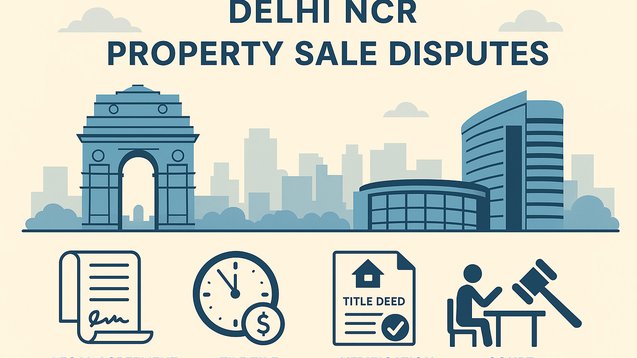
Introduction
Selling or purchasing property in Delhi NCR particularly in sought-after locations such as Dwarka, Rohini, Saket, or DLF Phase 2 is always a seeming accomplishment. But what if a disagreement abruptly spoils the deal? From ambiguous clauses to delayed payments or issues related to the title, property sale disputes are more prevalent than one can imagine. The reality: property transactions entail mammoth amounts of money, legal documents, and sentiment. So when something goes awry, it can result in legal hassles, money loss, or delayed ownership. As a seller in Vasant Kunj or a buyer in Sector 56 Gurgaon, understanding how to avoid and resolve disputes in property sale agreements is crucial. In this article, we’ll break down the common types of property disputes, how to avoid them, and most importantly—how to resolve them if they happen. You’ll also learn how platforms like Property Aaj (https://www.propertyaaj.com) help connect serious parties, reducing the risk of conflict in the first place.
Why Disputes Happen in Property Sale Agreements
Disputes can arise between buyers and sellers, co-owners, brokers, or even builders. Here are some common reasons:
Ambiguous agreement terms
Delayed payments or breach of payment schedule
Title defects or ownership doubts
Disagreement over possession timelines
Disputes over fixtures, furnishings, or encumbrances
Non-disclosure of legal issues (like pending loans, litigation, or tenant rights)
Localities like Janakpur, Lajpat Nagar, or Sector 82 in Gurgaon have a mix of old and new properties, making proper documentation and clarity even more crucial.
Step 1: Draft a Clear and Legally Binding Sale Agreement
The most powerful tool to prevent disputes is a well-drafted sale agreement. This document must clearly define the terms of sale, timelines, rights, and duties of both parties.
Key Clauses to Include:
Complete property description (including address, size, floor, etc.)
Sale amount and payment schedule
Date of possession and registration
Advance or token money terms
Penalty clauses for delays or non-compliance
Fixtures and fittings to be included
Dispute resolution clause
Pro Tip: Use a registered legal professional especially for properties in areas with old ownership chains like Karol Bagh, Palam Vihar, or South Extension.
Step 2: Verify All Property Documents Before Signing
Disputes often arise due to missing or forged documents. Always verify the following before signing the sale agreement:
Seller Should Provide:
Sale deed or title deed
Approved building plan
Property tax receipts
Electricity/water bills
Encumbrance certificate
Occupancy/completion certificate
No Dues from society or builder (if applicable)
In regions like DLF Phase 3 or Golf Course Extension, lack of builder NOC or pending dues can halt registration even at the last stage. Using trusted platforms like Property Aaj (https://www.propertyaaj.com) helps reduce such risks by attracting verified and serious buyers and sellers.
Step 3: Handle Payment Issues Proactively
Many disputes come up when a buyer fails to make payment on time or a seller delays returning token money after cancelling the deal.
How to Avoid This:
Use written receipts for each payment (including token money)
Never deal entirely in cash keep a bank trail
Include a clause in the agreement about forfeiture or refund
Escrow arrangements are useful for high-value properties in areas like Connaught Place or MG Road
If a party defaults, send a legal notice through a lawyer before taking it to court. Most payment disputes get resolved at this stage.
Step 4: Resolve Title or Ownership Conflicts
If the title is unclear due to inheritance, disputes among co-owners, or pending loans—buyers can back out, or legal notices may arrive post-sale.
Solutions:
Sellers should provide a legal title certificate from a property lawyer.
For inherited property, a succession certificate or legal heir certificate is a must.
If a property has joint owners (common in Rohini and Tilak Nagar), get NOC from all owners before the sale.
Buyers should always conduct a title search at the local sub-registrar’s office. This is critical in older colonies where mutation records may be outdated.
Step 5: Mediation and Out-of-Court Settlements
Not all disputes need to go to court. In fact, mediation or negotiation is often faster, cheaper, and more peaceful—especially when both parties want to avoid long legal battles.
Try This First:
Involve a neutral third party (preferably a lawyer or senior family member)
Set up a meeting with documented issues and expectations
Agree on revised terms, if needed (like adjusting possession date)
Mediation is especially useful for disputes among family members over jointly-owned properties in areas like Lajpat Nagar or Paschim Vihar.
Step 6: Legal Action as a Last Resort
If the dispute cannot be resolved through negotiation or mediation, legal action is necessary.
Legal Options for Property Sale Disputes:
File a civil suit for specific performance if one party breaches the agreement.
Lodge a criminal complaint in case of fraud or cheque bounce.
Approach the consumer court for delay in possession or non-disclosure of defects (in case of builder properties).
Use arbitration if your agreement includes an arbitration clause.
Delhi NCR has dedicated Real Estate Regulatory Authority (RERA) benches for buyer-builder disputes especially relevant for Gurgaon sectors and Dwarka Expressway projects. Important: Always maintain records emails, messages, payment receipts, and agreement copies. These are key during any legal proceedings.
Step 7: Prevent Disputes Through Verified Listings
Many disputes happen because people rely on word-of-mouth brokers, WhatsApp forwards, or unverified leads. To reduce risk:
List your property or search for one on reputed platforms like Property Aaj (https://www.propertyaaj.com).
Use clear, accurate property descriptions and attach verified documents.
Communicate openly with potential buyers or sellers through platform messages or email.
In high-value zones like DLF Phase 1 or South Extension Part 2, verified listings attract better, more trustworthy buyers.
Conclusion: Disputes Are Avoidable If You’re Smart and Prepared
Real estate in Delhi NCR is a serious transaction, often involving a lifetime’s worth of savings. While disputes can seem scary, most are preventable through clear agreements, verified paperwork, and open communication. If a dispute does arise, remember to act quickly, gather documentation, and try peaceful solutions first. When needed, legal action is always an option but good planning and honest dealing usually make it unnecessary. For a smoother selling experience, choose verified platforms like Property Aaj (https://www.propertyaaj.com) that prioritize clarity, security, and quality listings. After all, property deals should be steps toward success, not stress.
FAQs
1. What do I do if the buyer defaults on payment after he has executed the agreement?
First, serve a legal notice requesting them to fulfill the agreement. In case of still no response, you may cancel the transaction and keep the token amount (if specified in the agreement), or approach a court for specific performance.
2. Can I rescind a sale agreement if I receive a better offer subsequently?
Only if the contract permits it—or if the buyer defaults on conditions. Otherwise, cancellation without reason can result in a breach of contract lawsuit.
3. I purchased a flat in Gurgaon, but the seller now says it was a family property. What should I do?
If co-owners weren't involved or their NOC wasn't taken, your sale might be invalid. Hire a lawyer and file a title suit.
4. What if the sale deed was executed but the registration was not?
Until the sale deed is registered, the transaction is incomplete. You can still go ahead with registration if mutually agreed to by both parties. If the other party reneges, legal recourse is required.
5. How do I deal with disputes with a builder for delayed possession in NCR?
You may lodge a complaint with RERA Delhi or RERA Haryana (in case of Gurgaon properties). You are entitled to compensation or refund by virtue of RERA guidelines.
6. How can I make my sale agreement legally robust?
Engage a professional property lawyer, incorporate all essential clauses, register the agreement if advance payment is involved, and specify dispute resolution procedures clearly.
Read more about property matters with our specialists and browse the latest property listings on Property Aaj. Download the app from the Play Store and App Store now for easy buying, selling, and renting!