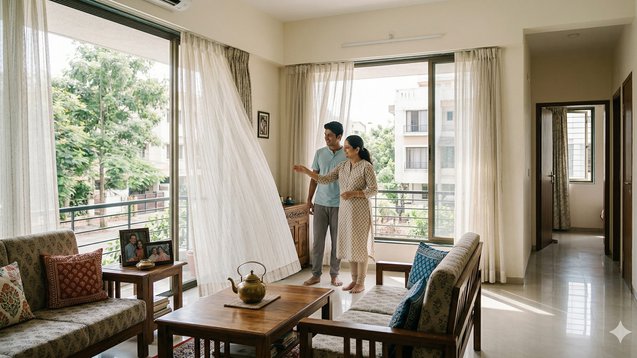
How to Select Homes With Good Ventilation
The Indian home buying conversation starts with three main factors which include price per square foot and location and amenities. People rarely start the conversation with the question which maintains its simple form yet holds great power: How well does this home breathe? The ability to ventilate space correctly affects your personal comfort and health and your electricity expenses and your property's worth over time. The people of India from Mumbai's dense high-rises to Hyderabad's developing suburbs and Tier 3 towns' independent houses fail to understand the importance of proper ventilation. Homebuyers first feel impressed by modern kitchen designs and shiny product catalos but they later find their new home contains unventilated bedrooms and wet areas and insufficient airflow. The country needs ventilation systems because it experiences three distinct climate zones which include humid coastal regions and dry northern plains and hot central areas. The system operates as a crucial component for human survival. The combination of rising temperatures and pollution outbreaks and increased remote workforces has created a critical need for fresh air circulation. Smart buyers on Property Aaj (https://www.propertyaaj.com) start to evaluate practical liveability elements which include cross ventilation and window placement and building orientation instead of focusing on aesthetic design. This guide will help you do exactly that — choose a home in India that truly feels fresh, healthy and future-ready.
Why Ventilation Is Very Important in Homes
The weather in India makes Ventilation very important. In cities near the sea like Chennai it can get really humid and homes that are not well ventilated can feel really bad. In cities in the north like Delhi Ventilation helps to get rid of pollution inside homes. In the middle of the country in cities like Indore the summers are very hot. Ventilation directly affects how well homes can be cooled. In cities people often live in tall buildings that are close together which can stop natural air from moving around. In cities homes are often spread out which allows for better air to move around. In smaller towns people usually have more freedom to design their homes but the quality can be different. Ventilation is also important for other things, such as:
The quality of the air inside homes
Preventing meld and dampness
How much energy homes use
The health and productivity of people living in homes
More and more people are realizing that homes with Ventilation do not need to use air conditioning and air purifiers as much. This means people can save money on their electricity bills and live in a way. In short Ventilation is not something that people want in their homes. Ventilation is a thing that people should look for when buying a home, in India today.
The Gold Standard provides complete understanding of cross ventilation.
The concept that people most need to remember during their house search process is cross ventilation. The process of cross ventilation occurs when air flows into a building through one entrance and exits through another entrance which creates natural airflow. The setup requires windows or openings on two opposite walls which need to be installed for these systems to function. Developers in Tier 1 cities which include Bengaluru use "three-side open" and "corner units" as premium project features because these designs provide superior cross ventilation capabilities. The special units require customers to pay extra fees. The availability of land in Ahmedabad and Jaipur allows better building spacing which creates better airflow conditions in these Tier 2 cities. The Property Aaj website at httpswww.propertyaaj.com provides more information than carpet area when users browse its listings. The floor plan needs to be examined in detail for its complete understanding. The test to perform needs you to check whether all windows will create an airflow path when opened. Homebuyers discover after taking possession that their windows directly face another building which stands 10 feet away. The process ends with this action because it completely stops ventilation.
Window Placement and Size: Bigger Isn’t Always Better
People believe that larger window sizes automatically improve air circulation through their windows. The statement holds true only in specific cases. Window positioning proves more critical than window dimensions. The best window design uses windows that match direct wind flow patterns. Coastal western regions contain buildings with sea-facing windows that create effective ventilation. The northern plains need windows to face east and west because their landscape requires this design. The Tier 1 dense developments use large glass windows that look impressive but only allow limited opening. The building design restricts air movement through its windows, which needs to remain open for proper ventilation. The design of Tier 2 and Tier 3 independent houses gives buyers control over their home layout yet window design shows which way air will flow through the house because windows must face both directions. Use the floor plan zoom feature on Property Aaj (https://www.propertyaaj.com) to examine how windows distribute throughout different rooms of the building. The design requires bedrooms and kitchens and living rooms to each have their own independent systems for ventilation. Natural airflow needs to reach bathrooms and kitchens because this requirement prevents moisture build-up, which creates permanent damage.
Building Orientation: The Invisible Advantage
The process of building orientation creates strong effects that people cannot see. The orientation of a building creates an essential yet hidden effect that determines how air moves through the space. North and east-facing houses receive cultural preference in India although wind patterns hold greater importance than superstition in determining effective ventilation. The monsoon season brings south-west winds as the primary wind pattern for Pune. The city of Kolkata requires its residents to implement strategies that control humidity levels. The design of well-planned projects needs to assess local wind patterns during their development process. The operators of mass-market developments choose to build more units in their projects because they want to achieve higher density than they want to maintain open spaces for natural airflow. Most RERA-registered projects in Tier 1 metro areas provide complete information about their project layout and building orientation. Tier 2 buyers must verify these more actively. A practical step: visit the property at different times of the day. The home creates an airy atmosphere during the afternoon. The home creates an atmosphere that collects heat. Building orientation functions as a fundamental element that determines how buildings maintain their temperature levels. People need to understand that orientation impacts their power consumption and their overall climate in their home.
Balconies, Utility Areas, and Air Shafts: Small Details, Big Impact
Balconies serve a dual function because they function as visual elements in design and they create barriers against moving air. The design of air shafts functions as essential components which support building ventilation systems. The air circulation of homes in Tier 1 high-rises improves through open balcony spaces which provide direct access to outside areas but their closed glass walls create complete indoor environments. The design of corner balconies provides optimal performance for air circulation systems.
The common design of mid-rise apartments in Tier 2 cities includes utility balconies with equipment to kitchens that serve as essential spaces for controlling moisture within the buildings. The design of independent homes in Tier 3 requires outdoor spaces because open verandas and courtyard-style layouts provide natural airflow which reflects traditional Indian architectural practices. The installation of narrow air shafts creates problems for people who live in small apartments because these systems provide ventilation through small openings which fail to create adequate airflow. The comparison of balcony dimensions needs to include balcony depth, balcony width, and balcony positioning when selecting properties on Property Aaj. A balcony which people can use for their daily activities will improve building ventilation while increasing the property value for resale purposes.
Ventilation vs Pricing: Is It Worth Paying Extra?
Let’s address the practical question does better ventilation cost more?
The typical value of corner units and low-density developments in Tier 1 cities ranges between 10 and 20 percent above regular market prices. But these homes typically retain value better over time. The premium for better airflow in Tier 2 cities provides a more practical long-term solution because better airflow leads to better air circulation. The ventilation quality in Tier 3 towns depends mainly on the design choices made by building developers. The behaviour of buyers shows a pattern of transformation. People now give more importance to indoor health and comfort after experiencing the COVID-19 pandemic. The demand for properties with good ventilation systems has increased. The combination of natural light and airflow creates an investment advantage because it enables properties to attract tenants with greater speed. Rental markets across Tier 1 and Tier 2 cities increasingly reflect this preference. The expenses of advanced ventilation systems create financial benefits and lifestyle advantages for users who pay extra costs.
Legal and Approval Considerations
Regulatory standards require ventilation systems to operate as their primary function. RERA regulations require developers to publish their building plans which enables buyers to check the window locations and outdoor spaces. However, different enforcement guidelines exist in various states throughout the country. Municipal building codes require specific window dimensions and setback requirements which enable sufficient airflow between buildings. Urban areas that experience high population density exceed the established limits for building requirements. Verify that the project possesses all necessary permits and meets local building regulations before you proceed with your purchase. The presence of illegal structural changes which include enclosed balconies will create future problems for building ventilation systems. The various stamp duty rates that differ between states will affect total project costs yet they should not force buyers to make design compromises that impact essential design elements. Ventilation systems may appear as architectural elements but they serve both regulatory requirements and continuous financial effects.
Future Value: Will Ventilated Homes Appreciate Better?
Market trends show that the answer is yes. Stronger natural ventilation systems will become more desirable for homes because climate conditions are worsening and people are becoming more aware of indoor air quality. Sustainability-focused buyers in Tier 1 cities already choose energy-efficient designs for their new projects. Tier 2 markets are implementing improved spacing norms through their planned townships and enhanced infrastructure developments. The building of airflow-friendly homes in Tier 3 towns becomes feasible because of available land but depends on buyers selecting high-quality construction. Ventilation contributes to:
• better living conditions
• reduced cooling expenses
• increased appeal for rental properties
• higher demand for resale properties
The market increasingly rewards practical design over cosmetic features.
Conclusion: Choose a Home That Breathes With You
People in India face their most important financial decision when they purchase property. People become distracted by location excitement and clubhouse features and brand names. Daily comfort depends on far simpler things fresh air and natural light and good airflow. A well-ventilated home feels lighter. The space maintains a cleaner aroma throughout its entire area. The process helps you to reduce stress without understanding what causes your stress. People who purchase homes should maintain proper ventilation standards regardless of whether they buy a home in a busy Tier 1 metro area or a growing Tier 2 city or construct their ideal residence in a Tier 3 town. Homebuyers should use Property Aaj (httpswwwpropertyaajcom) to evaluate different layouts and study floor plans and select homes that provide optimal health benefits. The best investment for your future will increase its market value through time. The best investment for your future will provide your family with year-round comfort.
FAQs
1. How can I check ventilation during a site visit?
The test requires you to visit the site during midday hours when temperatures reach their maximum. You should open all windows to observe how air flows through the building. The test requires you to determine whether rooms maintain stuffiness or freshness within a few minutes.
2. Are corner flats always better ventilated?
The answer is yes because corner flats have windows which face two different directions. The space between buildings that surround a property needs to be considered for building evaluation.
3. Is ventilation important for rental properties?
The answer is yes because tenants show a growing need for homes which provide better airflow especially in cities with hot weather. Vacant rental units require less time to find new tenants when their property owners implement better ventilation systems.
4. Can poor ventilation be fixed later?
Structural airflow limitations become permanent problems which require more than minor improvements through exhaust fan installation. The better approach requires users to make their selections at the beginning of the process.
5. Do high-rise apartments experience problems with their ventilation systems?
Some buildings experience ventilation problems when their towers are built too close together. Buyers need to examine the building layout and tower distance before making a purchase decision.
6. Does RERA guarantee good ventilation?
RERA ensures layout information becomes public through its disclosure requirements however the law does not guarantee better airflow management. Buyers must evaluate designs carefully.