Introduction
As Indian cities are on the rise, there has never been such a great demand for housing. Cities are experiencing significant levels of climate change, payment on utility bills, and excessive people densities. Therefore, homeowners are searching for more than comfort and style; they now want self-sustainable homes houses and apartments that generate energy, recycle water, and generate less waste while staying within modern lifestyles. In Maharashtra, cities like Mumbai, Pune, Thane, Navi Mumbai, Nagpur, Nashik, and Aurangabad are leading the way in self-sustainable housing. The hottest trends include everything from solar-powered apartments in Powai, Mumbai, rainwater harvesting villas in Banner, Pune, and green-certified societies in Nagpur's Civil Lines. Overall, self-sustainable housing is taking the world by storm! Demand for eco-friendly listings is increasing with eco-friendly homebuyers searching for sustainability and self-sustaining features on property platforms like Property Aaj (https://www.propertyaaj.com) without focus on the things that have previously been called luxury. But what does the future look like for self-sustainable housing in India, and is it feasible with how people are living?
What Is Self-Sustainable Housing?
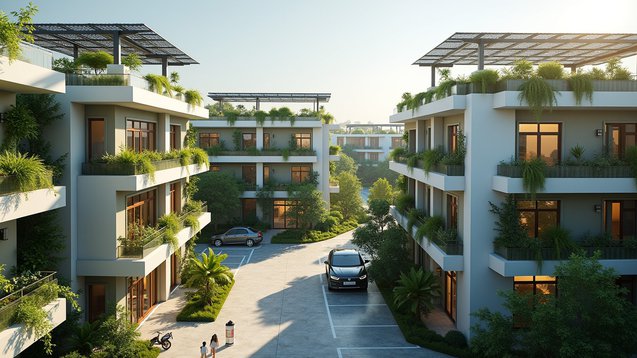
Self-sustainable housing refers to residential units created to reduce the dependence on outside inputs for a range of necessary resources. The goal is to develop homes that are:
Energy Independent - Solar, wind, hybrid renewables.
Water Efficient - Rainwater harvesting, greywater reuse, smart irrigation.
Waste Neutral - Compost, recycle, zero-waste.
Eco-integrated - Utilizes sustainably-sourced materials such as bamboo, fly-ash bricks, and low-VOC paint.
These homes reduce monthly costs, lessen climate impacts, and give some resilience to living in a changing world.
Why Self-Sustainable Housing Is the Future in India
Rising Utility Costs
Electricity and water bills are rising across Mumbai, Pune, and Thane. A solar-powered or water-efficient home saves lakhs annually.Government Push for Green Housing
Maharashtra’s building codes now encourage solar panels, rainwater harvesting, and waste segregation in housing societies.Urban Water Shortages
Cities like Nashik and Aurangabad often face summer water crises. Self-sustainable homes with storage tanks and recycling systems ensure year-round supply.Environmental Awareness
Young buyers in Pune’s IT hubs like Hinjewadi and Kharrazi actively prefer eco-certified projects over conventional luxury homes.Resilience to Climate Change
Flood-prone areas in Mumbai’s Andheri or Thane’s Ghodbunder Road need housing that can adapt with better drainage, renewable energy, and rainwater harvesting.
Key Features of Self-Sustainable Homes
Solar Energy Systems
Rooftop solar panels are now common in Pune and Thane societies, often cutting energy bills by 50–70%.Rainwater Harvesting
Projects in Aurangabad and Nagpur are mandating rainwater storage for societies.Waste Management Systems
Housing societies in Mumbai’s Powai and Navi Mumbai’s Panel use compost pits and biogas plants to manage organic waste.Vertical Farming & Green Balconies
Pune and Thane developers are integrating hydroponic vertical farms for fresh produce.Smart Home Automation
Energy-efficient lighting, water leak sensors, and AI-powered energy management systems are gaining popularity in premium homes.Eco-Friendly Materials
Bamboo flooring, recycled steel, and low-VOC paints are trending in projects across Pune and Mumbai.
Examples from Maharashtra
Mumbai (Powai, Bandar, Andheri): Premium towers market solar energy, EV charging, and rainwater harvesting as luxury features.
Pune (Banner, Hinjewadi, Kharrazi, Koregoan Park): Developers are blending smart automation with eco-friendly amenities to target tech professionals.
Thane (Ghodbunder Road, Pokhran Road): Townships advertise zero-waste communities with composting and shared solar grids.
Navi Mumbai (Pavel, Nerul, Vashi): Large gated societies are investing in rainwater harvesting and community farming.
Nagpur (Civil Lines, Dharam Peth): Builders highlight self-sustainability to attract middle-class buyers who face frequent water shortages.
Nashik (College Road, Gangapur Road): Villas integrate solar and water recycling, aligning with the city’s vineyard-inspired eco-lifestyle.
Aurangabad, Kolhapur, Solapur: Early adoption is happening, with new societies branding themselves as “green-ready.”
Benefits of Self-Sustainable Housing
Lower Utility Bills – Solar and water systems drastically reduce costs.
Higher Property Value – Eco-friendly homes command premium prices on Property Aaj (https://www.propertyaaj.com).
Government Incentives – Tax rebates and subsidies for renewable energy installations.
Better Health & Lifestyle – Reduced pollution, clean water, and toxin-free interiors.
Future-Proofing – Homes that adapt to resource shortages will remain more livable.
Challenges to Adoption
Higher Initial Costs – Installing solar panels, rainwater tanks, or vertical farms requires upfront investment.
Awareness Gap – Many buyers in smaller Maharashtra cities still prioritize cost over sustainability.
Maintenance Needs – Systems like water recycling and solar grids require technical knowledge.
Policy Enforcement – While Maharashtra mandates eco-features, enforcement varies across municipalities.
The Role of Real Estate Developers
Builders in Mumbai, Pune, and Thane are actively branding self-sustainable homes to appeal to younger, eco-conscious buyers. By featuring these projects on Property Aaj (https://www.propertyaaj.com), developers gain visibility among a new generation of buyers who care about both affordability and sustainability.
The Future Ahead
Adoption – Within 5–10 years, the vast majority of new houses built in the metropolitan areas of Maharashtra will be sold as self-sustainable.
Technology – Smart housing will utilize AI and renewable energy in tandem to achieve complete efficiency.
Community – Societies will incorporate shared solar grids, community urban farms, and biogas systems.
Buyer Demand – Eco-friendly homeowners will consciously refuse to consider projects that are not sustainable.
Key Takeaway
Housing in India is undoubtedly headed in the self-sustainable direction. Maharashtra is at the leading edge of this transition, with its rapidly urbanized cities and progressive buyers. While we will face challenges concerning economics, costs, and awareness, the sustainability industry holds nothing but long-term value for individuals—lower bills, more resilience, and eco-friendly living. Self-sustainable housing is not a passing fad or trend, it is a necessity. If homebuyers are seeking a future-ready home that has the benefit of being eco-certified and self-sustainable, looking for eco-certified and self-sustainable projects through Property Aaj (https://www.propertyaaj.com) is a wise place to start.
FAQs
What makes a house self-sustainable?
A home that generates its own energy, manages waste, and recycles water with minimal external dependency.Are self-sustainable homes more expensive?
They cost more initially but save money in the long run through reduced bills.Can apartments be self-sustainable or only villas?
Both many high-rise apartments in Mumbai and Pune integrate solar and water recycling.What government support is available in Maharashtra?
Subsidies on solar panels, rainwater harvesting mandates, and tax benefits on eco-homes.Do self-sustainable features increase property value?
Yes, eco-friendly homes often sell faster and at premium rates.Which cities in Maharashtra are leading in self-sustainable housing?
Mumbai, Pune, Thane, Navi Mumbai, and Nagpur are currently ahead.Read more about property matters with our specialists and browse the latest property listings on Property Aaj. Download the app from the Play Store and App Store now for easy buying, selling, and renting!