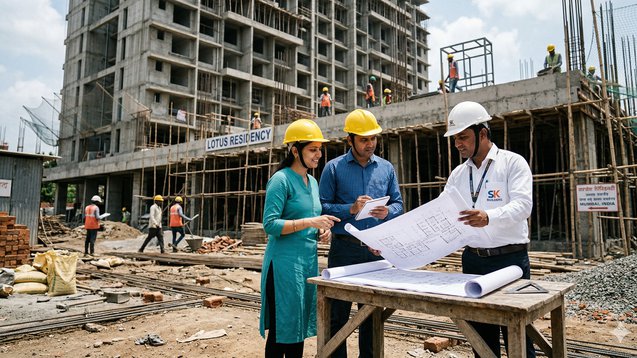
How to Choose Property With Strong Construction Quality
Introduction: Why Construction Quality Matters More Than You Think
The first questions that homebuyers in India ask when they begin their property search relate to three main factors which are price, location, and amenities. The first question asks about the distance from the metro station while the second question inquires about the cost per square foot and the third question checks if the project includes a gym and clubhouse. All valid questions. But there’s one factor that often gets less attention during the initial excitement of house hunting construction quality. The most essential aspect of property purchase actually becomes hidden by this particular situation. A well-built property can last decades with minimal structural issues. The system provides protection and longevity together with reduced maintenance expenditures throughout its life. Poor construction quality leads to wall cracks and water seepage and electrical failures which result in costly repairs that occur within two years after completion. Construction quality in India shows significant differences between developers who work on various building projects from high-end Mumbai and Bengaluru apartments to residential developments in Tier 2 and Tier 3 cities. Buyers who research projects on Property Aaj at httpswww.propertyaaj.com need to learn effective methods of assessing construction standards because this knowledge will determine their financial outcome through proper investment decisions. The guide shows readers how to assess building sites which display high construction standards by showing them the essential technical indicators and practical elements which help Indian buyers select their residential properties.
Why the quality of construction has an effect on how much a property is worth in the long run
The quality of construction is not just about being safe, it is also about how much a property will be worth after a long time and if people will want to buy it or rent it. Buildings that are constructed well will still look good after ten to fifteen years. They will still be strong. Look nice and people will still want to buy or rent them. People are often willing to pay money for properties that are built by companies that are known for building strong buildings. On the other hand, buildings that are not constructed well will start to fall apart quickly. If you can see cracks or if there are problems with the pipes or if the building is starting to wear out it will be harder to sell or rent. You can really see the difference in cities like Mumbai, Delhi NCR and Bengaluru. In these cities old buildings that were built by companies are still worth a lot of money because they were built to last. In cities the quality of construction can be very different. This is because new companies are often building in these cities. People who are buying properties need to be careful and make sure they are not getting a deal. When people are looking at properties on Property Aaj they often care more about who built the property and if it was built well than about getting a price. Because when it comes to estate it is often better to have a property that will last than to get a good deal.
Evaluating the Builder’s Track Record
The simplest method to evaluate construction quality involves investigating the developer who constructed the building. Established builders usually maintain consistent construction standards across their projects. Their reputation depends on delivering reliable structures that stand the test of time. Buyers should examine the developer’s previous projects and, if possible, visit completed buildings. The presence of certain indicators should be assessed which include:
Structural stability
Quality of materials used
Maintenance of common areas
Overall building condition after several years
In general, well-maintained older buildings which maintain their original strength appear to be a favourable sign. In Tier 1 markets, large developers often follow strict construction processes and engineering standards. In Tier 2 and Tier 3 cities, buyers should conduct additional due diligence because developer quality may vary significantly. Property search platforms like Property Aaj (https://www.propertyaaj.com) often provide details about developer history and completed projects which enable buyers to compare builders before making their selection. The previous work of a developer serves as the most effective way to predict upcoming projects.
Understanding Structural Design and Engineering Standards
The structural design of a building establishes its durability beyond its visual appearance. The majority of contemporary residential developments in India utilize reinforced concrete (RCC) frame structures. When engineers design these structures correctly, they deliver strength and flexibility and earthquake resistance capabilities. The Bureau of Indian Standards establishes construction standards which buildings in earthquake-prone areas must follow to achieve earthquake resistance. Buyers don’t need to become structural engineers, but asking a few basic questions can reveal important insights:
What structural design standards were followed?
Was the project engineered for seismic resistance?
Which engineering consultants were involved?
In Tier 1 cities, high-rise buildings often involve specialized structural consultants and advanced construction technology. Construction methods in smaller cities may be less complicated, but they need to adhere to safety regulations. Strong structural engineering ensures that buildings remain stable for decades, even under environmental stress.
Construction Material Testing and Quality Assessment for Finishing Work
The construction materials that get selected for building projects determine how long the structure will last. Durable buildings require high-grade cement and steel reinforcement bars and bricks and waterproofing systems. When buyers visit construction sites and apartment samples they must inspect these seven elements:
Wall thickness and finishing
Quality of flooring materials
Door and window fittings
Plumbing fixtures
Electrical wiring installations
The developer's dedication to maintaining quality standards gets revealed through these elements which show their cost-cutting approach. Construction projects in Tier 1 cities will use branded building materials and high-quality installation components for their top-tier developments. Affordable housing projects should use basic materials that still fulfil durability requirements. Buyers who use Property Aaj to compare multiple projects (https://www.propertyaaj.com) will discover that different builders use different material qualities even though their prices are the same. The inspection work at the beginning stage needs close attention to its details because this work protects against future problems.
Inspecting Waterproofing and Drainage Systems
Water leakage and seepage represent two of the most typical difficulties which arise in buildings that builders construct with inadequate techniques. The permanent structural damage together with ongoing maintenance problems originate from bathroom and balcony and terrace and basement areas where builders fail to establish proper waterproofing systems. During property visits, buyers should look for signs such as:
Wall and ceiling surfaces display damp patches
The balcony area has multiple drainage slopes which do not function properly
The basement parking spaces display water which has gathered on the floor
These indicators may suggest weak waterproofing systems. Construction projects which follow best practices allocate substantial funding to their waterproofing membranes and drainage systems and complete proper water flow design work. Urban areas which experience heavy rainfall need this aspect because it impacts their essential operations. The drainage design quality in Tier 2 and Tier 3 cities leads to waterlogging problems which occur during monsoon seasons. The process of evaluating waterproofing quality represents an essential yet frequently neglected step which property buyers must take when selecting a property that will last.
Importance of Proper Ventilation and Natural Light
Construction quality extends beyond structural integrity because it impacts the comfort people experience during their daily activities. Good architectural design uses proper ventilation methods to create optimal natural light distribution and thermal comfort conditions. Apartments that receive adequate sunlight and air circulation tend to remain healthier and more energy efficient. During property visits, buyers should evaluate factors such as:
Window placement
Cross-ventilation between rooms
Orientation of balconies
Distance between buildings
High-rise towers in Tier 1 cities face space constraints because developers keep building distances between structures too close together. Buyers should ensure that apartments still receive adequate light and ventilation. Tier 2 and Tier 3 projects often offer better spacing and lower density, which can improve natural airflow. These design factors control both energy efficiency and long-term liveability of buildings.
Understanding RERA Compliance and Legal Quality Standards
The introduction of India’s Real Estate Regulatory Authority RERA has created a substantial increase in housing sector transparency. Developers must provide complete project information which includes their construction schedules and building specifications and all obtained project approvals under RERA regulations. Buyers should always verify whether a project is registered under the relevant state RERA authority. RERA also requires developers to maintain structural warranties for certain defects within a specified period after project completion. Legal compliance therefore indirectly supports construction quality. The property registration process and stamp duty requirements vary between states yet RERA verification remains necessary throughout the country. Buyers can protect themselves from construction delays and structural compromises by checking project approvals and legal documentation.
Site Visits: The Most Reliable Evaluation Method
Research and brochures offer information yet nothing matches the value of visiting a site. Construction sites and finished apartment buildings display information which marketing materials and photographs fail to show. Buyers should observe:
Construction activity quality
Safety practices at the site
Storage of materials
Cleanliness and organization
A construction site which a contractor operates effectively shows all elements of professional project management and operational quality control. Residents from completed sections of the project can help verify which project elements actualize to development standards. Many buyers shortlist properties online using Property Aaj (https://www.propertyaaj.com) but finalize decisions only after physically inspecting the site. Digital listings do not provide complete information because this step shows all practical issues which digital listings cannot show.
Comparing Construction Quality Across City Tiers
India's construction standards show regional differences which depend on local market conditions. The intense developer competition in Tier 1 cities drives builders to use advanced building methods which include precast systems and modern construction materials. The development market in Tier 2 cities includes both national builders who operate nationwide and local construction companies. Buyers must do thorough project assessments to find developers who have demonstrated their ability to deliver successful outcomes. Tier 3 towns typically develop their building projects through multiple small-scale construction ventures which lead to major differences in construction quality between different building companies. Research indicates that both infrastructure development and better regulations lead to enhanced standards which affect these markets. Property buyers need to understand these regional differences because they help create proper expectations for different property areas.
Conclusion: Quality Construction Is the Foundation of Smart Property Investment
The majority of Indians will consider home acquisition to be their most critical financial choice throughout their lives. The construction quality establishes the essential elements which determine both property value and security, although location and price and amenities do hold significance. A well-constructed asset provides buyers with protection against building defects, while it decreases upkeep expenses, and it preserves considerable resale value throughout the years. The construction quality assessment requires developer reputation evaluation together with engineering standards assessment and material quality assessment and waterproofing system assessment and ventilation design assessment. The Property Aaj platform (https://www.propertyaaj.com) enables users to search for projects in various cities, but buyers must conduct thorough site assessments before making their final purchasing decisions. Construction quality assessment enables investors to maintain their properties as long-lasting and comfortable and valuable investments through all future years in all property markets, from major Tier 1 cities to developing Tier 2 and Tier 3 urban areas. Real estate foundations depend on informed decision-making more than they depend on concrete materials.
FAQs
1. How can buyers check construction quality before purchasing property?
Buyers should investigate the developer's previous work through their past projects and conduct material inspections and structural design checks and site visits. The construction quality can be determined by observing details that include wall finishing and plumbing systems and ventilation systems.
2. Does RERA ensure good construction quality?
RERA establishes better transparency and accountability standards which do not result in improved construction quality. The law requires developers to provide project information while it protects buyers from structural defects through legal measures.
3. Are new buildings always better than older ones?
The answer to this question is no because some buildings which renowned construction companies built in the past possess better structural integrity than contemporary buildings which developers built using budget-reduction methods. The evaluation process requires assessment of each individual project.
4. What are common signs of poor construction quality?
Building defects appear through various indicators which include wall cracks, flooring height differences, water leaks, defective plumbing systems and insufficiently secured doors and windows. The existing problems staff experience show evidence of fundamental building faults.
5. Does construction quality affect property resale value?
Yes. Properties with durable construction and good maintenance history tend to maintain higher resale values and attract more buyers compared to poorly built structures.
6. Is construction quality different in Tier 2 and Tier 3 cities?
The quality of construction work experiences greater variability in smaller markets because decreased developer competition exists. Buyers should conduct thorough inspections and choose projects by experienced builders.